


Hospital Digital Marketing: Let Your Website Help the Help Desk
Hospital administrators know the help desk is one of the busiest places in the building. Phones ring constantly, families queue with questions, and staff repeat the same answers many times a day.
This post looks at hospital digital marketing from the administrator's side. The aim is simple: let the website, Maps listing and WhatsApp handle routine questions, so your people can focus on patients who need a human.
The problem: every question lands on the help desk
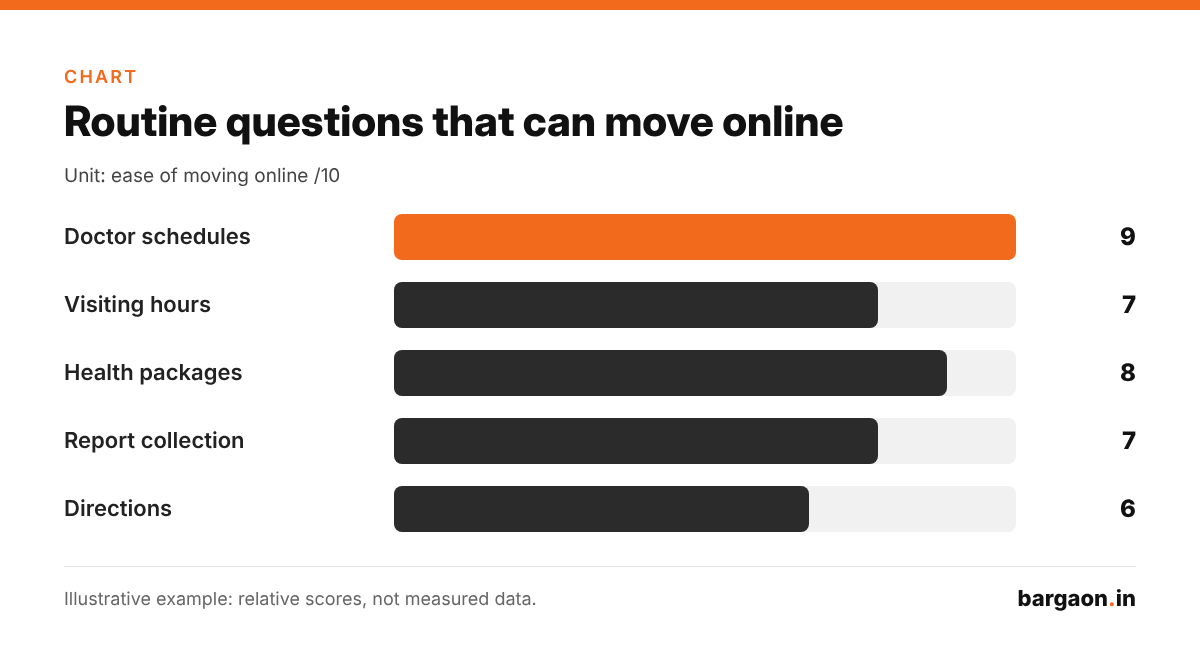
Is the cardiologist in today? What are the visiting hours? How much does a health check package cost? Where do we collect reports? These questions are reasonable, but when every one of them comes through the phone or the front counter, the system gets overloaded.
Calls go unanswered, families get frustrated and staff feel stretched. Meanwhile, the hospital website sits largely unused, because it does not answer these questions either.
In hill regions the pressure is even sharper. Families travelling from far away often call several times before setting out, because a wasted trip costs them a full day or more.
Why it happens
The online side of a hospital often grows without a plan.
None of this is unusual. Most hospitals focus their energy on clinical care, equipment and staffing, which is right. The online side simply needs a small, clear routine of its own so that it keeps pace with the hospital.
-
The website was designed as a brochure, not as a helpful tool for patients.
-
Doctor schedules and package details change often, but the website is updated rarely.
-
Different departments share information in different ways, with no single owner.
-
WhatsApp is used informally by staff on personal phones, without saved replies or records.
-
Nobody checks which questions come up most, so the website never answers them.
What it costs
The most visible cost is pressure on staff. Long hours on repetitive calls lead to tiredness and mistakes, and the people at the front desk are often the first face of the hospital.
Patients feel it too. When they cannot get through, some choose another hospital, and others arrive unprepared, leading to longer waits and repeat visits. Health check packages and new services go unnoticed because they are not explained anywhere.
There is a management cost as well. Without knowing what people ask, it is hard to plan staffing, improve services or decide which departments need more visibility.
Finally, there is the question of trust. A family that struggles to get basic answers may assume the care will be just as hard to access, even when the doctors inside are excellent.
The fix: hospital digital marketing that supports operations
Good hospital digital marketing treats the website and online listings as an extension of the help desk. It puts the most asked questions online, keeps schedules current and gives families simple ways to reach the right person. Content stays factual and ethical, with no promises of results.
This is less about advertising and more about organisation. A hospital that already has the right doctors and services mainly needs to make that information findable, current and easy to act on, whether someone is searching at midnight or asking on WhatsApp from a village hours away.
Strong pages also help with healthcare SEO Uttarakhand searches, so people looking for a specific test or specialist find your hospital first. Learn more about how we approach hospital digital marketing for hospitals in the state.
How we work with your team
The process is built around your staff, not around extra work for them.
We keep the routine small enough that it survives busy months. A short weekly update from each department is usually enough to keep the website and listings accurate.
-
Listen to the desk: collect the most common questions from front-desk staff over two weeks.
-
Answer them online: create clear pages for doctor schedules, health packages, reports and visiting rules.
-
One owner for updates: agree who sends schedule changes, and how quickly they go live.
-
Official WhatsApp line: set up a hospital business number with saved replies and handover to staff when needed.
-
Clean listings: keep the Google Maps listing accurate, including emergency hours and entrances.
-
Monthly review: look at which questions still reach the desk and close those gaps next.
What improves
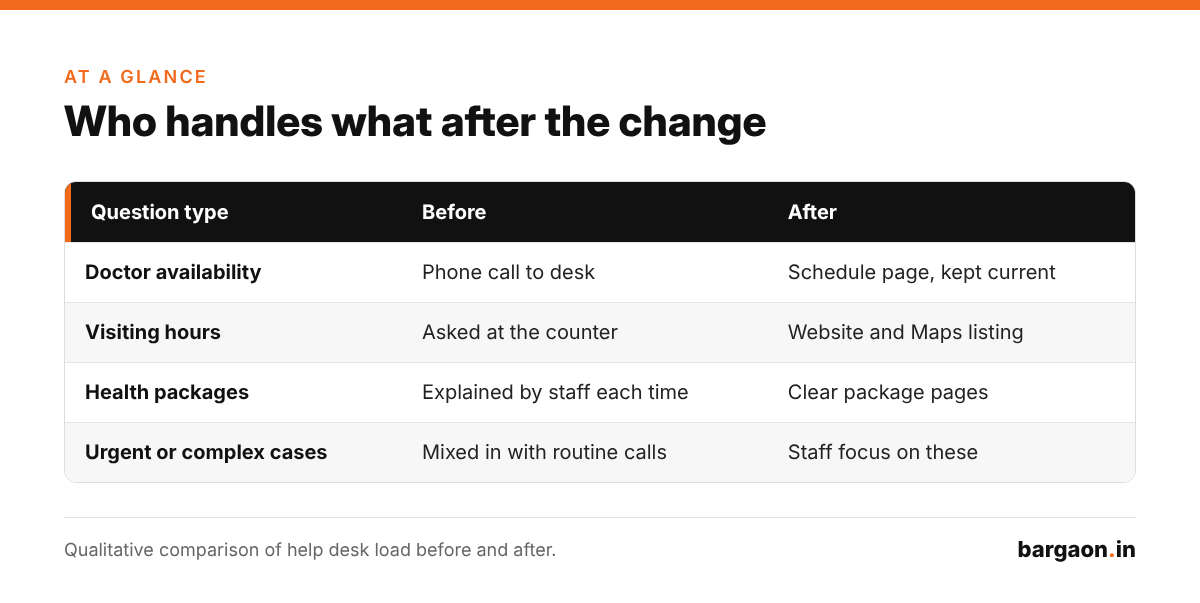
Front-desk staff spend less time on routine questions and more time helping families in person. Calls that do come in are more specific, so they are resolved faster.
Patients arrive prepared, with the right documents and at the right time. New services and health packages get noticed. And management gains a clearer picture of what patients need, which helps in planning departments, staffing and future services.
Over a few months, many administrators find the website becomes one of the most used tools in the hospital, quietly answering questions around the clock while the team looks after patients.
Start with what your desk already knows
Your help desk team already knows the ten questions they hear most. Write them down this week and check whether your website answers each one clearly. If it does not, that is where to begin. When you want support turning this into a steady system, have a look at how we work with hospitals and get in touch whenever it suits you.

 English
 Arabic
 Spanish
 Portuguese
 Deutsch
 Turkish
 Dutch
 Italiano
 Russian
 Romaian
 Portuguese (Brazil)
 Greek