


How Bulk Bath Mat Purchasing Can Help Hospitality Businesses Manage Costs
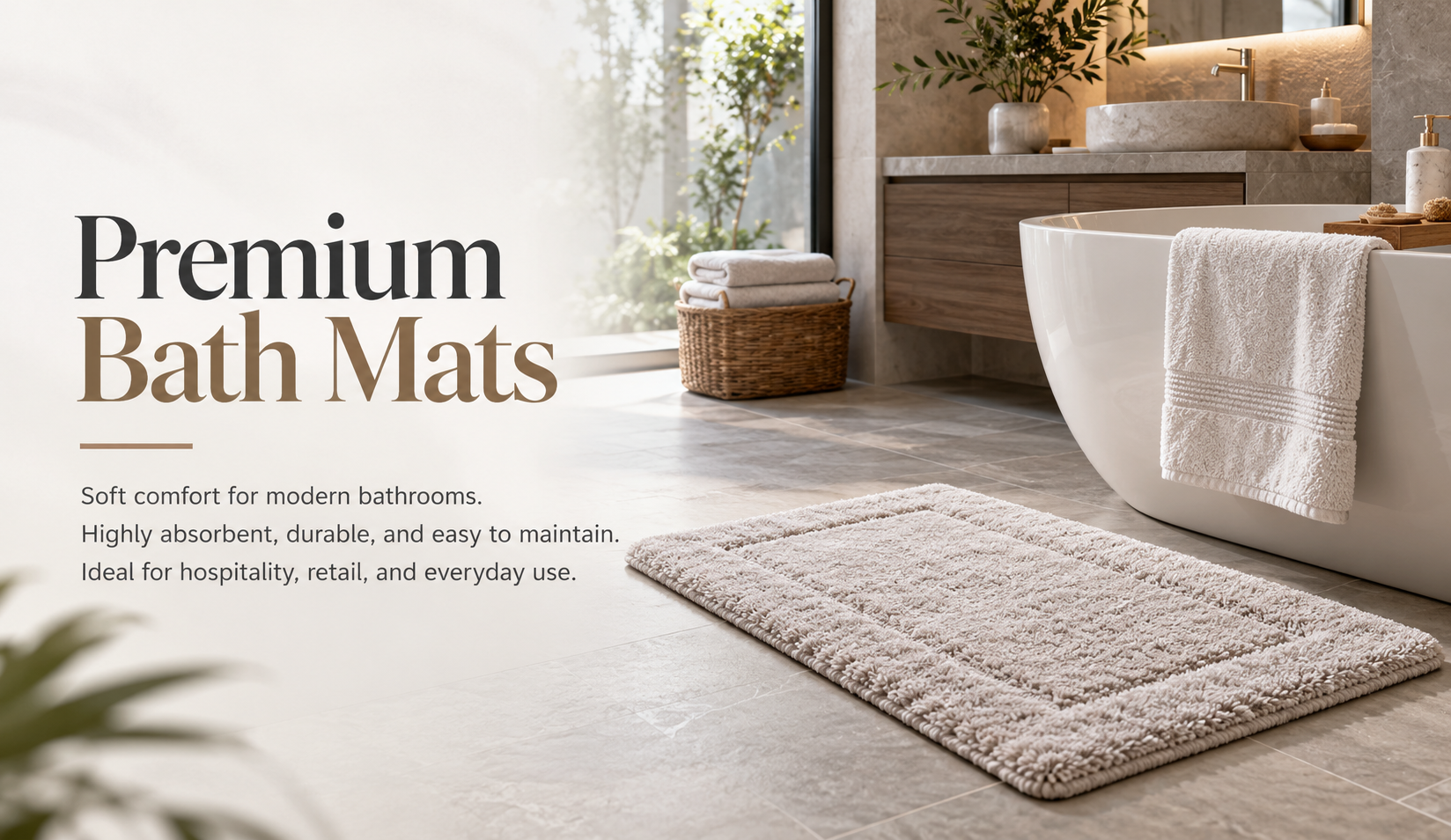
Running a hospitality business means paying attention to expenses that guests rarely notice. From fresh linens to housekeeping supplies, small purchases quickly add up when a hotel, resort, or vacation rental welcomes guests every day. Bath mats may seem like a minor expense, but frequent replacements, inconsistent quality, and unexpected supply shortages can quietly increase operating costs.
We often see how purchasing decisions affect businesses that depend on clean, comfortable guest bathrooms. Choosing reliable Bath Mats in suitable quantities can help hospitality operators maintain consistent quality while avoiding unnecessary spending. Rather than focusing only on the lowest purchase price, we encourage businesses to consider durability, laundering requirements, storage, and long-term replacement costs.
A thoughtful purchasing strategy gives housekeeping teams the supplies they need without creating excess inventory. When businesses understand their actual usage and choose suitable products, they can manage budgets more confidently while maintaining the bathroom standards guests expect.
Why Bulk Bath Mat Purchasing Makes Financial Sense for Hospitality Businesses
Hospitality businesses use bathroom textiles far more frequently than most households. Hotels may replace bath mats after each guest departure or according to their room-cleaning procedures, while spas and wellness facilities often require fresh mats throughout the day. This constant demand makes purchasing efficiency an important part of everyday operations.
Buying small quantities whenever supplies run low can create unnecessary administrative work and unpredictable expenses. Bulk purchasing offers a more structured approach, especially when businesses know their room occupancy, laundry schedules, and replacement patterns.
Lowering the Cost Per Bath Mat
Wholesale suppliers commonly offer quantity-based pricing, which can reduce the purchase price per item. For a property that regularly needs hundreds of bath mats, even a modest difference in unit cost can influence the annual purchasing budget.
Consider a hotel purchasing 300 bath mats at $4.50 each instead of $5.25 through smaller orders. The difference saves $225 on that purchase before accounting for shipping, handling, and other expenses. Although these figures serve as an illustration rather than actual supplier pricing, they show why comparing unit costs matters.
However, we never recommend choosing a product based on price alone. A cheaper bath mat that loses its shape, absorbs poorly, or wears out quickly may cost more over time than a slightly more expensive alternative.
Reducing Frequent Ordering Expenses
Every purchase requires time. Someone must review stock, compare suppliers, approve payments, track deliveries, and coordinate with housekeeping. Repeating these activities several times each month creates administrative costs that businesses sometimes overlook.
Larger, well-planned orders can reduce purchasing frequency and make expense tracking easier. Instead of dealing with repeated emergency orders, managers can establish a predictable procurement schedule that supports both housekeeping operations and cash flow.
Maintaining Consistent Bathroom Quality
Guests expect clean, comfortable bathrooms regardless of room category or occupancy levels. When a property purchases bath mats from different suppliers throughout the year, variations in thickness, color, texture, and dimensions can affect that consistency.
Buying suitable quantities of the same product helps housekeeping maintain a more uniform bathroom presentation. It also makes folding, stocking, and replacement procedures easier for staff members who manage several rooms during each shift.
How Wholesale Bath Mats Help Control Long-Term Operating Costs
The initial purchase price tells only part of the story. Hospitality businesses also spend money washing, drying, storing, transporting, and replacing bathroom textiles. A sensible purchasing strategy considers these expenses before managers commit to a large order.
We encourage buyers to calculate the useful life of bath mats rather than judging value only by the invoice total. Two products with different purchase prices may have very different replacement cycles, especially under commercial laundry conditions.
Choosing Durability Over the Lowest Price
A hotel bath mat experiences frequent washing, repeated guest use, and regular handling by housekeeping employees. Weak stitching, excessive lint, and poor fabric construction can shorten its useful life.
For example, imagine a lower-priced bath mat costs $3 and survives 30 usable laundry cycles, while a $4.50 alternative survives 60 cycles under comparable conditions. The first product costs approximately $0.10 per use, while the second costs about $0.075 per use.
These hypothetical figures demonstrate why cost per use provides a more useful comparison than purchase price alone. Actual performance depends on fabric construction, care practices, laundering conditions, and the property's quality standards.
Reducing Unexpected Replacement Expenses
Poor-quality mats can create inconsistent replacement patterns. Some may develop worn edges, become noticeably thin, or lose their appearance after repeated laundering. Housekeeping staff then need to replace individual mats more frequently.
With more durable products and regular inventory inspections, businesses can identify wear before it becomes a widespread problem. This approach supports planned purchasing rather than sudden replacement orders that place pressure on operating budgets.
Improving Laundry Efficiency
Bath mat construction affects washing and drying requirements. Thick products may offer a plush appearance, but they can also retain more moisture and require longer drying cycles. Lightweight products may dry more quickly, although they still need sufficient absorbency and durability.
We recommend testing samples using the property's normal commercial laundry process. Laundry managers should observe drying time, lint production, shrinkage, texture, and appearance after several wash cycles.
The goal is not simply to choose the thinnest or thickest mat. Businesses need a product that balances guest comfort, practical laundering, and long-term value.
Choosing the Right Bath Mats for Hotels, Resorts, and Spas
Different hospitality environments have different requirements. A luxury resort may prioritize softness and appearance, while a busy roadside hotel may place greater emphasis on quick laundering and reliable availability.
Understanding these differences helps buyers avoid purchasing products that look attractive in a catalog but perform poorly during daily operations.
Cotton Bath Mats for Everyday Hospitality Use
Cotton bath mats remain a practical option for many hotels because cotton offers absorbency, familiar texture, and a comfortable feel. Terry-style constructions can provide a soft surface while supporting regular laundering.
However, cotton products vary considerably in weight, construction, and quality. We recommend comparing fabric specifications and testing samples instead of assuming that every cotton bath mat performs the same way.
For hotels that already use cotton towels, compatible bath mat care requirements may also simplify textile handling. Staff should still follow the manufacturer's washing instructions and evaluate whether the mats suit the property's laundering equipment.
Selecting Appropriate Thickness and Weight
A heavier bath mat may feel more substantial, but additional weight can influence laundry loads, drying requirements, and storage space. A lighter mat may suit high-turnover operations if it still provides suitable comfort and absorbency.
Buyers should consider dimensions, fabric weight, and construction together. A product's overall weight does not automatically prove superior quality, so sample testing remains important.
The right choice depends on room standards, guest expectations, and the practical limitations of the housekeeping operation.
Considering Bathroom Safety and Floor Conditions
Bathroom floors can become slippery when moisture accumulates. Bath mats can help absorb water, but their safety depends on their construction, placement, and compatibility with the flooring.
Traditional hotel-style towel bath mats do not necessarily include slip-resistant backing. Businesses should assess the actual product and bathroom surface rather than assuming that absorbency alone prevents slipping.
We recommend keeping floors clean, placing mats appropriately, and selecting suitable slip-resistant designs where the environment requires them. Property managers should also inspect mats for curling edges, damage, or other conditions that could create hazards.
Planning Bulk Bath Mat Orders Around Actual Demand
One of the most common purchasing mistakes involves ordering without understanding real usage. Some businesses buy too little and encounter shortages, while others purchase more than their storage space or cash flow can comfortably support.
A simple inventory calculation helps managers make more informed decisions. Even a basic spreadsheet can reveal purchasing patterns that become difficult to recognize through occasional stock checks.
Calculating Bath Mat Requirements by Room Count
Consider a hotel with 100 rooms that uses one bath mat per occupied room. The business needs enough mats for guest use, the laundry process, and a practical reserve.
If management establishes a planning stock level of three bath mats per room, the property would require approximately 300 mats. This example assumes the hotel's occupancy and laundry turnaround justify that stock level.
The actual requirement may differ significantly depending on occupancy, housekeeping policies, guest requests, laundry turnaround time, and delivery schedules. Businesses should validate their stock target using actual operating records.
Accounting for Occupancy and Laundry Turnaround
A hotel with consistently high occupancy needs a different inventory strategy from a seasonal resort. During busy periods, housekeeping teams may need fresh mats faster than the laundry department can process them.
Managers should monitor the time between collecting a used mat and returning it to clean inventory. Delays caused by laundry capacity, staffing, or outsourced service schedules can increase the amount of stock a property needs.
Planning around these operational realities helps prevent situations where rooms become ready for guests but housekeeping lacks essential bathroom supplies.
Setting a Practical Reorder Point
A reorder point gives purchasing teams a clear signal to replenish inventory. Instead of waiting until shelves look empty, managers can consider expected usage during supplier lead time and maintain an appropriate safety stock.
For example, if a property expects to consume or permanently replace 40 mats during its supplier's delivery period and wants a 30-mat reserve, it might establish a reorder point of 70 available mats.
This calculation should reflect actual replacement demand, not every temporary movement of reusable mats through the laundry cycle. Regular inventory reviews make the reorder point more accurate over time.
Reducing Waste Through Better Bath Mat Inventory Management
Buying in bulk can lower purchasing costs, but excessive inventory also creates expenses. Unused stock occupies valuable storage space, ties up money, and can become difficult to manage when businesses change bathroom designs or product specifications.
We encourage hospitality operators to treat inventory planning as an ongoing process rather than a one-time purchasing decision. Good records make it easier to identify unnecessary spending and improve future orders.
Preventing Overstocking and Storage Problems
Bath mats require clean, dry storage conditions. Crowded shelves, poor ventilation, and inconsistent stock rotation can create avoidable handling problems.
Before placing a large order, managers should confirm that their storage areas can accommodate the incoming quantity. They should also consider how housekeeping employees will access and rotate supplies during busy shifts.
Bulk purchasing delivers the greatest value when the savings outweigh additional storage and inventory management costs.
Separating Usable, Damaged, and Replacement Stock
Not every bath mat that returns from laundry remains suitable for guest use. Staff may notice damaged stitching, permanent stains, excessive wear, or changes in texture.
Creating a simple inspection process helps housekeeping identify products that require removal from active inventory. Managers can then record actual replacement rates rather than estimating losses.
This information also helps buyers compare suppliers. If one bath mat consistently requires replacement earlier than expected, its lower purchase price may not justify continued purchasing.
Avoiding Unnecessary Product Variety
Hotels sometimes introduce too many variations in bathroom textiles. Different colors, sizes, and constructions may look appealing individually, but they can complicate stock management.
Standardizing bath mats across similar room categories helps purchasing teams maintain predictable inventory. It also reduces the likelihood that housekeeping staff will run out of a particular design while unused alternatives remain in storage.
Businesses can still maintain different textile standards for premium suites, spas, or specialty accommodations where guest experience justifies the distinction.
How Smart Wholesale Purchasing Supports Hospitality Procurement
A strong purchasing strategy involves more than negotiating discounts. Businesses need to understand supplier reliability, product specifications, order quantities, and delivery arrangements.
Hospitality operations depend on consistent supplies, so a slightly lower price provides little value if shipments frequently arrive late or products fail to meet expectations.
Comparing Suppliers Beyond Unit Pricing
When evaluating wholesale bath mat suppliers, we recommend comparing product specifications alongside commercial terms. Buyers should examine fabric content, dimensions, weight, care instructions, minimum order quantities, shipping charges, and replacement policies.
Product samples offer valuable information before a business commits to a larger purchase. Managers can ask housekeeping staff to inspect the mats and review their performance after routine laundering.
The same principle applies across other hospitality textiles. Businesses exploring complementary supplies can use a wholesale towel sourcing guide to understand broader procurement considerations and evaluate purchasing options.
Combining Orders Where Practical
Some hospitality businesses purchase bath mats, bath towels, hand towels, and washcloths from the same supplier. Coordinating these orders may reduce administrative work and, depending on shipping arrangements, improve freight efficiency.
However, combining products into a single shipment does not automatically guarantee savings. Freight charges, order minimums, available inventory, and delivery schedules all influence the final cost.
We recommend comparing the complete delivered cost of combined orders against separate purchases before making a decision.
Building Predictable Supplier Relationships
Reliable suppliers can make inventory planning easier by providing clear product specifications, realistic delivery information, and consistent communication.
Hospitality managers benefit when suppliers understand recurring purchase requirements and seasonal demand. This helps both sides plan inventory and resolve potential shortages before they affect operations.
Maintaining a dependable supplier relationship does not mean ignoring other options. Periodic price comparisons and quality reviews help businesses confirm that their purchasing arrangements continue to provide value.
Balancing Guest Comfort With Hospitality Cost Savings
Cost control should never mean ignoring the guest experience. Visitors expect bathrooms to feel clean, comfortable, and carefully maintained, even when they pay budget-friendly room rates.
A worn or poorly maintained bath mat can undermine an otherwise tidy bathroom. Guests may not know the product's weight or fabric specifications, but they can notice stains, unpleasant textures, and inconsistent cleanliness.
Maintaining Quality Across Every Guest Room
Consistent bathroom textiles help properties create a dependable presentation. Whether guests stay for one night or an extended visit, they expect the same basic level of cleanliness and comfort.
We recommend defining minimum standards for bath mat appearance, absorbency, and condition. Housekeeping supervisors can use these criteria during routine inspections.
This approach allows managers to control spending without relying entirely on personal judgments about when a bath mat needs replacement.
Training Housekeeping Teams to Handle Bath Mats Properly
Even durable bath mats can deteriorate quickly when staff use unsuitable washing methods or excessive drying temperatures. Care procedures should match the manufacturer's recommendations and the property's hygiene requirements.
Laundry and housekeeping teams should understand sorting, washing, drying, inspection, and storage expectations. Consistent practices help reduce unnecessary wear and support predictable inventory turnover.
Managers can also encourage staff to report recurring problems. When employees notice excessive lint, shrinkage, or unusual wear, their observations can help purchasing teams make better decisions.
Measuring the Real Return on Bulk Bath Mat Purchasing
Businesses can only evaluate purchasing improvements when they measure actual results. A lower invoice total may look encouraging, but the full financial picture includes usage, replacement frequency, freight, and operational expenses.
We recommend monitoring a small group of practical indicators rather than creating complicated reports that staff rarely use.
Tracking Cost Per Use
Cost per use compares the purchase cost of a bath mat with the number of acceptable uses it provides. For example, a $4 bath mat that delivers 50 acceptable uses has a purchase cost of $0.08 per use.
This calculation excludes laundering and handling expenses, but it provides a useful starting point for comparing product durability.
Hotels with detailed laundry records can expand the calculation to include processing costs and obtain a more complete estimate of textile ownership expenses.
Reviewing Replacement Frequency
A rising replacement rate may indicate problems with product quality, laundry practices, or daily handling. Tracking how many mats leave active inventory each month helps managers identify unusual changes.
Businesses should compare replacement patterns with occupancy levels and laundry volume. Otherwise, a busy season might appear to indicate declining product quality simply because the property processed more guest stays.
Accurate records give purchasing teams stronger evidence when reviewing suppliers or adjusting product specifications.
Evaluating Total Procurement Savings
An effective procurement review should consider discounts, freight, staff ordering time, storage costs, and product losses. Looking at these expenses together helps managers determine whether larger orders genuinely improve efficiency.
For some properties, quarterly purchasing may work better than annual stockpiling. Others may benefit from more frequent deliveries under a negotiated pricing arrangement.
The most economical strategy depends on the property's available cash, storage capacity, supplier terms, and expected demand.
Common Mistakes Hospitality Businesses Should Avoid When Buying Bath Mats in Bulk
Bulk purchasing can support cost control, but several mistakes can cancel out the expected benefits. A careful review before ordering helps businesses avoid unnecessary expenses and operational difficulties.
Purchasing Without Testing Samples
Product photographs rarely show how a bath mat performs after repeated laundering. Buyers who skip sample testing may discover problems only after receiving a large shipment.
We recommend reviewing absorbency, shrinkage, lint, stitching, drying behavior, and appearance before finalizing an order. A small initial test can prevent a much larger purchasing mistake.
Choosing Quantity Discounts Over Actual Needs
A larger discount may encourage buyers to purchase far more inventory than their property requires. However, extra stock ties up capital that the business could use for maintenance, staffing, or other operating expenses.
Managers should calculate realistic demand before comparing wholesale price tiers. The lowest unit price does not always create the lowest overall cost.
Ignoring Shipping and Handling Costs
A supplier may offer attractive product pricing while charging substantial freight fees. These additional expenses can change the financial comparison between vendors.
We recommend calculating the total delivered price per mat and reviewing delivery schedules before making purchasing decisions. Businesses should also clarify responsibility for shortages, damaged goods, and incorrect shipments.
Failing to Review Inventory Regularly
Even a well-planned purchase can become inefficient when management stops monitoring inventory. Changes in occupancy, laundry practices, or room requirements can affect future purchasing needs.
Regular stock reviews help managers identify slow-moving inventory, unexpected losses, and opportunities to improve order quantities.
Frequently Asked Questions About Bulk Bath Mat Purchasing
1. How does buying bath mats in bulk help hotels save money?
Bulk purchasing may lower unit prices, reduce ordering frequency, and improve inventory planning. Hotels can also benefit from consistent product specifications and fewer emergency purchases. However, businesses should compare freight, storage, and replacement expenses to determine the actual savings.
2. How many bath mats should a hotel purchase?
The ideal quantity depends on room count, occupancy, laundry turnaround, replacement rates, and reserve requirements. Some properties may use three mats per room as an initial planning assumption, but this is not a universal standard. We recommend calculating demand from actual housekeeping and laundry records before placing a large order.
3. Are cotton bath mats suitable for commercial hospitality use?
Cotton bath mats can work well in hotels and hospitality environments because they offer absorbency and familiar comfort. Their performance depends on construction, fabric quality, and laundering practices. Buyers should test commercial-use samples and verify care requirements before committing to wholesale quantities.
4. What should hospitality businesses check before choosing a wholesale bath mat supplier?
Businesses should review fabric specifications, dimensions, unit pricing, order minimums, delivery arrangements, shipping charges, and supplier communication. We also recommend requesting samples and testing durability under normal laundry conditions. These steps help buyers evaluate long-term value instead of relying only on the advertised price.
Conclusion: Smarter Bath Mat Purchasing Creates Better Cost Control
Managing hospitality expenses requires attention to both major investments and everyday operating supplies. Bath mats may represent a relatively small portion of a property's budget, but poor purchasing decisions can lead to repeated replacements, unnecessary ordering expenses, and avoidable inventory problems.
Bulk bath mat purchasing offers a practical opportunity to improve cost control when businesses select appropriate products, calculate realistic quantities, and monitor long-term performance. The strongest purchasing decisions balance unit pricing with durability, laundry efficiency, storage capacity, and guest comfort.
We believe that informed sourcing and consistent inventory practices create more reliable results than simply choosing the cheapest available products. Hospitality teams that understand their actual needs can make purchasing decisions with greater confidence and maintain the bathroom standards their guests expect.
For businesses reviewing their bathroom textile requirements, Towel Hub provides a starting point for exploring wholesale textile options and comparing products. Taking time to evaluate quality, quantity, and total ownership costs can help hospitality operators establish a purchasing strategy that supports both financial efficiency and a comfortable guest experience.

 Arabic
 French
 Spanish
 Portuguese
 Deutsch
 Turkish
 Dutch
 Italiano
 Russian
 Romaian
 Portuguese (Brazil)
 Greek