


Why Use a Sonitron Warbler Internal Buzzer?
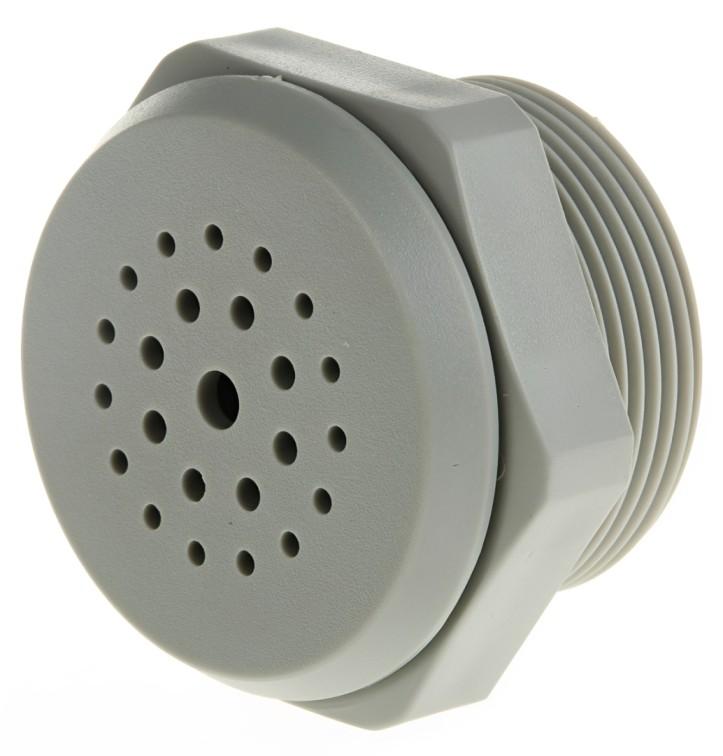
A Sonitron Warbler Internal Buzzer provides a distinctive audible signal for electronic equipment, industrial controls, machinery, and warning systems. Its changing tone can draw attention more effectively than a simple continuous sound, which makes it useful when operators need to recognise an important event quickly.
Audible signalling plays an important role in equipment design because users cannot always watch displays or indicator lamps. By adding a recognisable sound pattern, designers can improve communication between a machine and the person operating or maintaining it.
What Makes a Sonitron Warbler Internal Buzzer Different?
A warbler buzzer produces a varying tone instead of one constant acoustic frequency. This changing sound pattern makes the signal easier to distinguish from normal background noise in many working environments.
The distinctive output can represent a warning, completed cycle, system change, maintenance request, or another predefined condition.
Because the buzzer contains internal drive circuitry, designers can often integrate it more easily into suitable electronic systems without creating a separate sound-generation circuit.
How Does Piezoelectric Buzzer Technology Work?
Many compact audible devices use piezoelectric technology. When electrical energy reaches the piezo element, it changes shape rapidly and creates vibration.
These vibrations generate the acoustic output heard by the user. The internal electronics control the pattern so the buzzer produces its characteristic warbling effect.
Semiconductors may form part of the surrounding control electronics that determine when the buzzer activates. These components help process signals and switch electronic functions quickly.
Why Internal Drive Matters
An internally driven buzzer simplifies the control arrangement because the sound-generation function is already built into the device.
Instead of generating the frequency externally, the system mainly needs to provide the correct electrical supply and switching method. This can make integration more straightforward in compact equipment.
Where Can a Warbler Internal Buzzer Be Used?
A Sonitron Warbler Internal Buzzer can support many applications where audible feedback improves operator awareness.
Typical examples include:
-
Industrial control panels
-
Monitoring equipment
-
Access systems
-
Alarm circuits
-
Laboratory instruments
-
Production machinery
-
Test equipment
-
Electronic control units
-
Automated systems
The best application depends on the required sound level, mounting arrangement, electrical specifications, and working environment.
How Can Control Relays Activate Audible Signals?
Control Relays can help connect machine logic with signalling devices. When a specific condition occurs, the relay can switch the buzzer on or off according to the control sequence.
For example, a relay may activate the buzzer when a process finishes, a fault occurs, or an operator action is required.
This allows the audible signal to become part of a broader control strategy rather than operating independently.
Why Are Power Supplies Important for Buzzer Performance?
Power Supplies provide the electrical energy required by control devices, alarms, indicators, and electronic modules.
The selected supply must match the voltage and current requirements of the exact buzzer model. Incorrect voltage can lead to unreliable operation or damage.
Designers should also consider the quality and stability of the supply. A consistent electrical source helps the buzzer produce predictable audible performance whenever it is activated.
Managing Electrical Connections
Reliable connections are equally important. Loose terminals, damaged conductors, or poor installation can interrupt the supply and cause inconsistent signalling.
Electrical designers should therefore plan the connection method as carefully as the buzzer selection itself.
Can Circular Connectors Be Used in Buzzer Systems?
Circular Connectors are commonly used in industrial equipment where secure and removable electrical connections are needed.
If the buzzer forms part of a modular machine section, detachable control panel, or distributed warning system, suitable connectors can make installation and maintenance easier.
The connector should be selected according to current, voltage, environment, and mechanical requirements.
How Do Batteries Support Portable Audible Equipment?
Batteries can power portable warning devices, handheld electronics, test instruments, and standalone monitoring systems.
In these applications, audible indicators can communicate low-power warnings, user inputs, faults, or completed operations.
However, designers should consider power consumption carefully. Frequent or continuous buzzer operation can shorten battery life, so the control logic may limit the duration of each audible signal.
How Can Lighting and Audible Alerts Work Together?
Lighting and audible signalling often complement each other in machine interfaces.
A visual indicator can show equipment status continuously, while the buzzer attracts immediate attention when a condition changes. Using both methods can make alerts easier to recognise in environments where either sound or visibility may be limited.
For example, a warning lamp can remain illuminated after the buzzer stops, allowing technicians to identify the affected system during inspection.
Why Is Site Safety Relevant to Audible Signalling?
Site Safety depends on many different measures, including safe machinery, correct procedures, guarding, protective devices, and effective communication.
Audible signals can support that communication by drawing attention to specific machine conditions. However, a buzzer should not replace dedicated safety systems or required protective equipment.
Instead, it should function as one part of the broader signalling and control arrangement.
What Should Engineers Consider Before Choosing a Buzzer?
Selecting an audible device requires consideration of the complete operating environment.
Important factors include:
-
Operating voltage
-
Sound output
-
Tone pattern
-
Current requirement
-
Installation space
-
Mounting method
-
Connection type
-
Operating temperature
-
Expected duty cycle
-
Background noise level
Engineers should also consider where operators will stand and whether the sound needs to travel through an enclosure or machine housing.
How Can Installation Improve Audible Performance?
Physical placement can strongly affect how well a buzzer performs.
If the sound outlet is obstructed or positioned deep inside closed equipment, the audible level reaching the operator may be reduced. Therefore, the buzzer should have a suitable acoustic path.
Mounting should also protect the device from excessive vibration or mechanical stress while maintaining secure electrical connections.
Why Choose a Sonitron Warbler Internal Buzzer?
A Sonitron Warbler Internal Buzzer offers a practical solution for equipment that requires noticeable and distinctive audible feedback. Its changing tone can help operators differentiate important alerts from ordinary machine sounds.
When combined with suitable control electronics, power sources, connectors, and visual indicators, the buzzer can form part of a clear communication system between equipment and users.
Careful attention to electrical compatibility, acoustic conditions, mounting, and control logic helps achieve reliable performance. For industrial machinery, monitoring devices, control panels, and electronic systems, a properly selected warbler buzzer can provide clear and effective audible indication.

 English
 Arabic
 French
 Spanish
 Portuguese
 Deutsch
 Turkish
 Italiano
 Russian
 Romaian
 Portuguese (Brazil)
 Greek
Greek