


Understanding the Importance of Water-Cement Ratio in Concrete
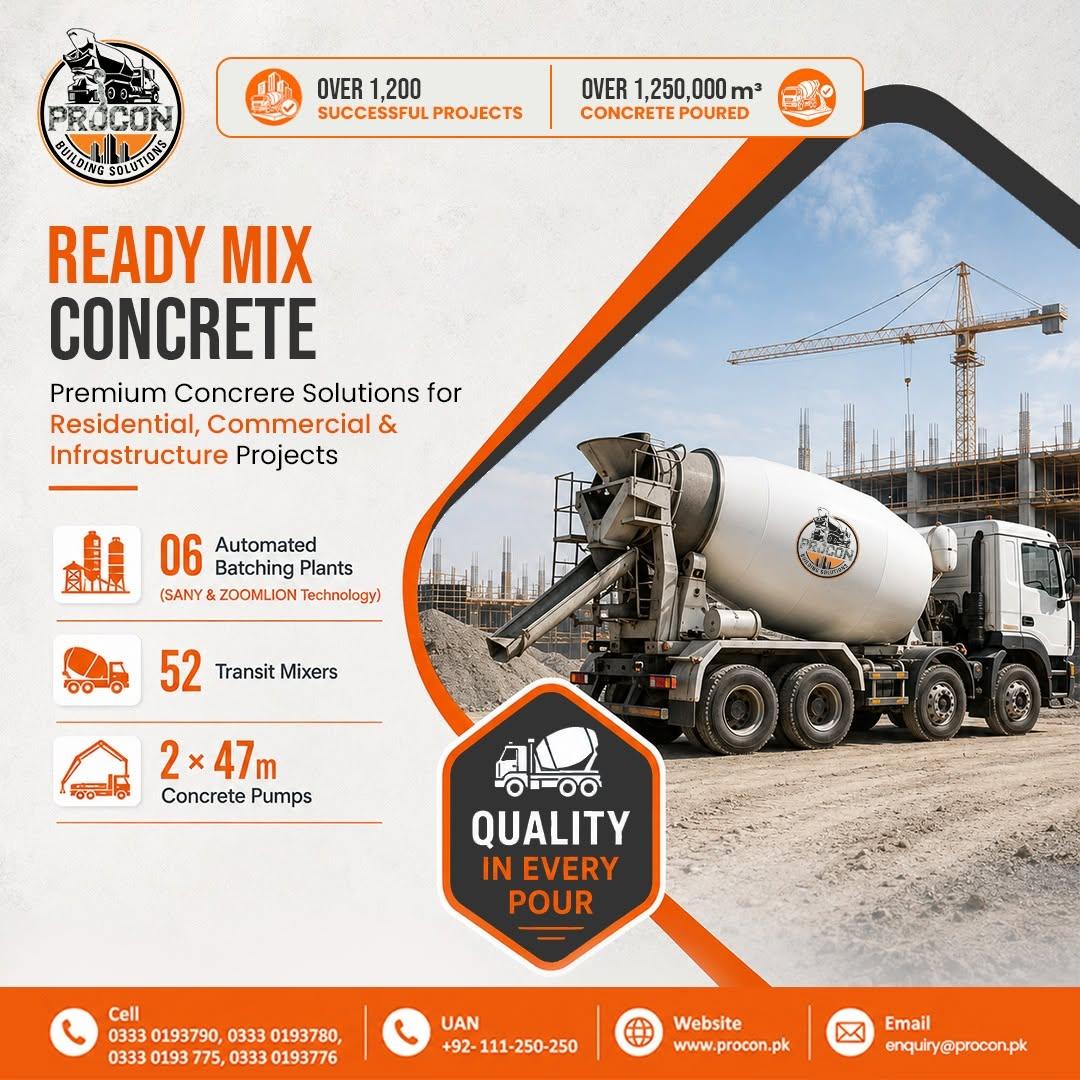
In structural engineering and modern construction, concrete quality depends on the precise balance of its constituent materials. Among these variables, the water-cement (w/c) ratio is the single most critical factor determining compressive strength, durability, and overall workability. The ratio—calculated by dividing the weight of water by the weight of cement in a batch—dictates the chemical hydration process that binds aggregates into a solid matrix. Deviating from the optimal ratio can compromise structural integrity or make the mixture unworkable on the job site. For large-scale developments across rapidly growing urban centers, sourcing precisely proportioned mix formulations alongside professional equipment like a concrete pump Karachi ensures seamless placement without altering the designed water content.
1. The Direct Impact on Compressive Strength
Abram’s Law establishes that the strength of fully compacted concrete is inversely proportional to its water-cement ratio. Maintaining proper water proportioning directly governs the structural load capacity of the hardened concrete:
-
Optimal Hydration Requirements: Cement requires a theoretical minimum water-cement ratio of approximately 0.22 to 0.25 for complete chemical hydration, plus an additional 0.15 to fill gel pores.
-
Porosity and Voids: Excess water not consumed during hydration eventually evaporates, leaving microscopic capillary voids that significantly reduce compressive and flexural strength.
-
Target Strength Standards: Lowering the w/c ratio from 0.60 to 0.40 can effectively double the ultimate 28-day compressive strength of a concrete mix.
2. Workability vs. Structural Durability
Achieving the right balance between fluid workability during pouring and final hardened density presents a core engineering challenge:
-
High Water Ratios: Adding extra water increases fluid slump, making the mix easier to pour, but leads to aggregate segregation, excessive surface bleeding, and severe drying shrinkage.
-
Low Water Ratios: Overly dry mixtures prevent proper compaction, creating internal honeycombing and large air pockets that weaken the structure.
-
Chemical Admixtures: Superplasticizers and water-reducing agents allow engineers to achieve high slump and fluid flow without increasing the actual water content.
3. Durability, Permeability, and Environmental Protection
A lower water-cement ratio produces a denser internal micro-structure, which protects concrete against severe environmental degradation over time:
-
Corrosion Prevention: Reduced permeability prevents water, oxygen, and airborne chlorides from penetrating to embedded steel reinforcement, stopping internal rust and concrete spalling.
-
Chemical Resistance: Dense concrete resists chemical attacks from soil sulfates, acidic groundwater, and industrial pollution.
-
Resistance to Wear: Lower porosity creates a hard, highly abrasion-resistant surface layer ideal for heavy-duty industrial floors and traffic pavements.
4. Quality Control Through Automated Batching
Achieving exact water-cement ratios consistently across multi-truck orders requires computerized batching controls rather than manual site mixing:
-
Moisture Compensation: Advanced ready-mix batching plants automatically measure aggregate moisture levels and adjust added water volumes in real time.
-
Uniform Mixing: Transit mixers keep water, cement, and admixtures homogenously blended throughout transport.
-
Strict Code Compliance: Computer-controlled batching guarantees compliance with international building standards and structural engineering specifications.
Conclusion
Understanding and controlling the water-cement ratio is essential for constructing safe, durable, and long-lasting concrete structures. By utilizing chemical water reducers and precise automated batching, engineers achieve high-flow workability without compromising ultimate compressive strength or permeability. Partnering with professional suppliers ensures every batch meets strict mix design specifications from the plant to the job site formwork. To explore technical mix formulations, high-performance concrete solutions, and advanced delivery equipment for major structural projects, learn more about concrete pump Karachi today.
Survey No. 423, Ibrahim Hydri, behind Bol head quarter, Korangi creek road, Karachi-74900
+92 21 111 250 250

 English
 French
 Spanish
 Portuguese
 Deutsch
 Turkish
 Dutch
Dutch
 Italiano
 Russian
 Romaian
 Portuguese (Brazil)
 Greek
Greek