


How to Style Curtain Bangs | Easy and Chic Hairstyle Ideas
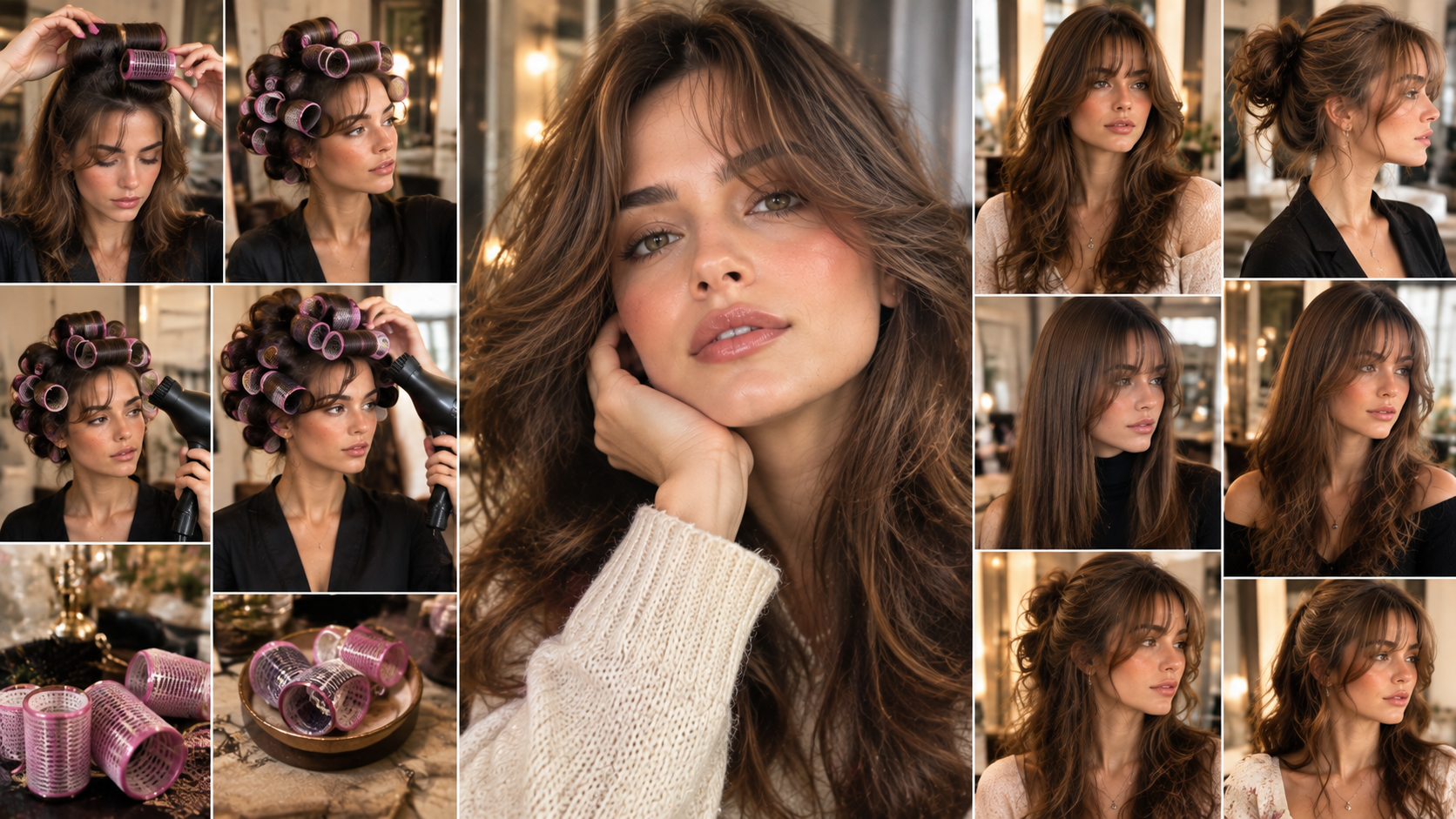
Curtain bangs have one job: frame the face by sweeping away from the center rather than hanging straight down like a classic fringe. Learning how to style curtain bangs comes down to mastering that outward, backward direction, whether you reach for a round brush, a straightener, a curling iron, rollers or skip heat altogether. Because the cut itself is angled, longer at the outer corners and shorter toward the middle part, the styling technique you choose has a much bigger effect on the final look than it does with a blunt, straight-across fringe.
This guide walks through every realistic way to style curtain bangs at home, broken down by tool and by hair length, so you can pick the method that matches what you already own and how much time you have in the morning. Whether you're working with a flat iron you already use daily, a curling iron, a set of rollers or no heat tools at all, you'll find a clear, repeatable routine here.
Quick Overview
How to style curtain bangs in short part them down the center, then direct each section outward and back using a round brush and blow dryer, a straightener, a curling iron or rollers, finishing with a light hold product to help the curve last through the day. A straightener gives the sleekest, most controlled shape. A curling iron produces a softer, more voluminous curve. Rollers create the longest lasting set. No heat methods, overnight sets or air drying with product, protect hair from daily heat exposure while still achieving the same swept back shape.
What Makes Curtain Bangs Different to Style
Curtain bangs are cut at an angle rather than straight across, which means the hair is designed to curve outward once it is dried or set in that direction. Styling them is less about drying the hair flat and more about actively training it to move away from the face on both sides of a center part.
This is the main reason curtain bangs can look completely different depending on how they're styled, even on the exact same haircut. Left to air dry without any direction, curtain bangs often fall forward and partially cover the eyes. Styled with intention, using a brush, a heat tool or an overnight set, the same bangs curve back and frame the face the way they were originally cut to do.
The Basic Routine Before Choosing a Tool
Every method for styling curtain bangs starts from the same foundation a clean center part and hair that is been prepped, either damp from the shower or lightly dampened with a spray bottle if you are restyling day old bangs.
Finding your natural part matters more than forcing a perfectly straight line. Push your bangs straight back with your fingers and notice where they naturally split. That is usually the most flattering part location for your particular head shape and hairline. From there, each section gets pulled slightly forward, then redirected outward and back using whichever tool you have chosen.
A lightweight heat protectant is worth applying before any hot tool touches your bangs, even on a quick five minute styling session, since the fine, face framing hair of curtain bangs tends to show heat damage, dryness, split ends, breakage, faster than the rest of your hair. This single habit, spraying protectant before reaching for any hot tool, is one of the easiest ways to keep bangs looking healthy over months of repeated daily styling.
How to Style Curtain Bangs With a Straightener
Using a flat iron is one of the most common ways to style curtain bangs with a straightener, largely because it is a tool most people already own and use daily on the rest of their hair.
The technique that actually curves the hair, rather than just flattening it, is a rotating motion clamp a one to two inch section near the root, then turn your wrist in a half circle as you glide the iron down toward the ends. You are essentially wrapping the hair around the plates rather than pulling it through straight. Do this on both sides, always rotating outward and away from your face and repeat with slightly smaller sections if your first pass does not create enough curve.
A moderate heat setting works better here than the highest setting on your iron. Too much heat can make fine bang hair go limp rather than hold a curve, which defeats the purpose of styling curtain bangs with a straightener in the first place. Finish with a light hold spray once the bangs have cooled completely, not while they are still warm, so the shape sets before you add product.
How to Style Curtain Bangs With a Flat Iron for an Even Softer Finish
If you want the control of a flat iron but a slightly less structured result than the classic half moon technique, try a looser version rotate your wrist only a quarter turn instead of a full half circle, and move the iron through the hair more quickly. This produces a gentler bend rather than a defined curl, which some people prefer for a more lived in, natural looking curtain bang.
The same rules about heat and cooling apply here. Since you are using a flat iron either way, the only real difference between straightener and flat iron styling for curtain bangs comes down to how tightly you rotate your wrist and how slowly you move the tool through each section. If your first attempt looks too stiff or too curled, adjusting that rotation angle is usually all it takes to dial the result in, rather than switching tools entirely.
How to Style Curtain Bangs With a Curling Iron
A curling iron produces a noticeably softer, bouncier result than a flat iron, which is why it tends to be the better choice for longer curtain bangs that have enough length to form a full, rounded wave.Wrap only the bottom two thirds of each section around the barrel, leaving the roots untouched. This keeps the curl from starting too high and looking overly done, instead letting it begin lower on the hair and blend more naturally into the rest of your style. Hold for three to five seconds on finer hair, closer to eight to ten seconds if your bangs are thicker or more resistant to holding curl.
Barrel size changes the final shape considerably. A one inch barrel is the most versatile choice for curtain bangs, wide enough to avoid a tight ringlet, narrow enough to still create visible, defined movement. If your bangs are on the shorter side, drop down to a three quarter inch barrel so the curve is proportionate to the shorter length. Anything larger than one and a quarter inches tends to produce such a loose wave that it starts to look more like a flat iron result than an actual curl.Let every section cool before you touch it. Running your fingers through warm, just curled hair collapses the shape almost immediately, undoing the work the curling iron just did.
How to Style Curtain Bangs With Rollers
Rollers take longer than a straightener or curling iron, but they tend to produce the longest lasting curve of any method, since the hair sets into shape gradually instead of being reshaped in one quick pass of direct heat.
Section your bangs and roll each piece away from your face, toward the outer edge of your forehead, the same outward direction every other method aims for. Velcro rollers work on damp, product prepped hair and typically stay in while you either air dry or sit under a blow dryer, making them the gentler of the two roller options. Hot rollers, pre heated before use, work on already dry hair and cut the set time down significantly, though they involve more direct heat than the velcro method.
Give velcro rollers fifteen to twenty minutes to properly set. Hot rollers can usually come out in five to ten minutes once they have cooled slightly while still in your hair. Either way, resist the urge to unroll early. Pulling a roller out before the hair has cooled and set almost always results in a curl that drops out within minutes, which means you have spent the time without getting the payoff. Once you do unroll, finger comb rather than brush through the set, since a brush at this stage can pull the curl straight before it had a chance to settle into place.
How to Style Curtain Bangs Without Heat
Styling curtain bangs without heat is entirely possible, and for anyone trying to cut down on daily heat exposure, it is often the better long term choice for hair health. The two most reliable no heat approaches are an overnight set and an air dry with product method.
For the overnight method, dampen your bangs slightly, then wrap small sections around a soft rod, a silk scrunchie or even a strip of fabric, rolling toward your face so the resulting wave curves the way curtain bangs are meant to sit. Secure loosely and sleep on a silk or satin pillowcase, which helps the set hold evenly instead of flattening on whichever side you sleep on. In the morning, unwind everything and use your fingers, not a brush, to shape the bangs into place.
For a faster, lower commitment option, apply a lightweight mousse or curl cream to damp bangs, then finger dry them outward and back while they air dry naturally. Check back every fifteen to twenty minutes to redirect the shape if it starts drifting, since damp hair can shift position as it dries if left completely alone. This method tends to work especially well if your hair already has some natural wave or texture, since the air-drying process enhances that texture rather than fighting against it.
How to Style Short Curtain Bangs
Short curtain bangs sit higher on the forehead with noticeably less length to work with, which means small mistakes, an uneven part, a section that falls the wrong direction, are much more visible than they would be on a longer bang.
Stick to smaller tools across the board a smaller round brush, a narrower curling iron barrel, more precise sectioning with a straightener. The shorter the hair, the faster it dries and the less weight it holds, so a light hold mousse applied before styling gives enough grip without stiffening the shape. Finish by curving the very ends under and away from the face rather than leaving them straight, which keeps short curtain bangs looking soft and intentional instead of choppy or disconnected from the rest of the cut.
Trims matter more here too. Because there is so little length to begin with, even a small amount of growth can shift short curtain bangs from face framing to simply in the way within a few weeks. Booking a trim every four weeks rather than waiting for a full haircut appointment is usually the easiest way to keep short curtain bangs looking consistently sharp.
How to Style Long Curtain Bangs
Long curtain bangs reach past the cheekbones, which puts them in a different category entirely. At that length, they behave more like face framing layers than a traditional fringe and the main styling challenge shifts from creating curve to blending the bangs seamlessly into the rest of your hair.
Use a larger round brush or curling iron barrel than you would for shorter bangs, since the extra length needs more room to form a full, graceful wave rather than a tight curl. The connection point where your bangs meet the rest of your hair should have no visible line if there is an obvious spot where bangs stop and hair starts, the length gradation needs adjusting, either through a fresh cut or a different blow-dry technique.
Long curtain bangs are also more prone to falling flat by afternoon, simply because their extra length and weight work against the lift you styled in that morning. A root focused volumizing mousse, applied before blow drying, plus a cool air finish to lock the shape, helps the curve hold longer. A light touch of dry shampoo or texture powder at the roots on day two can revive some of that lost lift without needing to fully restyle.
Choosing the Right Method for Your Curtain Bangs
|
Method |
Finish |
Typical Set Time |
Heat Exposure |
Best Suited For |
|
Straightener Flat Iron |
Sleek, controlled curve |
Under a minute per section |
Moderate daily use adds up over time |
Fine to medium hair, quick daily styling |
|
Curling Iron |
Soft, voluminous curve |
A few seconds per section |
Moderate, concentrated heat |
Longer curtain bangs needing more wave |
|
Rollers Velcro or Hot |
Soft, longest lasting curve |
5 to 20 minutes |
Low velcro to moderate hot |
Those wanting the set to last all day |
|
No-Heat Overnight or Air Dry |
Natural, relaxed wave |
Overnight or 20 to 30 minutes air drying |
None |
Protecting hair health slower mornings |
Products Worth Having on Hand
A handful of products cover nearly every method above. A lightweight heat protectant is non negotiable anytime a hot tool touches your bangs. A root-lifting mousse or light volumizing foam, applied to damp hair, gives enough grip for a round brush or curling iron without weighing the bangs down. A flexible hold hairspray, rather than a stiff, high hold formula, keeps the finished shape in place while still letting it move naturally.
Between full washes, a dry shampoo or texturizing spray applied specifically at the roots of your bangs can revive lift on day two or three, since that section of hair tends to pick up oil faster than the rest of your head simply from being close to your forehead.
Common Mistakes When Styling Curtain Bangs
Skipping the center part is the single most common mistake, and it undercuts everything else. Without that clear part, curtain bangs end up looking like a slightly shaped fringe rather than the open, face framing style they are meant to be.
Overloading bangs with heavy products is another frequent issue. Wax or stiff hold spray weighs fine bang hair down and can make it look greasy or clumped together well before the end of the day. On the heat side, using a hot tool on curtain bangs every single day, especially without a heat protectant, speeds up visible damage, dryness, frizz and breakage, faster than it would on thicker sections of hair.
Brushing the curtain bangs the same way you had brushed the rest of your hair, straight through from root to tip, flattens whatever curve you just styled in. Reshaping with your fingers throughout the day, rather than reaching for a brush, preserves both the direction and the volume far better.
Interesting Facts About Styling Curtain Bangs
-
Curtain bangs get their shape from an angled cut, longer at the outer edges and shorter near the center part, which is why they naturally curve outward once dried or styled in that direction.
-
How to style curtain bangs consistently ranks as one of the most searched hair styling questions within the broader bangs category, reflecting how much the finished look depends on technique rather than the cut alone.
-
Tool specific searches straightener, curling iron, rollers each show meaningful individual search volume, suggesting people look for guidance tailored to the tool they already own rather than one generic tutorial.
-
Velcro rollers are generally gentler on hair than hot rollers, since they rely on time and air drying rather than direct heat to set the curve.
-
Interest in no heat styling methods has grown noticeably in recent trend reporting, with some platforms noting search increases well over 100% year over year for heatless curling techniques.
-
Curtain bangs typically need a trim every four to six weeks to maintain the length gradation that keeps the face framing shape intact as hair grows.
Conclusion
Learning how to style curtain bangs really comes down to picking a tool that matches your hair length and the amount of time you have, then consistently directing the bangs outward and back from a clean center part. A straightener gives you speed and control, a curling iron adds softness and volume, rollers deliver the longest lasting hold and no heat methods protect your hair while still achieving the same swept-back shape.
Short and long curtain bangs each come with their own small adjustments, smaller tools and tighter precision for short bangs, more blending and extra lift for long ones but the core technique stays the same across every version. Once you've found the method that fits your routine, styling curtain bangs becomes a quick, repeatable part of getting ready rather than a daily guessing game and a little trial and error early on is normal before the whole routine starts to feel automatic.
Frequently Asked Questions (FAQs)
How do you style curtain bangs at home?
Part the bangs down the center, then direct each section outward and back using a round brush and blow dryer, a straightener or a curling iron, finishing with a light-hold product to help the curve last.
What is the easiest way to style curtain bangs without heat?
Apply a lightweight mousse or curl cream to damp bangs, then finger dry them outward and back or set them in small foam rollers overnight for a soft curve by morning.
Should I use a straightener or curling iron for curtain bangs?
A straightener creates a sleeker, more defined curve using a half moon rotating motion, while a curling iron produces a softer, bouncier finish, especially on longer curtain bangs.
How do I style short curtain bangs differently from long ones?
Short curtain bangs need smaller tools and more precise, smaller sections, while long curtain bangs benefit from larger barrels and extra attention to blending them into the surrounding layers.
Why do my curtain bangs fall flat by the end of the day?
This is usually caused by heavy products weighing the hair down, insufficient cooling time after heat styling or long bangs losing lift under their own weight, which can be improved with a lighter, root focused product.

 English
 Arabic
 French
 Spanish
 Portuguese
 Deutsch
 Dutch
Dutch
 Italiano
 Russian
 Romaian
 Portuguese (Brazil)
 Greek
Greek