


Custom Advent Calendars: A Brand Sourcing Guide
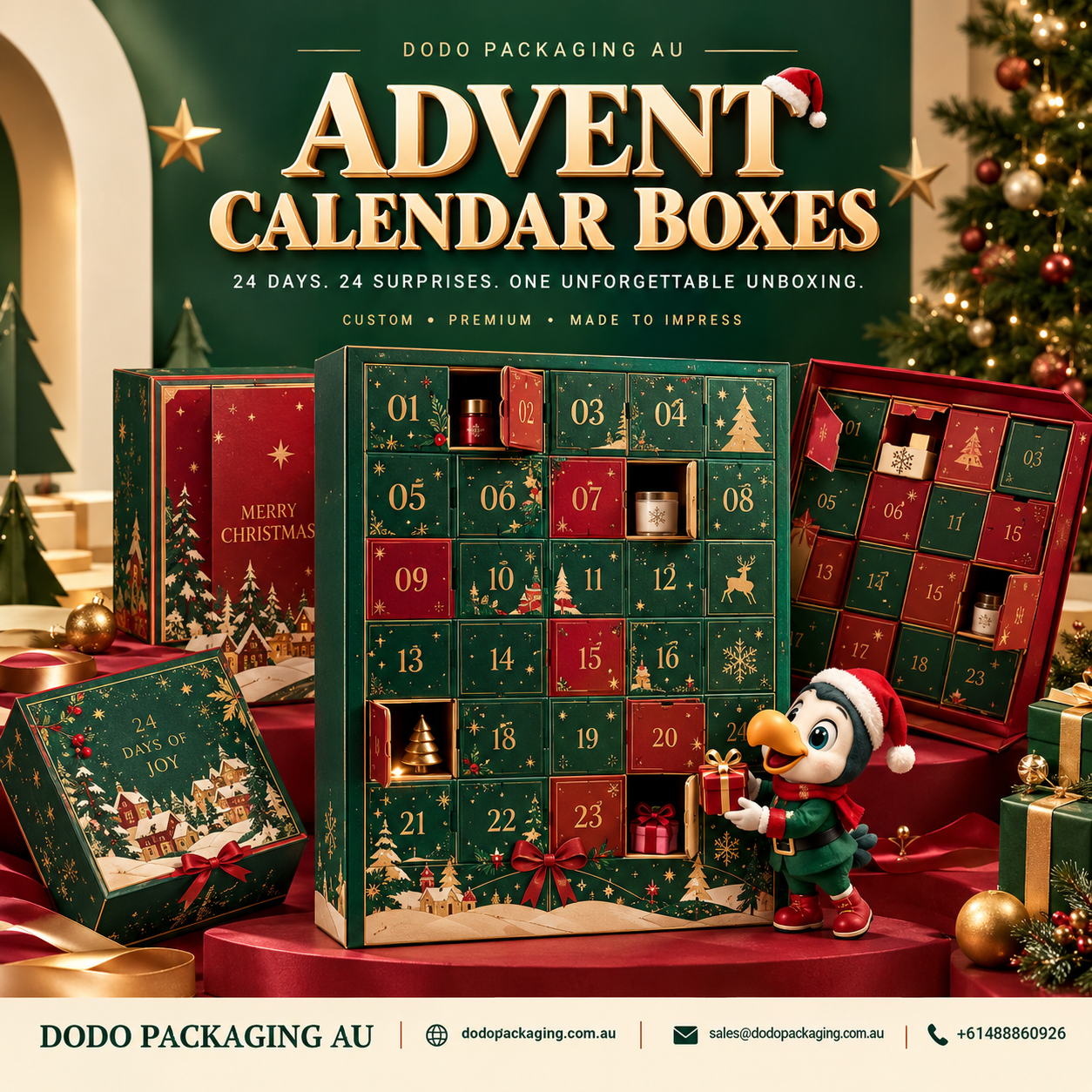
Launching a custom advent calendar isn't just a design decision — it's a sourcing and timeline challenge. Between compartment engineering, print lead times, and holiday shipping windows, brands that start planning late often end up scrambling or settling for off-the-shelf structures. This guide walks through what to sort out before you brief a supplier, so your holiday launch goes smoothly from quote to shelf.
Why Sourcing Timeline Matters More Than Design
Unlike a standard retail box, an advent calendar involves structural engineering — compartment tolerances, door or drawer mechanisms, and sometimes custom inserts. That complexity means production timelines run longer than most seasonal packaging, and suppliers' holiday calendars fill up fast.
A rough planning window to work backward from:
- 6+ months out — finalize product list, compartment count, and structure type
- 4-5 months out — lock in print design and get production quotes
- 3 months out — place the order to allow for production and freight
- 6-8 weeks out — stock should be landing at your warehouse or fulfillment center
Brands that start this process in October for a December launch are almost always too late for custom structural work.
Questions to Answer Before You Brief a Supplier
How many compartments do you actually need?
24 or 25 is standard, but mixed-format calendars (fewer, larger compartments) are increasingly common for higher-value items. Decide this before requesting quotes, since compartment count drives both structure and cost.
What's the size range of your products?
If every item is roughly the same size, a uniform grid works fine. If you're mixing small and large items, you'll need variable compartment sizing or a drawer-style structure, which adds engineering time.
Door, drawer, or modular?
This decision affects both cost and unboxing experience. Door-style is the most budget-friendly for flat items; drawer-style suits bulkier beauty or lifestyle products; modular designs offer the most flexibility but typically cost more per unit.
Does the structure need to double as a gift box?
If customers will display or gift the calendar itself — not just unwrap it and discard it — a rigid gift-box-style structure is worth the extra spend over a flat door-panel design.
Ready-Built vs. Fully Custom Structures
Not every brand needs to engineer a structure from scratch. For brands wanting a dependable, pre-engineered starting point rather than a ground-up custom build, Advent Calendar Gift Boxes offer a rigid, ready-to-fill structure with individually sized compartments already proven for shipping durability and shelf presentation, which shortens the sourcing timeline considerably compared to a fully custom structural design. Starting from a tested base structure means the engineering risk is already handled, leaving your brand to focus print design, branding, and fill logistics rather than compartment tolerances and mechanism testing from scratch. For brands running their first advent calendar launch, this tends to be the lower-risk path — you can always move to a fully custom structure in future seasons once you have sales data to justify the added engineering cost.
Budgeting for Custom Advent Calendar Packaging
A few cost drivers to factor into your quote comparisons:
- Compartment count and uniformity — more compartments and mixed sizing both add cost
- Structure type — door-style is generally cheapest, drawer and modular cost more
- Print complexity — full-wrap seasonal graphics across 24+ panels add up in plate and print costs
- MOQ requirements — custom structural tooling often carries higher minimums than standard folding cartons
- Freight — rigid, pre-assembled structures take up more shipping volume than flat-packed designs
Common Sourcing Mistakes
- Requesting quotes too late in the season — structural engineering and tooling take longer than standard box production, and suppliers prioritize early bookings.
- Underestimating MOQ for custom compartment sizing — non-standard compartment grids often require higher minimums than off-the-shelf structures.
- Not testing a sample before full production — compartment tolerances are easy to get wrong on paper; a physical sample catches fit issues before a full print run.
- Overlooking freight volume in the budget — rigid, pre-built calendars cost more to ship than flat-packed alternatives, which can shift your true landed cost.
Frequently Asked Questions
How far in advance should I order a custom advent calendar?
Given the structural engineering involved, most suppliers recommend finalizing design at least 4-5 months before launch, with orders placed roughly 3 months ahead of your in-stock date.
Is it cheaper to use a pre-engineered structure instead of a fully custom design?
Starting from a proven, ready-to-fill structure generally reduces both cost and lead time compared to engineering compartment tolerances and mechanisms from scratch.
What's the minimum order quantity for a custom advent calendar?
MOQs vary by supplier and structure complexity, with custom compartment sizing typically carrying higher minimums than standard door-style formats — it's worth confirming early in the sourcing process.
Should I request a sample before placing a full production order?
Yes, a physical sample is the best way to catch compartment fit or mechanism issues before committing to a full print run, especially for a first-time advent calendar launch.
What structure is best for a brand's first advent calendar launch?
A pre-engineered, ready-to-fill structure is often the lower-risk option for a first launch, letting a brand validate demand before investing in a fully custom structural design in future seasons.
Planning Your Launch
The biggest risk in sourcing a custom advent calendar isn't the design — it's the timeline. Starting the process early, deciding on compartment count and structure type upfront, and considering a pre-engineered base structure for a first launch can all save weeks of back-and-forth with suppliers during the busiest part of the holiday production season.
Ready to plan your advent calendar launch? Get a custom quote from DODO Packaging AU and share your compartment count, product sizes, and target in-stock date to get started.

 English
 Arabic
 French
 Spanish
 Portuguese
 Deutsch
 Turkish
 Dutch
 Italiano
 Russian
 Portuguese (Brazil)
 Greek