


Pain O Soma and Muscle Tightness After Returning to the Gym
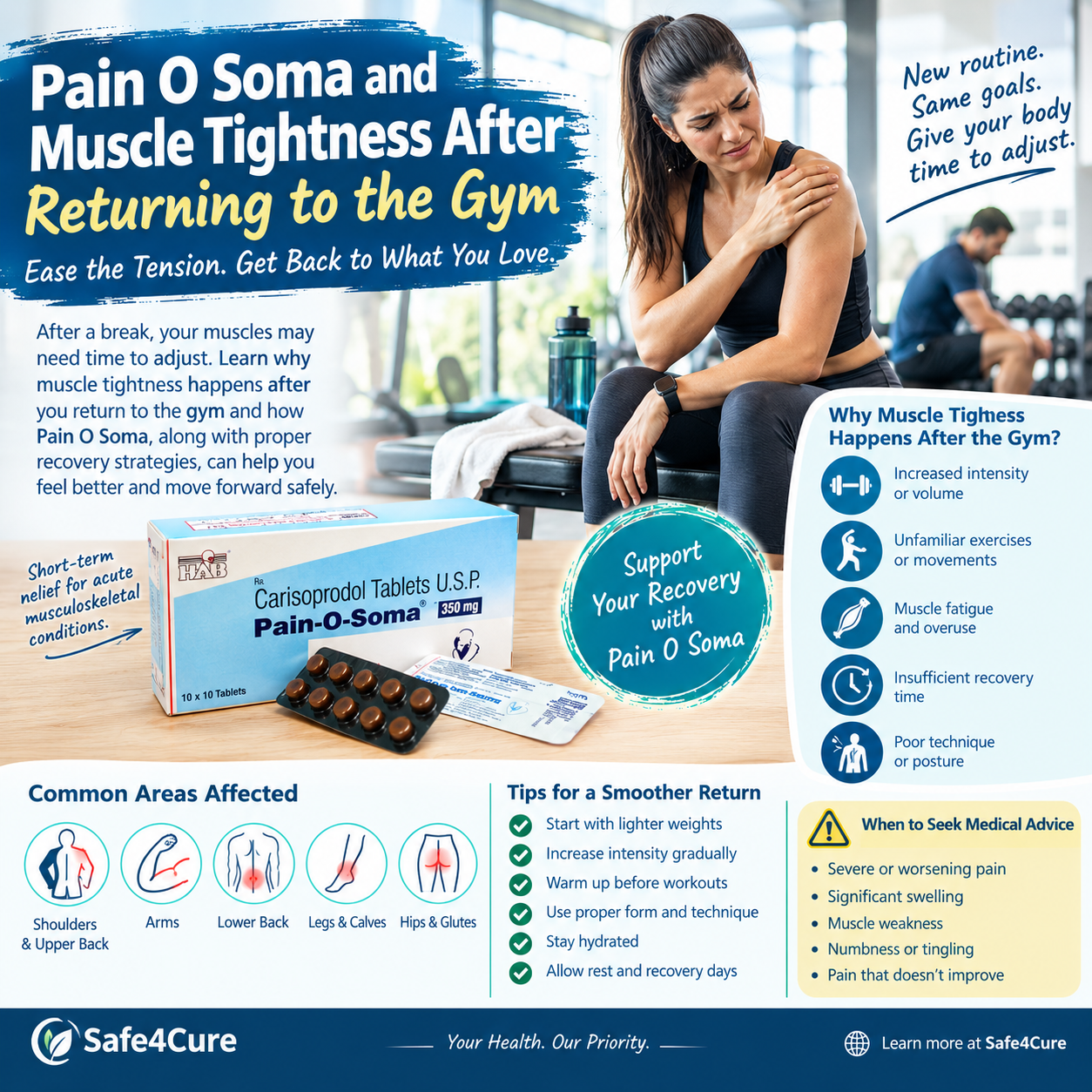
Returning to the gym after a break can feel motivating, but muscles may need time to readjust to resistance training, cardio, and other forms of exercise. A workout that once felt routine can seem much more demanding after several weeks or months away.
Muscle tightness after returning to the gym can develop in the legs, shoulders, arms, chest, hips, or back. It may be related to increased workload, unfamiliar exercises, muscle fatigue, or delayed soreness. In some situations, excessive effort or poor technique may contribute to a muscle strain or spasm.
Understanding why tightness develops and how to approach recovery can help make the return to exercise more manageable.
Why Do Muscles Feel Tight After Returning to the Gym?
When someone takes a break from regular exercise, the body may not immediately tolerate the same training volume or intensity as before. Returning to previous weights, repetitions, or workout duration too quickly can place additional stress on muscles.
Common contributors to muscle tightness include:
-
Starting with weights that are too heavy
-
Performing more repetitions than usual
-
Increasing workout duration suddenly
-
Returning to high-intensity training after a break
-
Trying unfamiliar exercises
-
Repeating the same movement extensively
-
Inadequate recovery between workouts
-
Poor exercise technique
-
General muscle fatigue
Even experienced gym users can experience stiffness when they return after an extended break.
Common Areas Affected
The location of muscle tightness often depends on the type of workout.
Legs: Squats, lunges, running, cycling, and leg presses can place considerable demands on the thighs and calves.
Shoulders and arms: Pressing, pulling, curls, and other upper-body exercises can leave these muscles feeling tight after a break.
Back: Rows, deadlifts, pull-downs, and other exercises can challenge the back and surrounding muscles, particularly when technique or workload changes.
Hips and glutes: Squats, lunges, stair climbing, and lower-body exercises may cause temporary tightness in these areas.
Muscle Tightness vs. Muscle Strain
Post-workout tightness does not necessarily mean that a muscle has been injured. General soreness or stiffness may occur after increasing physical activity and can gradually improve with recovery.
A muscle strain is an actual injury involving a muscle or tendon. It may cause more noticeable pain, tenderness, weakness, swelling, or difficulty using the affected area.
A sudden sharp pain during a particular exercise deserves more attention than mild stiffness that develops gradually after a workout. If symptoms are severe or persistent, medical evaluation can help identify the cause.
How to Recover After Returning to Exercise
A gradual recovery approach can help reduce additional stress on muscles.
Reduce Training Intensity Temporarily
If a muscle feels unusually tight, avoid immediately repeating the same demanding workout. Reducing weight, repetitions, or duration can give the affected area more time to recover.
Keep Movement Comfortable
Gentle walking and other comfortable movements may help prevent excessive stiffness. However, exercise should not be used to push through significant pain.
Try Gentle Stretching
Light stretching can be incorporated into a recovery routine when it feels comfortable. Avoid aggressive stretching of a painful or recently injured muscle.
Allow Recovery Days
Muscles need time to adapt to increased workloads. Scheduling recovery days between demanding sessions can be particularly useful when returning after a long break.
Hydrate Adequately
Adequate fluid intake is part of general exercise habits, especially during longer or more demanding workouts and periods of increased sweating.
Returning to the Gym Gradually
One of the most common mistakes after a training break is attempting to immediately match a previous workout routine.
A gradual return may involve:
-
Starting with lighter resistance.
-
Reducing the number of sets or repetitions.
-
Choosing simpler exercises initially.
-
Increasing training volume gradually.
-
Including rest or recovery days.
-
Paying attention to changes in pain or stiffness.
-
Prioritizing proper exercise technique.
The goal is not necessarily to avoid all muscle soreness. Instead, the focus should be on giving the body enough time to adapt to renewed physical activity.
Can Pain O Soma Help With Muscle Tightness?
Pain O Soma contains carisoprodol, a prescription muscle relaxant. In the United States, carisoprodol is indicated for relief of discomfort associated with acute, painful musculoskeletal conditions in adults. Current U.S. labeling specifies that it should be used only for short-term treatment, generally up to two or three weeks.
This does not mean that ordinary muscle tightness after returning to the gym automatically requires carisoprodol. A healthcare professional should determine whether the symptoms are consistent with an acute painful musculoskeletal condition and whether prescription treatment is appropriate.
Carisoprodol is generally used together with other appropriate measures, such as rest and physical therapy, rather than replacing exercise modification and recovery.
Pain O Soma 350 mg Considerations
Pain O Soma 350 mg contains 350 mg of carisoprodol. The appropriate strength and dosing schedule should be determined from the patient's prescription and medication labeling.
Carisoprodol can cause drowsiness and dizziness and may impair the ability to drive or operate machinery. Alcohol and other central nervous system depressants can increase sedative effects. The medicine also carries risks involving abuse, dependence, and withdrawal.
For these reasons, Pain O Soma should be taken only as prescribed and should not be shared with another person.
When Should Gym-Related Tightness Be Checked?
Mild tightness that gradually improves with recovery may not require medical treatment. However, symptoms should not automatically be attributed to normal exercise soreness.
Consider speaking with a healthcare professional if you experience:
-
Severe or worsening pain
-
Significant swelling
-
Noticeable weakness
-
Difficulty walking or moving normally
-
Persistent muscle spasms
-
Numbness or tingling
-
Pain that began suddenly during an exercise
-
Symptoms that do not improve with rest
These symptoms can indicate an injury or another condition requiring assessment.
Preventing Tightness During Future Workouts
Once you return to regular training, several habits may help make the transition easier.
Warm Up
Begin workouts with several minutes of comfortable, progressively increasing activity rather than immediately starting heavy resistance.
Use Appropriate Weights
Choose resistance that allows you to maintain controlled technique. Increasing weight too quickly can place unnecessary stress on muscles.
Avoid Sudden Training Changes
Try not to increase weight, repetitions, workout duration, and frequency simultaneously. Changing one element at a time can make it easier to monitor how your body responds.
Prioritize Technique
Proper form can help reduce unnecessary mechanical stress. If you are unsure about an exercise, consider working with a qualified fitness professional.
Schedule Recovery
Consistent exercise does not mean training every muscle intensely every day. Recovery is an important part of returning to fitness.
Researching Pain O Soma Online
People researching prescription muscle relaxants online should consider pharmacy safety as well as product information.
The FDA advises consumers to avoid online pharmacies that do not require a prescription, are not appropriately licensed, lack access to a licensed pharmacist, or provide medicines with questionable packaging or unclear origins. FDA also recommends checking an online pharmacy's license through the relevant state board of pharmacy.
Safe4Cure can provide an online pharmacy platform for researching healthcare products and medication information. Before obtaining prescription medication online, customers should verify prescription requirements, pharmacy credentials, product details, and applicable regulations.
Final Thoughts
Muscle tightness after returning to the gym is often connected with a sudden increase in physical workload, unfamiliar exercises, muscle fatigue, or insufficient recovery. Starting with manageable workouts and gradually increasing intensity can give the body time to readapt.
Pain O Soma contains carisoprodol, a prescription medicine used for certain acute, painful musculoskeletal conditions in adults. It is intended for short-term treatment and has important safety considerations, including sedation and risks associated with dependence and misuse.
If muscle tightness becomes severe, persistent, or is accompanied by weakness, swelling, numbness, or significant pain, professional medical evaluation is more appropriate than assuming it is ordinary post-workout soreness.

 English
 Arabic
 French
 Spanish
 Portuguese
 Deutsch
 Turkish
 Dutch
Dutch
 Italiano
 Romaian
 Portuguese (Brazil)
 Greek
Greek