


EHS Management Software for Risk and Compliance Management
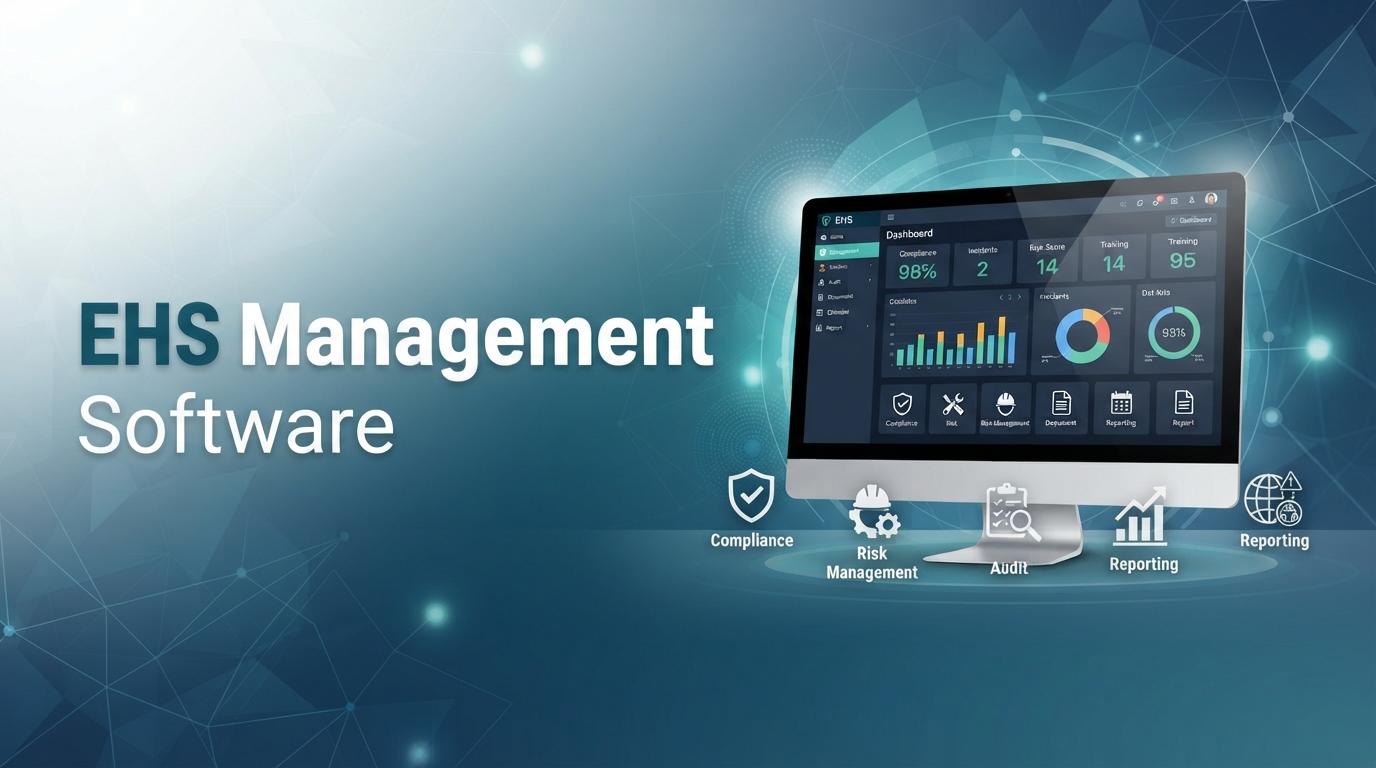
Managing workplace risks and meeting safety requirements can become difficult when information is spread across paper forms, spreadsheets, emails, and separate systems. EHS Management Software gives organizations a structured way to bring risk management, incident reporting, inspections, corrective actions, and compliance activities together. Instead of treating each safety task as a separate responsibility, teams can connect related information and create a clearer record of what risks were identified, what actions were taken, and whether those actions were completed.
What Is EHS Management Software
EHS Management Software is a digital system that helps organizations manage environmental, health, and safety processes from a centralized platform.
Every workplace has different requirements. A construction company may need to focus heavily on field inspections and hazard reporting, while a manufacturing facility may have more complex machinery, chemical, environmental, and operational risks.
Depending on the platform, organizations may use EHS software for
- Risk assessments
- Hazard identification
- Workplace inspections
- Incident reporting
- Near miss reporting
- Corrective actions
- Safety audits
- Compliance activities
- Environmental records
- Safety documentation
- Reporting and analytics
The purpose is not simply to replace paper forms with digital forms. The bigger benefit comes from connecting the information so teams can follow an issue from identification through resolution.
Why Risk and Compliance Management Need To Work Together
Risk management and compliance management are closely connected, but they are not exactly the same thing.
Risk management focuses on identifying and controlling conditions that could cause harm, disruption, financial loss, environmental damage, or other unwanted outcomes.
Compliance management focuses on meeting applicable laws, regulations, standards, policies, and internal requirements.
A company may complete a compliance inspection and identify a workplace hazard at the same time. If the two processes are managed separately, the organization may have difficulty connecting the finding to the relevant risk and corrective action.
With a connected approach, teams can link compliance findings with risk assessments and follow up activities.
For example, if an inspection identifies an issue with emergency equipment, the organization can record the finding, assess its significance, assign corrective action, and verify completion.
This creates a more complete safety record.
Identifying And Assessing EHS Risks
Risk identification is one of the first steps in effective EHS risk management.
Employees, supervisors, safety professionals, and managers may identify risks through routine work, inspections, incident investigations, audits, or employee observations.
A digital platform can provide a consistent process for recording these risks.
A risk record may include information such as
- Hazard description
- Location
- People or activities affected
- Existing controls
- Likelihood
- Potential consequence
- Risk level
- Additional control measures
- Responsible person
- Review date
Once the information is recorded, safety teams can review risks more systematically.
You may also find it easier to identify risks that have remained open for a long period or areas where the same type of hazard continues to appear.
Building A Workplace Risk Register
A risk register can become an important reference for safety teams.
When risks are recorded manually in different spreadsheets, maintaining an accurate register can take considerable effort. Information may become outdated or duplicate records may appear.
Risk management software can provide a centralized way to maintain risk information.
For example, a company operating several facilities can maintain separate risk records for each location while allowing authorized managers to review broader organizational information.
The risk register can also be connected with inspections, corrective actions, incidents, and other safety activities.
This gives teams more context when they review individual risks.
Workplace Safety Software For Hazard Management
Hazards can appear during normal operations, maintenance activities, inspections, or unexpected events.
Workplace safety software can provide employees with a structured method for reporting these hazards.
Imagine an employee notices a damaged electrical cable in a work area. They can report the issue, provide its location, and attach a photograph if the system supports it.
The responsible team can then review the report and determine what needs to happen.
The important part is creating a clear path between reporting and action.
A hazard that remains only in an email or verbal conversation can easily be forgotten. A recorded finding with an assigned responsibility and follow up status is easier to monitor.
Managing Incidents And Near Misses
Incident information can provide valuable insight into workplace risks.
An organization may need to record injuries, property damage, environmental events, equipment failures, and near misses.
Incident management software can help standardize the reporting and investigation process.
A typical incident record may contain
- Event date and time
- Location
- People involved
- Event description
- Immediate response
- Photographs or attachments
- Investigation details
- Contributing factors
- Corrective actions
- Follow up information
Near misses should also receive attention.
A near miss may reveal a weakness in an existing control even though no injury or major damage occurred. When these events are consistently reported and reviewed, safety teams can use the information to identify areas that deserve further investigation.
Connecting Corrective Actions With Risks
Corrective actions are an important link between identifying a problem and addressing it.
Suppose an inspection finds that a machine guard is damaged. The finding should not simply be marked as an inspection result and forgotten.
The issue can be assigned to the responsible department, given a priority, and provided with a target completion date.
Once the repair is completed, supporting information can be added to the record.
This approach allows safety teams to see
- What was identified
- Why it mattered
- Who was responsible
- What action was required
- When the action was due
- Whether it was completed
- What evidence supports completion
This creates better traceability across the safety process.
Supporting Safety Compliance
Organizations may have several types of requirements to manage.
These can include legal requirements, industry standards, internal policies, customer requirements, and site specific procedures.
Safety compliance software can help organizations organize activities related to these requirements.
For example, teams may use the system to schedule audits, document findings, assign corrective actions, and retain evidence of completed activities.
However, organizations should not assume that purchasing compliance software automatically makes them compliant.
Compliance depends on the requirements that apply to the organization and how effectively those requirements are implemented.
The software provides tools for organizing and monitoring the work. Qualified personnel still need to interpret requirements and make appropriate operational decisions.
Managing Environmental Health And Safety Information
EHS responsibilities can extend beyond occupational safety.
Depending on the organization's activities, environmental responsibilities may include waste handling, chemical storage, emissions, spills, resource use, and environmental inspections.
Environmental health and safety software can bring environmental and workplace safety information into one management environment.
This can help organizations avoid maintaining completely separate records for related activities.
For example, an environmental incident may require an immediate response, an investigation, corrective action, and follow up monitoring. Keeping these activities connected can make the overall process easier to manage.
Compliance Management Software For Audits
Audits can reveal gaps between existing practices and required procedures.
Managing audit findings manually can become difficult when an organization has multiple sites or conducts audits regularly.
Compliance management software can help teams record audit findings and assign follow up tasks.
A compliance manager can review open findings, responsible employees, due dates, and supporting evidence.
This can also make recurring audits easier to manage because previous findings and completed actions remain available for reference.
If the same issue appears repeatedly, management may need to review whether the corrective action addressed the underlying problem.
Keeping Safety Documents Organized
Risk and compliance programs depend on reliable documentation.
Organizations may need to maintain
- Safety policies
- Procedures
- Risk assessments
- Inspection records
- Audit reports
- Incident investigations
- Training records
- Corrective action evidence
- Environmental records
When documents are stored in different folders or email accounts, employees may struggle to find the correct version.
An EHS platform can provide a centralized location for authorized users to access relevant records.
Document permissions and version control can also help organizations manage access and reduce confusion around outdated information.
Using Data To Monitor EHS Performance
A large collection of safety records becomes more useful when organizations can review it over time.
EHS software may provide reports covering incidents, near misses, hazards, corrective actions, inspections, risk levels, and compliance activities.
Managers can use these reports to ask practical questions.
Are corrective actions being completed on time?
Are similar hazards appearing repeatedly?
Which locations have more inspection findings?
Are certain types of incidents occurring more frequently?
Which compliance activities still require attention?
The answers do not automatically tell management what decision to make, but they can provide useful information for further review.
Benefits Of EHS Management Software
A well implemented EHS platform can support several areas of risk and compliance management.
Centralized Risk Information
Teams can maintain risk records in one structured system.
Better Compliance Tracking
Compliance activities, findings, and follow up tasks can be monitored more easily.
Consistent Incident Reporting
Employees and supervisors can follow a defined process for documenting incidents and near misses.
Clear Corrective Action Ownership
Tasks can be assigned to specific people or departments with due dates and status tracking.
Easier Audits
Audit findings and supporting evidence can be maintained in a centralized environment.
Improved Safety Visibility
Managers can review information across locations and departments where appropriate.
Better Record Keeping
Digital records can reduce reliance on disconnected spreadsheets and paper documents.
Choosing The Right EHS Software
Choosing software should start with your organization's actual requirements.
Before selecting a platform, consider the types of risks you manage, the number of locations, the size of your workforce, compliance requirements, existing systems, and the people who will use the software.
Important features may include
- Risk assessment tools
- Hazard reporting
- Incident management
- Inspection management
- Corrective action tracking
- Compliance monitoring
- Audit management
- Environmental reporting
- Document management
- Mobile access
- Dashboards and reports
- User permissions
- Integration options
You should also consider how easy the system is for employees to use.
A technically capable platform will not provide much value if workers find it difficult to report hazards or supervisors struggle to manage assigned actions.
Implementing EHS Management Software
Successful implementation requires a clear plan.
Start by reviewing your existing risk and compliance processes. Identify where information is currently stored and where delays or duplication occur.
Then decide which workflows should be introduced first.
For some organizations, incident reporting and corrective actions may be the starting point. Others may benefit from beginning with risk assessments, inspections, or compliance audits.
Training should be provided according to each user's responsibilities.
Employees need to know how to report issues. Supervisors need to understand how to review findings and manage tasks. Safety professionals need to know how to maintain risk records, investigate incidents, and monitor compliance activities.
After the system is introduced, review how people are using it and make adjustments where necessary.
Final Thoughts
EHS Management Software can help organizations bring risk management and compliance activities into a more organized digital process.
Instead of managing hazards, incidents, inspections, corrective actions, and compliance records separately, teams can connect these activities and maintain a clearer history of safety work.
EHS risk management still depends on people who understand the workplace and the risks involved. Software cannot replace professional judgment, employee participation, training, or effective safety controls.
What it can do is provide a structured environment where information is easier to record, assign, review, and maintain.
For organizations working to strengthen risk and compliance management, the right EHS platform should fit their existing processes, support their regulatory responsibilities, and remain simple enough for employees to use consistently.
When technology and practical safety procedures work together, organizations can maintain better visibility of their risks, track important actions, and keep their safety and compliance activities organized over time.

 English
 Arabic
 French
 Spanish
 Portuguese
 Deutsch
 Turkish
 Dutch
Dutch
 Russian
 Romaian
 Portuguese (Brazil)
 Greek
Greek