


How Proper Concrete Compaction Improves Structural Performance
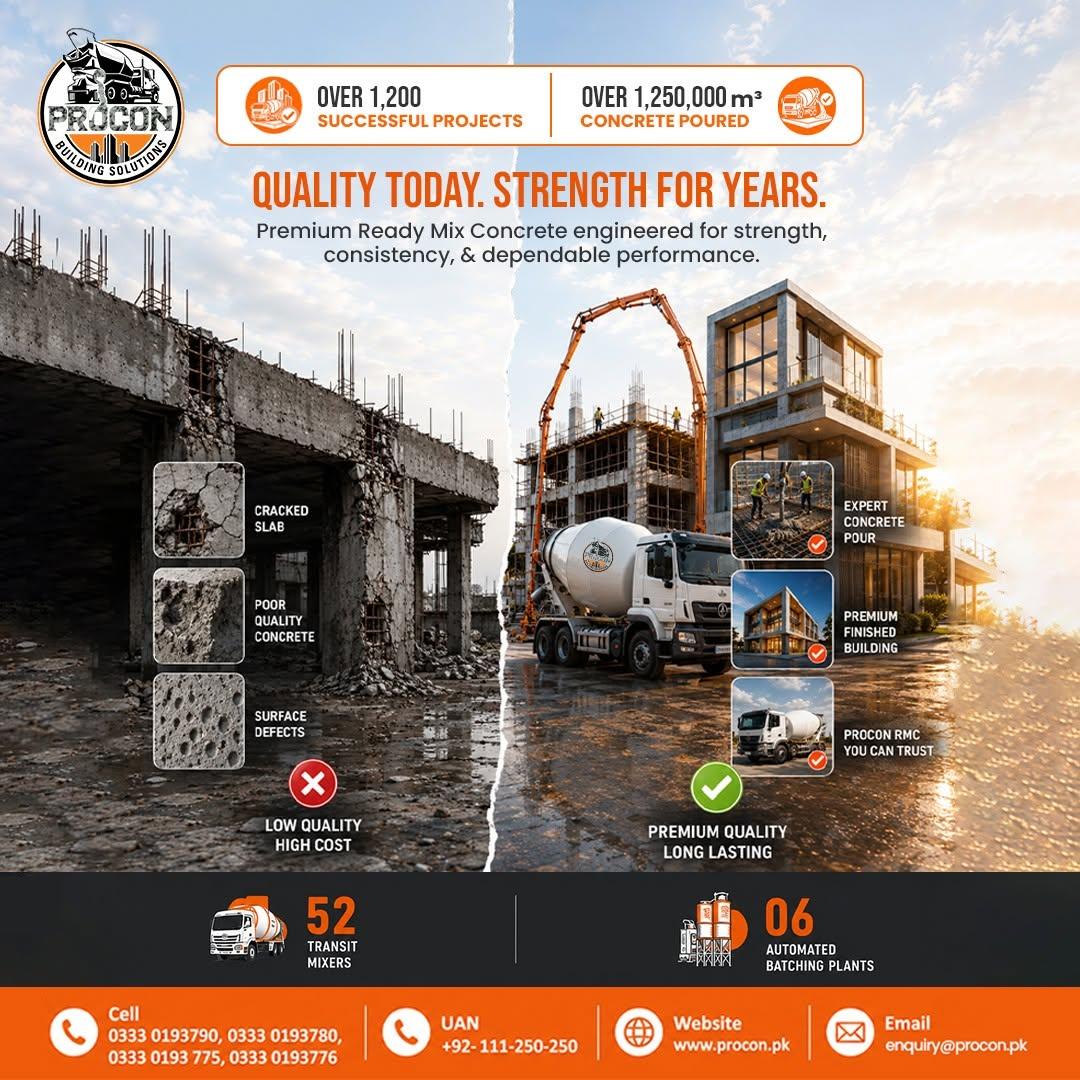
Building high-rise commercial centers, multi-family housing projects, and heavy industrial facilities requires uncompromising structural integrity at every stage of construction. While precise batching, proper water-cement ratios, and high-grade aggregates form the core of a quality mix, the physical placement process plays an equally vital role in determining final strength. When fresh concrete is poured into formwork, it entraps a significant volume of air. If left uncompacted, these internal air pockets create porous voids that drastically weaken the hardened mass. Utilizing certified ready mix concrete in Karachi ensures that contractors receive a cohesive, highly workable mix, but executing thorough job-site compaction is what turns that fresh material into a dense, long-lasting structure.
The Physical Mechanics of Concrete Compaction
Concrete compaction is the mechanical process of expelling trapped air bubbles and consolidating fresh concrete around reinforcement bars and formwork edges. This process alters the internal matrix of the material in several key ways:
-
Elimination of Entrapped Air Voids: Standard placement techniques can trap up to 5% to 20% air by volume. Proper compaction reduces entrapped air to under 1%, maximizing overall density.
-
Complete Rebar Encapsulation: Mechanical vibration liquefies the fresh mortar matrix temporarily, allowing it to flow smoothly into tight spaces and surround dense steel rebar networks without leaving gaps.
-
Enhanced Interfacial Transition Zone: Compaction forces cement paste into direct, tight contact with aggregate surfaces, eliminating air film barriers and strengthening the internal mechanical bond.
-
Uniform Mass Distribution: Consolidating the mix eliminates honeycombing and segregation, ensuring consistent density and load-bearing capacity across columns, beams, and slabs.
Structural Vulnerabilities of Uncompacted Concrete
Skipping or improperly executing compaction introduces severe structural defects that threaten building safety, aesthetic appeal, and overall service life:
1. Significant Compressive Strength Loss
The relationship between air voids and compressive strength is steep. For every 1% of entrapped air left within the concrete matrix, final compressive strength drops by roughly 5% to 6%. A mix with 5% uncompacted air voids can suffer up to a 30% reduction in load-bearing capacity.
2. High Permeability and Accelerated Rebar Corrosion
Uncompacted concrete contains interconnected networks of capillary voids and air pockets. Subterranean moisture, carbon dioxide, and airborne salts easily penetrate these open channels, reaching embedded steel rebar, causing rust expansion, and leading to severe concrete spalling.
3. Surface Honeycombing and Voids
Inadequate vibration along formwork faces results in visible honeycombing—clusters of exposed aggregate without cement mortar. Remediation requires costly surface chipping, grouting, and structural retrofitting before the build can proceed.
Best Practices for Effective Compaction on Site
Achieving maximum structural density requires using the right mechanical equipment and proper technique:
-
Internal Mechanical Vibrators (Poker Vibrators): The vibrator tip should be inserted vertically into the concrete quickly and allowed to penetrate several inches into any underlying layer to stitch the pours together.
-
Controlled Insertion Timings: The poker should remain stationary for 5 to 15 seconds until the surface becomes smooth and air bubbles stop rising, then be withdrawn slowly to prevent leaving a hole.
-
Surface and Formwork Vibrators: For thin floor slabs or heavily reinforced precast sections, surface vibrators (screeds) or external formwork vibrators ensure uniform consolidation where poker insertion is impractical.
Conclusion
Proper concrete compaction is a fundamental step in structural engineering, bridging the gap between fluid placement and peak load-bearing performance. By expelling trapped air voids, consolidating the matrix around rebar, and creating a dense, impermeable structure, mechanical compaction ensures long-term durability and safety. Partnering with established batching specialists like ready mix concrete in Karachi gives developers and site engineers access to computer-controlled mix designs, superior slump consistency, and reliable delivery logistics, laying a solid foundation for high-performance construction outcomes.
Survey No. 423, Ibrahim Hydri, behind Bol head quarter, Korangi creek road, Karachi-74900
+92 21 111 250 250

 English
 Arabic
 Spanish
 Portuguese
 Deutsch
 Turkish
 Dutch
Dutch
 Italiano
 Russian
 Romaian
 Portuguese (Brazil)
 Greek
Greek