


The Volleyball Trainer App for German Club Coaches: Getting Started with Koach
Germany has one of the largest volleyball communities in Europe, with thousands of clubs running teams from the youngest age groups up through regional leagues and beyond. Behind every one of those teams is a trainer, very often a volunteer, who combines coaching with a job, studies or family. For these coaches, time is the scarcest resource of all. Koach was built to give some of that time back by bringing the organizational side of coaching into one app. In this article we explain how German club coaches can get started quickly and what the first weeks with a volleyball trainer app typically look like.
Why German Club Coaches Look for an App
Coaching at a German Verein usually means limited hall time, a packed league schedule and plenty of tasks beyond the court itself. Trainers keep track of players, plan sessions, set lineups for league matches and often help with club duties such as refereeing or scorekeeping at home tournaments. Much of that information ends up scattered across notebooks, spreadsheets and group chats. When a trainer wants to check who attended the last three practices or how the team performed in rotation four, the answer is buried somewhere. An app that keeps everything together makes those answers quick to find and saves a lot of evening admin.
Step One: Set Up Your Team and Roster
Getting started begins with your team. Create the team, then add each player with their position and jersey number. This roster becomes the foundation for everything else, including lineups, attendance and match stats. If you're not yet sure about every player's position, that's fine; you can update it as the season develops. Taking fifteen minutes to set up the roster carefully pays off many times over, because you never need to type the same names again. When a new player joins in October or someone moves from middle blocker to opposite, you change it once and the update carries through everywhere.
Step Two: Build Your First Lineup
With your roster in place, build a lineup for your next match. Choose your system, such as a 5-1 or a 4-2, and place players on the visual court. Then step through all six rotations to check that passing is balanced and your setter has a sensible path to the target. The visual view makes weak spots obvious, like two less confident passers standing next to each other in serve receive. Save the lineup, and if you want to be prepared for absences, save a backup version too. On match day you simply open the plan instead of drawing it on the back of a scoresheet.
Step Three: Plan Training and Track Attendance
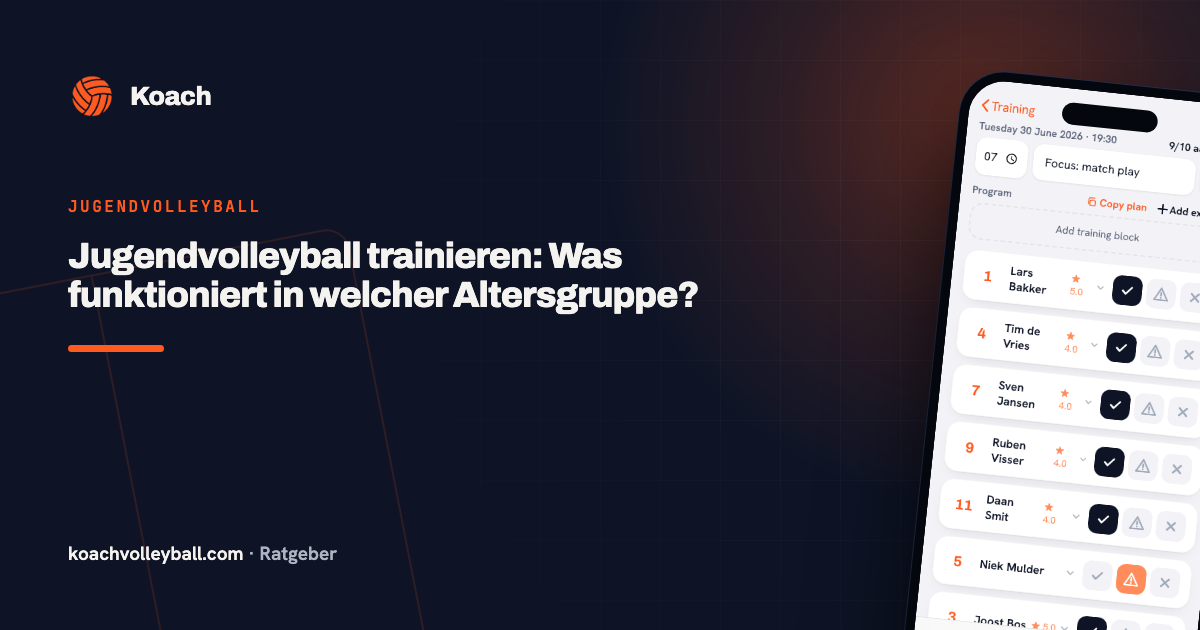
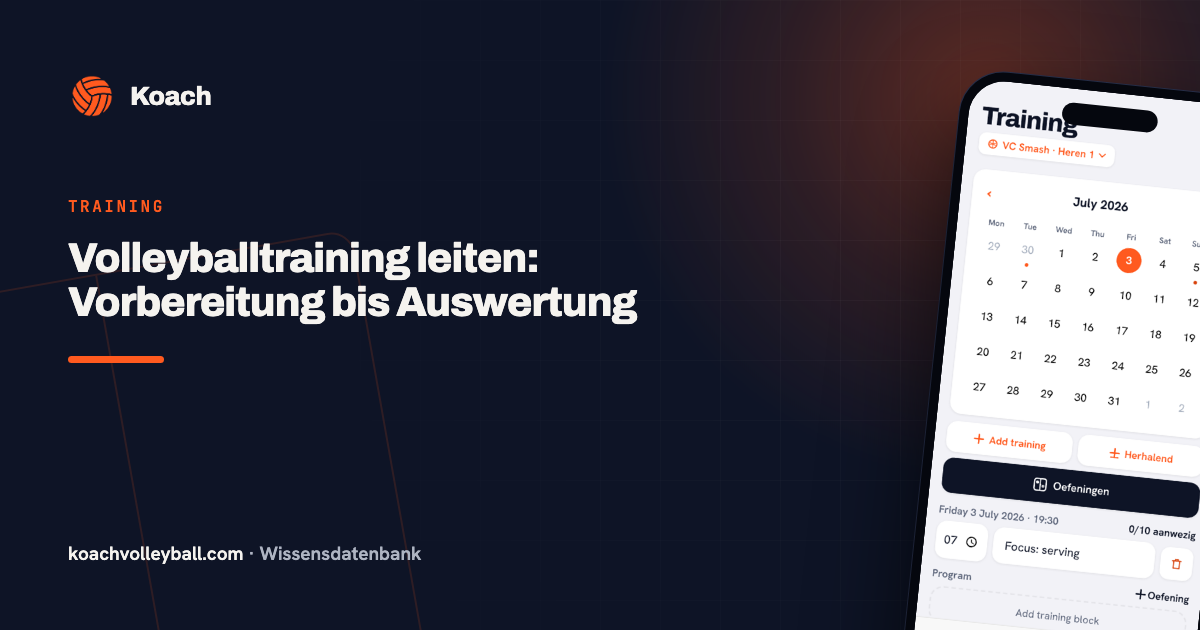
Next, plan your next training session. Choose a focus, add a warm-up, a few drills and a game at the end, and save the plan so you can follow it in the hall. At the start of practice, record attendance, which only takes a few seconds. Over the weeks, attendance data helps with fair decisions about playing time and shows early if a player is drifting away from the team. Saved training plans also build into a library you can reuse, so planning becomes faster as the season continues and good sessions are never lost.
Growing into the App Over the Season
There's no need to use every feature in the first week. Many German coaches start with roster and lineups, then add training plans, attendance and live stats once those feel natural. After a few matches, the stats begin to show patterns, such as which rotations struggle or how often serve errors cost points, and those patterns guide your practice planning. Over a full season, the app becomes a record of your team's development. The goal is simple: less paperwork, clearer decisions and more energy for the part of coaching that matters most, working with your players on the court.

 English
 Arabic
 French
 Spanish
 Portuguese
 Deutsch
 Turkish
 Dutch
Dutch
 Russian
 Romaian
 Portuguese (Brazil)
 Greek
Greek