


How to List Your Business Online and Get Found by Local Customers
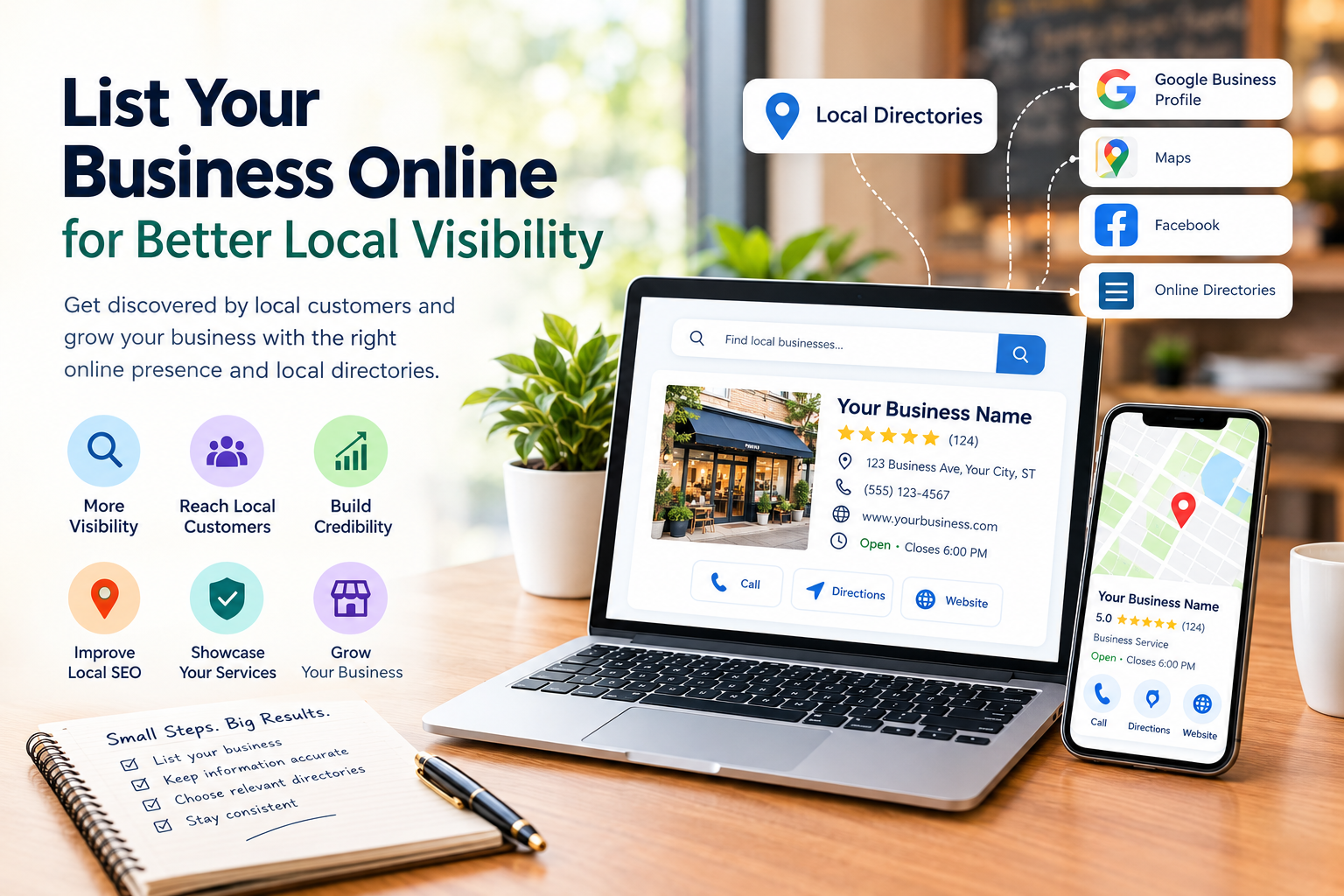
Getting a business noticed online can be difficult, especially when customers are searching for products or services in a specific city or neighborhood. A company may offer excellent services, but if people cannot easily find accurate information about it, potential customers may choose another option.
One practical way to improve online discoverability is to list your business on relevant online platforms and directories. A well-created business listing can give customers useful information such as your business name, location, phone number, website, services, operating hours, and other details they need before making contact.
For local businesses, local directories for business can also provide another place where potential customers can discover what the company offers. However, simply creating listings is not enough. The information needs to be accurate, complete, useful, and consistent.
Why Businesses Struggle to Get Found Online
Many small businesses face the same problem: they have a website or social media profile, but customers still struggle to find them through local searches.
This can happen for several reasons. The business may have limited online information, outdated contact details, an incomplete profile, or inconsistent information across different websites. In some cases, the company may simply not have enough relevant online presence for customers to discover it easily.
For example, imagine a customer searches for a cleaning service in their area. Several companies may provide similar services, but the customer is more likely to investigate businesses with clear information, an identifiable location, service details, contact options, and an active online presence.
A business listing can help solve part of this discovery problem by making important information available in places where people are already searching.
What Information Should a Business Listing Include?
A useful listing should answer the basic questions a potential customer is likely to have.
Start with the exact business name. Avoid unnecessary variations because inconsistent information can make it harder for customers to identify the correct company.
Your listing should generally include:
- Business name
- Accurate address or service area
- Phone number
- Website
- Business category
- Products or services
- Opening hours
- Short business description
- High-quality photos when appropriate
- Relevant contact information
The exact fields will depend on the directory or platform, but the goal should always be the same: make it easy for someone to understand what your business does and how to contact you.
How Local Directories Can Support Business Visibility
Local directories for business give companies additional places to present their information online. These platforms can range from general business directories to industry-specific and location-focused websites.
A directory listing can be especially useful for businesses that serve a defined geographic area. A customer searching for a restaurant, repair company, professional service, retailer, or other local provider may use directory platforms to discover available options.
Business directories can also create additional references to a company's basic information across the web. Local SEO practitioners commonly refer to these mentions as citations, particularly when they contain details such as the business name, address, and phone number.
The important point is quality and relevance. Creating a large number of poor-quality listings is not automatically better than maintaining a smaller number of accurate and useful profiles.
Keep Your Business Information Consistent
One of the most common problems businesses face is inconsistent information.
For example, suppose your website lists one phone number while an online directory shows an old number. Another platform might display a different business address. Customers may become confused about which information is correct.
Before you list your business on multiple platforms, prepare a standard version of your business information. Use the same official business name, phone number, website, address, and core description wherever appropriate.
If your business moves, changes its phone number, adjusts opening hours, or updates its services, review your existing listings and update them.
Keeping information current improves the customer experience and makes your online presence more reliable.
Choose Directories That Match Your Business
Not every directory will be useful for every company.
A local restaurant may benefit from food and local business platforms, while a professional service provider may look for industry-specific directories. A retailer may focus on platforms where customers search for products, while a service-area business may prioritize location-based listings.
Before creating a profile, consider:
Is the directory relevant to my industry?
Does it serve my target location?
Will potential customers actually use it?
Does the platform allow useful business information?
Does the listing provide a professional presentation?
These questions can help you avoid spending time maintaining profiles that provide little value.
Improve Your Listing Instead of Just Creating It
A basic listing is better than having no information, but a complete profile can be much more useful.
Write a clear business description that explains what you offer, who you serve, and where you operate. Avoid filling the description with repeated search terms. Instead, use natural language that customers can understand.
For example, instead of writing a description that repeatedly uses phrases such as “best local business,” “local business near me,” and “business in [city],” explain the actual services and customer benefits.
Google's guidance emphasizes creating content primarily for people and using words that customers would naturally search for rather than producing content solely for search engines.
Use Relevant Categories and Services
Choosing the right category is another important part of creating a useful listing.
Your primary category should describe the main type of business you operate. If the platform provides additional categories or service fields, use them only when they genuinely describe what you offer.
This helps customers understand your business more quickly.
For example, a company that provides residential plumbing services should clearly identify itself as a plumbing-related business rather than selecting unrelated categories simply because they have more searches.
Accuracy is more valuable than trying to appear relevant for every possible search.
Add Helpful Photos and Business Details
Visual information can make a business profile easier to understand.
Depending on the type of company, useful images might include the storefront, office, products, completed projects, team, facilities, or examples of services.
Images should represent the actual business rather than generic stock photography whenever possible.
Also provide practical information that helps customers make a decision. If you accept appointments, explain how customers can contact you. If you serve specific areas, clearly describe those locations. If your operating hours vary, keep them updated.
These small details can remove friction from the customer journey.
Review Your Listings Regularly
Creating a profile once and forgetting about it can eventually create problems.
Businesses change over time. They may move locations, introduce new services, change phone numbers, update websites, or modify opening hours.
Set a routine for checking important business profiles. Look for outdated information, broken website links, incorrect categories, old photos, and missing services.
Regular maintenance is particularly important for businesses with multiple locations because each location may have its own information that needs to remain accurate.
Don't Rely on Listings Alone
Business listings are only one part of a broader online presence.
Your website should provide detailed information about your products or services. Your social profiles can help customers learn more about your business and interact with you. Reviews can provide useful customer feedback and additional trust signals. Helpful website content can answer common questions before customers contact you.
Think of your online presence as a connected system rather than a collection of unrelated profiles.
Your directory listings should support the information available on your website, while your website should provide the deeper information customers need to take the next step.
A Simple Way to Start
If your business has very little online presence, you do not need to create dozens of profiles in one day.
Start by preparing accurate business information. Then identify relevant directories and platforms where your customers are likely to search. Create complete profiles, check every detail before publishing, and keep the information updated.
After that, review how customers interact with your online presence and improve areas that are unclear or incomplete.
The goal is not simply to have more listings. The goal is to make your business easier to discover, understand, and contact.
Final Thoughts
When customers cannot easily find accurate information about a company, even a good business can lose valuable opportunities. Taking the time to list your business with complete and consistent information can make the customer discovery process much easier.
Relevant local directories for business can provide additional places for people to find your company, particularly when the directory matches your industry and target location. The strongest approach is to focus on accuracy, relevance, useful information, and regular maintenance rather than creating listings simply for the sake of having more profiles.

 English
 Arabic
 French
 Portuguese
 Deutsch
 Turkish
 Dutch
Dutch
 Italiano
 Russian
 Romaian
 Portuguese (Brazil)
 Greek
Greek