


Why Consider Gangnammould Buck Basket Injection Mould for Projects
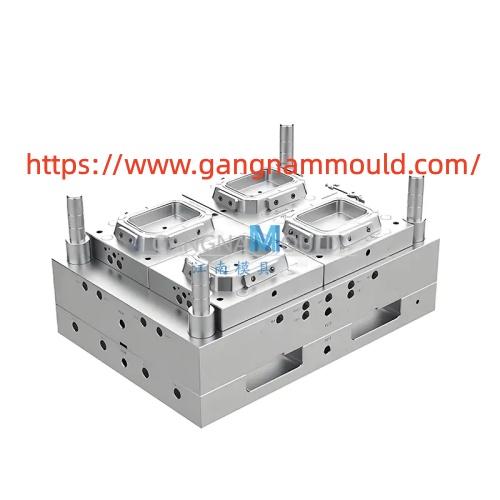
Buck Basket Injection Mould selection requires buyers to look beyond the initial quotation and sample appearance. Product geometry, resin type, wall thickness, cavity arrangement, cooling design, ejection method, production volume, and machine compatibility all deserve attention before tooling begins. Basket style products often include handles, openings, ribs, curved surfaces, and thin sections, so each feature can influence material flow and release. A careful engineering review can help connect the product concept with practical manufacturing requirements from the beginning.
Product drawings should be the starting point for discussion. Buyers can provide three dimensional CAD files, two dimensional drawings, dimensional tolerances, surface requirements, resin information, color specifications, and expected production quantities. These details allow engineers to study the component and identify areas that may need adjustment. Small changes to corners, wall transitions, openings, or internal structures can sometimes make filling and ejection easier without changing the intended function of the product.
Wall thickness is particularly relevant for basket shaped components. Large differences between thick and thin areas may produce different cooling rates, which can affect shrinkage, warpage, sink marks, and dimensions. A reasonably consistent section can support more predictable molding conditions. Where stiffness is needed, ribs or reinforcing structures can be incorporated into the design. Their thickness and position should be considered alongside the surrounding wall to avoid creating unnecessarily heavy sections.
Draft is another point buyers should review. Vertical surfaces need an appropriate taper so that the finished component can separate from the cavity and core during ejection. Internal ribs, deep recesses, handles, and textured areas may require additional attention. If a surface has texture, the release requirements can differ from those of a smooth surface. Reviewing these details early can help reduce scratches, deformation, and other release related concerns.
Handle design may also affect the tooling arrangement. A basket with an integrated handle can require careful consideration of material flow, structural strength, draft, and ejection. If the handle connects to the main body through narrow sections, those areas may need additional engineering review. The goal is to maintain the intended product shape while creating a structure that can be filled and released in a controlled manner.
Gate location should be evaluated according to the overall geometry. The point where molten resin enters the cavity influences the direction of material flow and can affect weld lines, packing, and visible surfaces. For larger components, engineers may need to consider flow distance and feature distribution before deciding on the gate arrangement. Buyers can ask for the proposed gate position and discuss whether it aligns with the product appearance and dimensional requirements.
Cooling is another practical consideration. Different sections of a component may release heat at different rates, especially when the geometry contains thicker areas around handles, corners, or reinforcing features. Cooling channel placement should therefore correspond with the shape of the cavity and core. Buyers can also ask about connection locations and maintenance access so that the cooling system remains practical during regular production.
Ejection planning should not be left until the final stage. The position of ejector pins, sleeves, lifters, or other release components should match the structural characteristics of the product. A basket with many openings may provide several possible support points, but these areas still need to be evaluated according to appearance and strength requirements. Suitable ejection planning can help reduce visible marks and deformation.
Cavity quantity should reflect actual output requirements. For projects with moderate production volume, a simpler configuration may be appropriate, while higher output plans can justify additional cavities depending on machine capacity, cycle requirements, and project economics. Buyers should provide realistic production targets so the tooling structure can be considered in relation to the complete manufacturing process.
Maintenance is another useful checkpoint. Buyers should ask how wear components, inserts, cooling connections, and other serviceable parts can be accessed. A practical maintenance structure can make routine inspection and replacement easier during ongoing production. Clear documentation and communication about spare components can also help manufacturers prepare for future service requirements.
Gangnammould works with customers developing plastic household and commercial products by connecting product drawings with tooling engineering and production considerations. When planning a new basket project, buyers can review related tooling capabilities at https://www.gangnammould.com/product/ and discuss the required resin, dimensions, surface finish, production volume, and machine conditions. Bringing these details together early can create a clearer path from product design to finished tooling while keeping the solution aligned with the actual manufacturing application.

 English
 Arabic
 French
 Spanish
 Portuguese
 Deutsch
 Turkish
 Dutch
Dutch
 Italiano
 Russian
 Romaian
 Portuguese (Brazil)