


Best Non-Surgical Piles Treatment Options Patients Prefer Today in Delhi
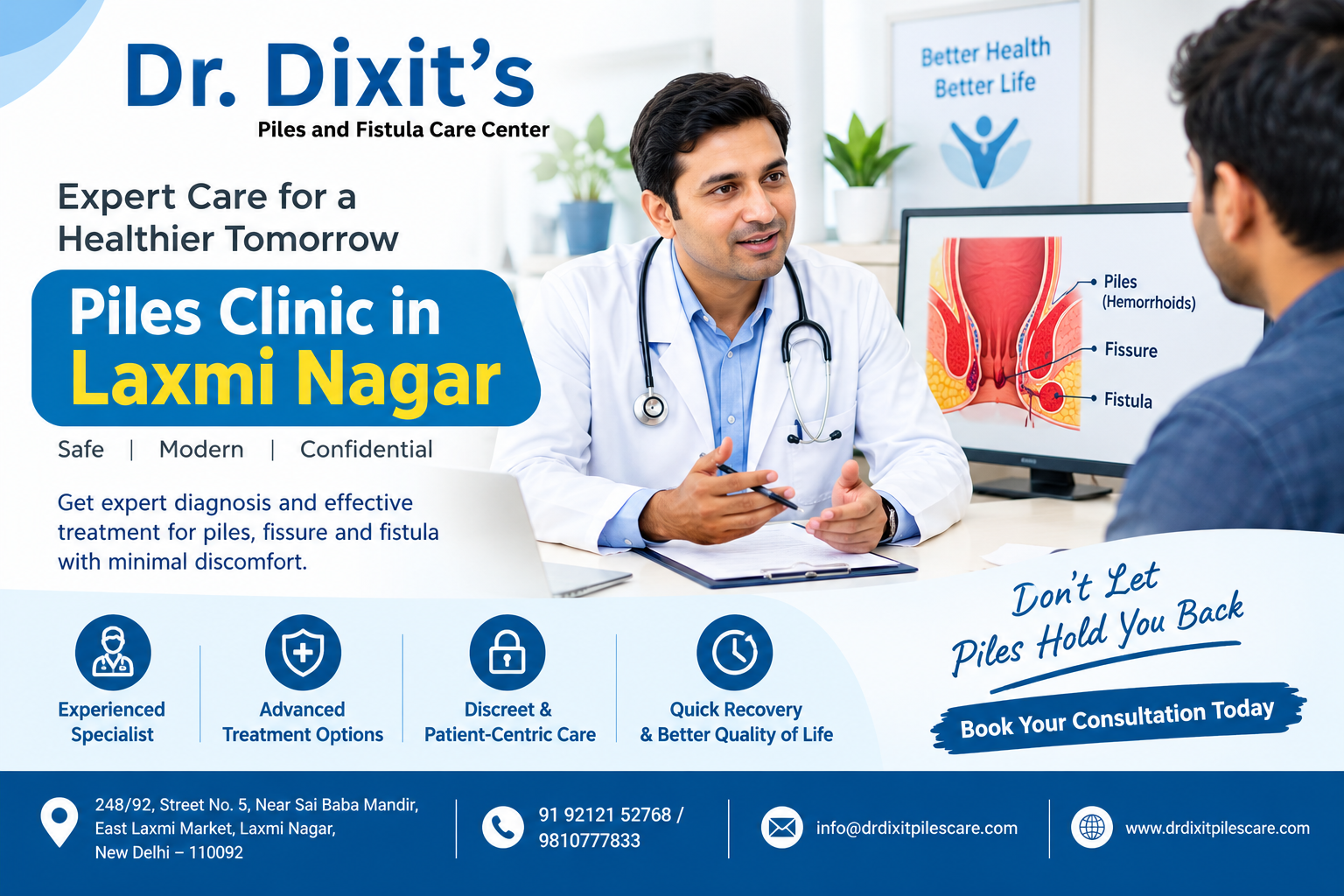
Bleeding, itching, swelling, discomfort, or a lump around the anus can make everyday activities surprisingly difficult. For many people, the first concern after being diagnosed with piles is simple: “Will I need surgery?”
The answer is not necessarily.
The appropriate treatment for haemorrhoids depends on factors such as the type and grade of piles, severity of symptoms, duration of the problem, previous treatment, and overall health. Mild cases can often improve with lifestyle changes, dietary measures, medicines, and other non-surgical approaches. When symptoms persist, doctors may also consider office-based procedures that do not involve conventional surgery.
For patients searching for a piles clinic in Laxmi Nagar, understanding the available options can make it easier to have an informed discussion with a qualified doctor.
What Are Piles and Why Do They Cause Symptoms?
Piles, medically known as haemorrhoids, are swollen vascular cushions in the anal canal. They may be internal or external, and internal haemorrhoids are commonly classified into four grades depending on whether they remain inside the anal canal or prolapse outside.
Common symptoms include:
Importantly, rectal bleeding should not automatically be assumed to be caused by piles. Other gastrointestinal conditions can also cause bleeding, so persistent or unexplained symptoms deserve medical evaluation.
Why Are Patients Looking for Non-Surgical Piles Treatment?
The preference for non-surgical treatment is understandable. Patients often want to:
However, “non-surgical” does not mean that every treatment is suitable for every patient. A proper examination is important before deciding on a treatment plan.
Best Non-Surgical Piles Treatment Options
1. Dietary and Lifestyle Changes
For many patients with mild haemorrhoid symptoms, the first step is improving bowel habits.
A high-fibre diet can help make stools softer and easier to pass. Fibre can come from vegetables, fruits, whole grains, legumes, nuts, and seeds.
Patients may also be advised to:
These measures are particularly useful when constipation and straining are contributing to symptoms.
Why bowel habits matter
Repeated straining increases pressure around the anal and rectal veins. Hard stools can also irritate already sensitive haemorrhoidal tissue. Improving stool consistency can therefore be an important part of conservative management.
2. Medicines and Symptom Management
Depending on the symptoms, a doctor may recommend medications or topical preparations to provide temporary relief from itching, irritation, swelling, or discomfort.
Treatment may address:
Medication should ideally be selected according to the patient's symptoms and medical history rather than used continuously without evaluation.
If symptoms repeatedly return after stopping medication, the underlying cause should be assessed rather than simply continuing self-treatment.
3. Sitz Baths and Local Care
A warm-water sitz bath can provide temporary relief from anal discomfort and irritation for some patients.
The basic approach involves sitting in comfortably warm water for a short period and gently drying the area afterward.
Patients should avoid very hot water and harsh soaps or products that may irritate the skin.
Sitz baths are generally a supportive measure, rather than a treatment that eliminates the underlying haemorrhoid.
4. Ayurvedic Approaches for Piles
Ayurvedic treatment is another option that some patients explore, particularly those looking for an integrative approach to managing piles.
Depending on the patient's condition, an Ayurvedic practitioner may consider dietary changes, bowel-regulating measures, medicines, and procedures used in Ayurvedic proctology.
Because “Ayurvedic treatment” covers several different approaches, patients should not assume that one remedy works for every type or grade of piles.
A qualified practitioner should assess:
Patients searching for Ayurvedic piles treatment in Delhi should also verify the qualifications and clinical experience of the practitioner before beginning treatment.
5. Kshar Karma and Other Ayurvedic Procedures
Some Ayurvedic centres use procedures such as Kshar Karma as part of their management of selected anorectal conditions.
These procedures should be discussed with a qualified practitioner after diagnosis. Suitability can depend on the nature and extent of the haemorrhoid and the patient's individual circumstances.
Patients should also understand the difference between a conservative treatment, an office-based procedure, and conventional surgery. Asking the doctor to explain exactly what will happen during treatment can prevent misunderstandings.
6. Rubber Band Ligation for Selected Internal Piles
Rubber band ligation is an established office-based treatment used primarily for suitable internal haemorrhoids.
During the procedure, a small band is placed around the base of the haemorrhoidal tissue. This cuts off its blood supply, allowing the treated tissue to shrink and eventually separate.
It may be considered when dietary and medical measures have not provided sufficient relief.
Because rubber band ligation is not appropriate for every type of haemorrhoid, a clinical examination is necessary before treatment.
7. Other Office-Based Procedures
Depending on the diagnosis and grade, doctors may consider other minimally invasive procedures for haemorrhoids.
Examples include procedures designed to reduce blood flow to haemorrhoidal tissue or shrink the problematic tissue.
The important point is that non-surgical treatment is not one single procedure. The most appropriate approach depends on the patient's diagnosis.
How Is the Right Treatment Chosen?
A good treatment plan begins with diagnosis rather than simply selecting the procedure a patient has heard about online.
During an evaluation, a doctor may consider:
Grade of haemorrhoids
Internal haemorrhoids are commonly classified as Grade I to Grade IV. The grade helps determine which treatments may be appropriate.
Main symptoms
A patient whose primary symptom is occasional bleeding may require a different approach from someone experiencing significant prolapse or persistent pain.
Constipation and bowel habits
If constipation is a major contributing factor, improving bowel habits can be an important part of treatment.
Previous treatment
A history of recurring piles, previous procedures, or unsuccessful self-treatment may influence the next step.
Other possible causes
Rectal bleeding or anal pain can have causes other than haemorrhoids. Proper diagnosis helps prevent an important condition from being overlooked.
When Should You See a Piles Specialist?
Occasional mild symptoms may improve with lifestyle measures, but medical evaluation is advisable when symptoms are persistent, recurrent, or worsening.
Consider consulting a doctor if you experience:
A piles doctor in Laxmi Nagar can evaluate the symptoms and determine whether conservative management, an office procedure, or another treatment approach is appropriate.
What Patients Should Ask Before Choosing Treatment
Before starting any piles treatment, consider asking:
These questions can help patients make decisions based on diagnosis rather than advertisements or anecdotal experiences.
Why Early Evaluation Can Matter
Piles are common, but delaying evaluation for recurrent bleeding or worsening symptoms is not always advisable.
Early-stage haemorrhoids may sometimes be managed conservatively, while more advanced disease can require procedural treatment. Seeking professional advice can help identify the problem and avoid prolonged self-treatment.
For people living or working around East Delhi, consulting a piles clinic in Laxmi Nagar can also make follow-up easier when multiple visits or monitoring are required.
Conclusion: Explore the Right Treatment Before Considering Surgery
Piles treatment has evolved beyond the assumption that every symptomatic patient needs conventional surgery. Depending on the diagnosis, many patients can begin with dietary and lifestyle changes, medicines, supportive care, Ayurvedic approaches, or selected minimally invasive procedures.
The key is to avoid choosing a treatment based solely on what someone else experienced. The right treatment depends on the type, grade, symptoms, and individual needs of the patient.
If you are experiencing persistent bleeding, pain, swelling, or prolapse, professional evaluation is the safest way to understand your options.
For patients looking for experienced guidance in East Delhi, Dr. Dixit’s Piles and Fistula Care Centre provides evaluation and treatment for piles and related anorectal conditions.
If you are searching for a piles clinic in Laxmi Nagar, contact Dr. Dixit’s Piles and Fistula Care Centre to discuss your symptoms and learn which treatment options may be appropriate for your condition.
Frequently Asked Questions
1. Can piles be treated without surgery?
Yes. Depending on the type and severity, piles may be managed with dietary and lifestyle changes, medicines, supportive care, or selected office-based procedures. Treatment should be individualized.
2. What is the best non-surgical piles treatment?
There is no single best treatment for everyone. The appropriate option depends on the haemorrhoid's grade, symptoms, duration, and response to previous treatment.
3. Is Ayurvedic treatment available for piles in Delhi?
Yes, Ayurvedic practitioners provide different approaches for piles, including dietary management, medicines, and selected procedures. Patients should seek assessment from a qualified practitioner.
4. Can Grade 1 piles improve without surgery?
Mild or Grade 1 haemorrhoids can often be managed conservatively, particularly when constipation and straining are addressed. A doctor can confirm the diagnosis and recommend appropriate treatment.
5. When should I consult a piles doctor?
Consult a doctor for recurrent bleeding, persistent pain, prolapse, worsening symptoms, or symptoms that do not improve with basic measures. Rectal bleeding should not automatically be attributed to piles.
6. Can piles come back after treatment?
Yes. Recurrence can occur, particularly when constipation, straining, prolonged sitting, or other contributing factors continue. Maintaining healthy bowel habits can help reduce the risk.

 English
 Arabic
 French
 Spanish
 Portuguese
 Deutsch
 Turkish
 Dutch
Dutch
 Italiano
 Russian
 Romaian
 Greek
Greek