


Why Are Refrigerators And Freezer Appliances Essential for Laboratory Storage?
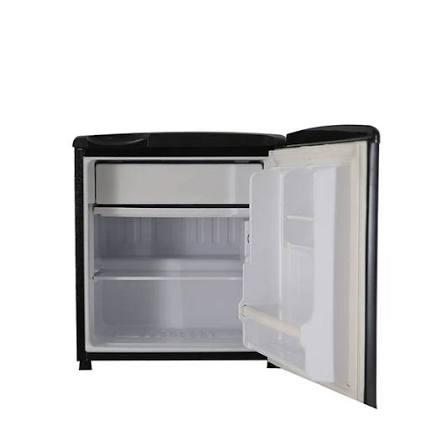
Creating Stable Cold-Storage Conditions for Samples, Reagents and Scientific Materials
Scientific materials can be highly sensitive to temperature, making dependable cold storage an important part of laboratory planning. Refrigerators And Freezer Appliances help laboratories maintain controlled environments for samples, reagents, reference materials and other products that require defined storage conditions. Their role extends beyond simple cooling because laboratory workflows depend on stability, organisation, accessibility and consistent temperature management.
From routine chemical preparation to biotechnology and pharmaceutical research, suitable refrigeration equipment helps protect materials between experimental stages and reduces the risk of avoidable deterioration caused by unsuitable storage.
Why Does Laboratory Cold Storage Need Careful Planning?
Laboratory materials often remain in storage for hours, days or significantly longer periods before they are used.
During this time, temperature changes can influence stability, physical properties or performance. For this reason, the storage system should be selected according to the requirements of the material rather than simply the amount of available space.
A well-planned cold-storage area considers temperature range, internal organisation, frequency of access and the types of containers being stored.
Researchers should also avoid assuming that every laboratory material needs the same conditions. Some products require chilled storage, while others must remain frozen or be managed under more specialised conditions.
How Do Laboratory Refrigerators Support Daily Research?
Many laboratories need temperature-controlled storage that allows regular access throughout the working day.
Refrigerators provide dedicated refrigerated environments for materials that need to be kept cool without being frozen.
They can support the storage of suitable reagents, prepared materials and scientific samples according to their specified conditions.
Effective refrigerator use depends on more than setting the temperature. Internal airflow should not be unnecessarily restricted, and materials should be arranged so that staff can locate them efficiently.
Good organisation can reduce the length and frequency of door openings, helping the unit recover its intended storage conditions more effectively.
When Are Combined Refrigerator and Freezer Units Useful?
Laboratories with limited space may need both refrigerated and frozen storage within the same work area.
Combi Fridge Freezers provide separate cold-storage sections within a combined appliance format.
This arrangement can be useful where researchers need frequent access to materials stored under different temperature conditions but do not require separate full-size units.
The two storage areas should still be managed independently according to the materials they contain.
Researchers should avoid placing items in whichever compartment has available space without first confirming that the temperature range is appropriate.
Why Does Internal Organisation Affect Storage Quality?
An organised laboratory refrigerator or freezer supports both efficient working and better temperature management.
Poorly arranged materials may block internal airflow, make products difficult to locate and encourage longer door-opening periods.
A practical storage system may include:
- Clearly labelled containers
- Defined shelves or storage zones
- Regular inventory reviews
- Separation of incompatible materials
- Space for effective internal air circulation
These steps also make it easier to identify expired, unused or incorrectly stored items before they create unnecessary clutter.
Organisation therefore becomes part of temperature management rather than simply a housekeeping task.
Understanding Special Storage Requirements
Not every chemical or scientific material should be placed in a conventional refrigeration appliance.
Some laboratory environments involve substances that require equipment designed around additional safety considerations.
Explosion-Proof Refrigerators And Freezers provide a specialised refrigeration category for applications where the nature of stored materials and the operating environment require an appropriately designed appliance.
Equipment selection should always follow the requirements associated with the chemicals or products being stored.
Researchers should review relevant safety documentation and equipment specifications rather than assuming that standard laboratory refrigeration is suitable for every substance.
Why Is Temperature Monitoring Important?
A temperature display provides useful information, but laboratories should consider how storage conditions will be checked over time.
Unexpected changes can occur because of repeated door opening, equipment issues, excessive loading or environmental conditions.
Regular monitoring helps users notice unusual behaviour before it becomes a longer-term problem.
Where materials are particularly valuable or sensitive, laboratories may also establish documented checking procedures or use additional monitoring methods suited to their quality requirements.
The objective is to create confidence that materials have remained within their required storage conditions.
Supporting Temperature-Sensitive Work With Laboratory Ice
Cold-storage workflows sometimes require materials to be kept cool temporarily while they are outside the refrigerator or freezer.
A Flake Ice Maker can support laboratory procedures where a convenient supply of ice is required for suitable cooling applications.
Flake ice can provide close contact around containers and sample vessels, making it practical for temporary cooling arrangements.
However, an ice bath does not replace controlled refrigerated or frozen storage. It is generally better viewed as part of short-term handling during preparation, transfer or processing.
How Should Laboratories Manage Door Opening?
Every time a refrigerator or freezer is opened, warmer surrounding air can enter the storage chamber.
Frequent or prolonged access can therefore affect internal conditions.
Researchers can reduce unnecessary exposure by knowing where required materials are stored before opening the appliance.
Organising samples by project, material type or frequency of use can make retrieval faster.
Frequently needed materials may also be positioned where they can be accessed without moving numerous other containers.
Small operational habits can make cold-storage workflows more efficient.
Selecting the Right Refrigeration Appliance
Laboratories should base equipment selection on the materials and workflow rather than capacity alone.
Important considerations include the intended storage temperature, usable internal space, frequency of access, available laboratory area and any special safety requirements.
Future storage demand should also be considered. A unit filled to capacity immediately after installation offers little flexibility for expanding research activity.
At the same time, unnecessarily oversized equipment may consume valuable laboratory space.
The most suitable appliance is one that provides appropriate conditions while fitting naturally into the laboratory's working environment.
Protecting Scientific Materials Through Better Cold Storage
Reliable refrigeration is an important part of maintaining organised and reproducible laboratory workflows.
Refrigerators and freezer appliances help researchers keep sensitive materials under defined conditions between preparation, analysis and later use. Their effectiveness depends on selecting the correct equipment, maintaining sensible internal organisation and monitoring storage conditions appropriately.
Whether a laboratory needs routine refrigerated storage, combined chilled and frozen capacity, specialised equipment or temporary cooling support, a carefully planned system helps protect valuable scientific materials while making everyday laboratory work more efficient.

 English
 Arabic
 French
 Spanish
 Portuguese
 Deutsch
 Turkish
 Dutch
Dutch
 Italiano
 Russian
 Romaian
 Portuguese (Brazil)