


Turning Quick Reactions into Crisp Patterns: How to Experience a Fun Geometry Jump in Geometry Dash
Introduction
If you’ve ever watched someone hit a perfectly timed jump in a rhythm-based platformer and thought, “How are they doing that so cleanly?”, you’re already close to what makes geometry jumps so satisfying. A geometry jump is about more than just moving forward—it’s about timing, spacing, and learning how your actions “fit” into a sequence.
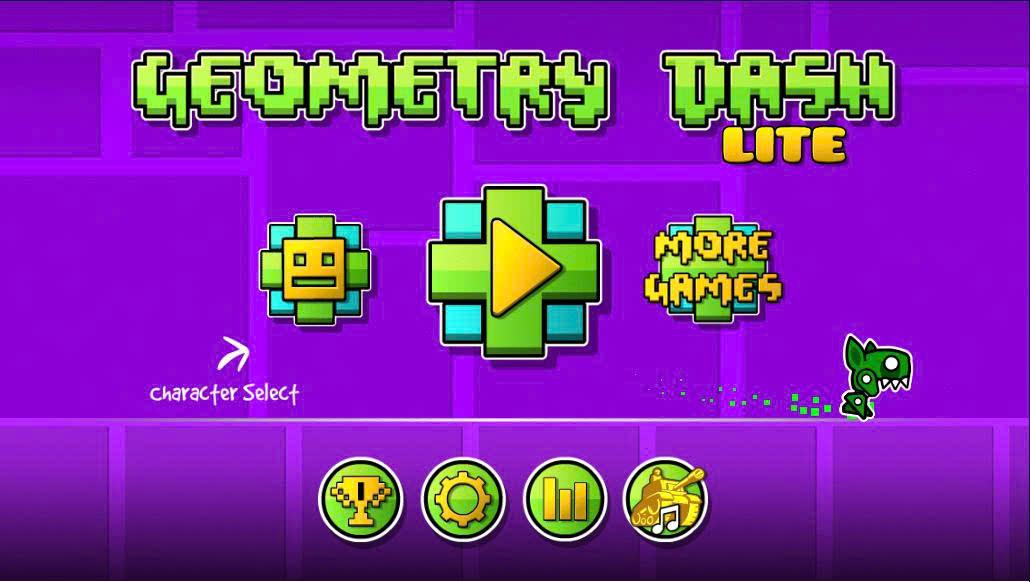
One of the most approachable games for this kind of experience is Geometry Dash. In many levels, your character bounces, flips, and lands in response to carefully designed obstacle patterns. The result feels like turning music and geometry into one coordinated challenge. If you want a place to start, you can explore Geometry Dash but the real fun is what you do once you’re in the level.
In this article, I’ll walk you through what it’s like to play a geometry jump, how to approach it with confidence, a few practical tips that make a difference, and how to keep the experience enjoyable as the difficulty ramps up.
Gameplay: What It Feels Like to Jump with Geometry
At its core, playing a geometry jump in Geometry Dash is an exercise in anticipation. The game doesn’t ask you to react instantly to everything. Instead, it teaches you to notice patterns ahead of time and commit at the right moment.
Most levels follow a clear loop:
-
Watch the rhythm of obstacles. You’ll see spikes, blocks, gaps, and platforms arranged in a way that feels timed to the music.
-
Time your jumps or taps. Your input triggers a movement (jump, flip, dash, or arc), and the timing determines whether you land safely or collide.
-
Learn from attempts. Each run gives you new information—like where you consistently arrive too early or too late.
-
Refine your “muscle memory.” After a few tries, your brain starts mapping the level layout to precise inputs.
A good way to describe it is like “falling forward on purpose.” Your character is always moving, and you’re constantly steering the moment-to-moment outcome using quick taps. The geometry jump becomes interesting when you stop treating it as a one-time action and start recognizing it as part of a chain.
For example, you might encounter a sequence where you need to jump over a short gap, then immediately land on a platform, then jump again to clear a tight set of hazards. In those moments, the most rewarding feeling comes from consistency. When you hit that chain correctly once, you can repeat it—and that’s where progress feels real.
Starting with “manageable chaos”
If you’re new, the best early experience is not trying to conquer everything at once. Choose levels where you can fail quickly and still understand why you failed. Look for stages where the difficulty increases gradually, so your learning sticks.
A geometry jump becomes especially fun when:
-
the music helps you anticipate obstacles,
-
the jumps are close enough together that you feel the rhythm,
-
the timing windows aren’t so tiny that you’re purely guessing.
Tips: Make Your Jumps Feel More Natural
Even though the game is fast, you can improve by using habits rather than brute force. Here are practical tips that work well for Geometry Dash–style geometry jumps.
1) Learn the level in chunks
Instead of telling yourself “I need to pass the whole level,” break it into sections. Mentally mark a checkpoint like “from the first spike wall to the first safe platform.” When you succeed in a chunk, move forward and connect the next chunk.
This keeps your brain focused and reduces the frustration of repeating everything without understanding your mistakes.
2) Use the first attempt as information
Many players hit retry immediately and treat the first run like a loss. But the first run can be valuable. Ask yourself:
-
Where did you first die?
-
Was it early, late, or completely unexpected?
-
Did you misread the spacing or the rhythm?
Even if you don’t improve on attempt two, you’re collecting the data you need to improve on attempt three.
3) Watch your timing, not just your jumps
When you get better, your landings become more consistent. That usually means you’re fixing timing more than technique.
If you keep hitting the obstacle “almost” safely, try adjusting your input slightly—earlier for late landings, later for early landings. The goal isn’t random experimentation; it’s making small adjustments that match what you observed.
4) Stay calm during sequences
Geometry jump challenges often include multiple inputs in a short time. If you panic, your hands speed up and your timing becomes less reliable.
A good mental trick is to treat each section as a single event. Instead of thinking “don’t mess up,” think “execute the next jump.” When you focus on the next action only, you’re less likely to overcorrect.
5) Practice consistency over perfection
If you’re repeating a difficult sequence, aim to get through it reliably even if it isn’t perfect. For instance, you might survive but land slightly off from ideal placement. That’s still progress because it proves your timing can be controlled.
Once the sequence is consistent, you can refine the exact beats.
6) Pay attention to visual rhythm
Some obstacles are arranged with visual cues that make the music feel “mapped” onto the level. Watch the spacing patterns. If a wall of spikes appears where the beat drops, you can often align your jumps with that beat.
Over time, you’ll start reading levels like rhythmic patterns rather than random danger.
Conclusion
Geometry jumps are fascinating because they turn simple inputs into a whole performance. The challenge is quick, but the growth is cumulative: each attempt teaches you how the level behaves, how the rhythm guides timing, and how your own reactions can become more deliberate.
Using Geometry Dash as an example, you get a clear pathway into this style of play: learn patterns, chunk the level, adjust timing, and build consistency. And when you finally land a sequence cleanly—especially one you previously feared—it feels less like winning a contest and more like discovering a skill you didn’t have five minutes ago.
If you want, tell me what kind of geometry jump you like most (tight spike timing, longer arcs, or fast dash sections), and I’ll suggest a simple practice approach for that specific style.

 English
 Arabic
 French
 Spanish
 Portuguese
 Deutsch
 Turkish
 Dutch
Dutch
 Italiano
 Russian
 Romaian
 Greek
Greek