Moving large metal equipment to a fabrication shop is not always practical. Heavy machinery, fixed structures, oversized frames, and installed components may be difficult or expensive to transport. In some situations, bringing the welding work to the equipment can simplify the project and reduce unnecessary disruption.
Mobile welding provides a way to handle suitable welding and fabrication work where the equipment or structure is located. The decision depends on the size of the component, site conditions, access, repair requirements, and the type of work involved. Understanding these factors can help businesses decide when on-site welding is a better fit than removing and transporting a metal component.
What Is Mobile Welding?
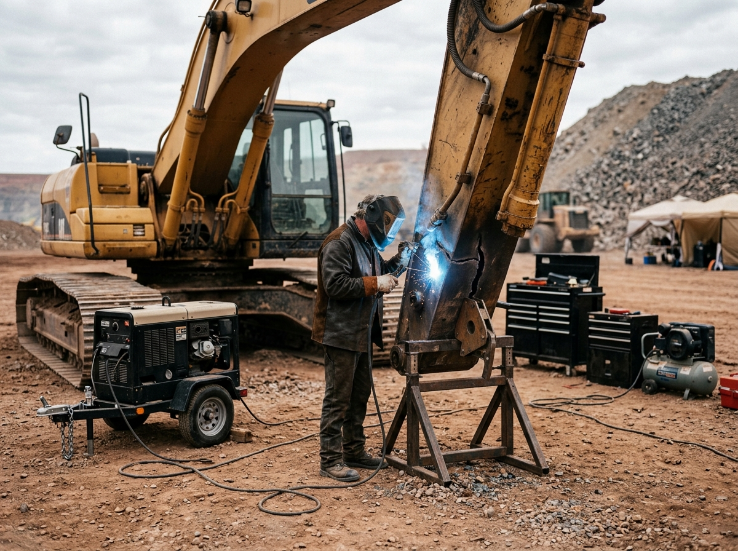
Mobile welding is welding or related metalwork performed at the customer's location rather than inside a fixed fabrication shop. A welding team brings the necessary equipment to the work site and performs suitable tasks where the metal component is installed.
This approach can be useful for repairs, modifications, structural metalwork, equipment components, and other projects where moving the item is difficult. The exact work that can be completed on-site depends on the equipment, material, access, and conditions available at the location.
The biggest difference is where the work happens. Instead of disconnecting, loading, transporting, unloading, and reinstalling a component, the fabrication work may be completed around the existing installation when the site allows it.
When Is Moving Equipment Difficult?
Large industrial equipment can be challenging to transport because of its size, weight, location, or connections to other systems. Some components are permanently installed, while others may require significant disassembly before they can even be moved.
Transportation can also introduce additional planning requirements. Access routes, loading areas, lifting equipment, and available space may all need to be considered before the component can leave the site.
A repair that appears simple can therefore become a larger project once removal and transportation are involved. On-site welding can sometimes avoid those extra steps by keeping the component where it already is.
The suitability of this approach still depends on the actual work required. Some components are better repaired in a controlled shop environment, especially when extensive fabrication or finishing is needed.
What Types of Projects Can Be Handled On-Site?
On-site work can be suitable for a range of welding and fabrication tasks when the component cannot be moved easily. Repairs to existing metal assemblies, modifications to installed structures, and certain equipment-related welding projects may be candidates.
The material and design also influence the approach. Stainless steel, aluminum, magnesium, and other metals can require different preparation and welding methods, so the fabricator needs to understand what material is involved before work begins.
The size of the repair does not always determine whether mobile work is practical. A relatively small repair can still be difficult to perform if the component is located in a restricted area. Conversely, a larger project may be manageable when there is sufficient space and access.
The key question is whether the work can be completed effectively at the existing location.
How Does Site Access Affect Mobile Welding?
Site access is one of the first things that should be reviewed. The welding team needs enough room to bring equipment into position, reach the damaged or modified area, and perform the required work safely.
Tight spaces can create difficulties even when the actual weld is straightforward. Nearby machinery, walls, pipes, supports, or other structures may limit the available working area or restrict the welder's position.
The component may also need to remain connected to other equipment during the repair. That can affect how the work area is prepared and how the fabrication team approaches the joint.
Providing photos, measurements, and information about the site before the appointment can help establish whether the project is suitable for mobile welding services and what preparation may be required.
Does On-Site Welding Save Transportation Work?
It can reduce the amount of handling required because the component does not necessarily have to leave its current location. This may eliminate some of the steps involved in dismantling, loading, transporting, unloading, and reinstalling a metal assembly.
That does not mean mobile work is automatically simpler or less expensive for every project. Site preparation, equipment access, working conditions, and the complexity of the repair still affect the overall effort.
The main practical advantage is often flexibility. When a component is difficult to move, performing suitable work in place can remove a major logistical obstacle.
For businesses working with large or fixed equipment, keeping the existing assembly in position may also reduce disruption to surrounding operations when the project can be planned around the site.
What Should Be Checked Before Welding at a Job Site?
The work area should be reviewed before fabrication starts. The team needs to understand where the repair will take place, how the component is positioned, what materials are nearby, and what access is available.
The condition of the damaged area also matters. A visible break or failed weld may not show the full extent of the damage. Cleaning and inspection may reveal additional issues that need to be addressed before welding begins.
Measurements can help determine whether the component is still aligned correctly. Previous repairs, modifications, corrosion, and wear may also affect the repair plan.
A clear assessment before work begins can prevent the team from arriving at the site without the information or equipment needed for the actual job.
Can Mobile Welding Be Used for Stainless Steel?
It can be suitable for certain stainless steel repairs and fabrication tasks, but the material needs to be identified and the welding process planned around the specific application. Stainless steel can require careful heat management and surface preparation to achieve the intended result.
The finish requirement also matters. A structural repair may have different appearance requirements from a visible stainless steel railing, enclosure, frame, or equipment component.
Site conditions can make finishing more challenging as well. Some projects may require grinding, cleaning, blending, or polishing after welding, and the available workspace can affect how easily those steps are completed.
For more demanding stainless steel work, the repair may be more practical in a fabrication shop when the component can be transported. The decision should be based on the actual requirements rather than the material alone.
What About Magnesium and Other Specialized Metals?
Specialized metals require extra consideration because their welding characteristics can differ from common structural materials. Magnesium, for example, needs careful preparation and process control, and the fabrication environment may affect how practical on-site work will be.
The same principle applies to other less common materials. Before scheduling mobile welding, the fabricator should know what metal is involved, how thick it is, what type of joint needs work, and how the component is being used.
The surrounding environment is also important. Site limitations may make it harder to control the conditions needed for certain specialized welding work. Some projects may therefore be better handled in a controlled shop where more fabrication equipment and finishing options are available.
How Does the Size of the Repair Affect the Decision?
The amount of welding required can influence whether on-site work is practical. A small localized repair may be easier to complete at the installation site, particularly when the component is fixed in position.
Larger projects may still be possible, but the team needs to consider equipment placement, material handling, work area size, and how the component can be supported while the work takes place. A large repair may involve more than welding. Cutting away damaged material, producing replacement pieces, fitting new sections, and finishing the repaired area can require several fabrication steps.
When the work becomes extensive, a shop environment may provide greater flexibility. In other cases, the component's size may make transport impractical, making mobile fabrication the more workable option.
Can Replacement Pieces Be Made During an On-Site Repair?
Some repairs require more than joining existing metal. A damaged section may need to be removed and replaced with a newly fabricated piece that matches the original component.
The replacement part can be produced separately when practical, then brought to the site for fitting and welding. This can combine shop fabrication with on-site installation rather than forcing the entire project into one location.
Accurate measurements become especially important in this situation. The replacement section needs to match the existing component closely enough for proper fit-up and alignment.
When a replacement part requires detailed shapes or precise profiles, laser cutting can be part of the preparation process before the component is taken to the job site.
What Role Does Engineering Play in On-Site Welding?
Engineering can help determine whether a repair or modification is practical before work begins. The design of the component, joint location, material, dimensions, and installation conditions all need to be considered together.
This becomes more important when an existing structure has been damaged or modified over time. The current condition may differ from the original design, making measurements and site information valuable during planning.
Fabrication engineering can also help with replacement components and custom modifications. A repair may require a new bracket, plate, support, connection, or other fabricated section that needs to fit into an existing assembly.
For projects where design and fabrication are closely connected, fabrication engineering can be part of the planning process before welding begins.
How Can Businesses Prepare for an On-Site Welding Job?
Preparation starts with useful information about the project. Photos of the equipment, close-ups of the damaged area, measurements, material details, and a description of the problem can help the fabricator understand what may be required.
It is also helpful to explain how the component is used and whether the repair affects other equipment. A part that looks independent may actually be connected to a larger system.
The work area should be considered as well. Information about access, surrounding equipment, available space, and the location of the repair can help identify potential limitations.
For a project that requires broader fabrication support, Complete Fusion Welding provides a starting point for reviewing the available welding and fabrication capabilities.
Is Mobile Welding Always Better Than Shop Welding?
No. The two approaches solve different logistical problems. Mobile work can be useful when a component is difficult to move, but a fabrication shop may be better when the project requires extensive cutting, detailed assembly, controlled finishing, or complex fabrication.
A shop environment can provide more space and access to fabrication equipment. It may also make it easier to rotate large components, prepare joints, inspect work, and complete finishing stages.
On-site welding has the advantage of bringing the work to the equipment. That can be especially valuable when removal would require major disassembly or transportation.
The right choice depends on the project rather than the name of the service. The material, damage, dimensions, access, and required fabrication steps should all be reviewed before deciding where the work should take place.
What Are Common Challenges With On-Site Welding?
Working at an existing installation can introduce challenges that are less common in a controlled shop. Limited access, unusual positioning, nearby machinery, and restricted working space can all affect the repair.
The condition of the component may also be harder to assess when it cannot be moved or fully disassembled. Hidden damage may only become visible once preparation begins. Weather and the surrounding environment can also affect certain outdoor jobs. The work area needs to provide suitable conditions for the required fabrication process, and the team may need to plan around the site's operating schedule.
Good preparation helps reduce these challenges. Clear project details allow the fabricator to assess the job before arriving and determine whether additional equipment, replacement material, or a different approach is needed.
Can Mobile Welding Support Industrial Maintenance?
Industrial equipment often needs repairs without being completely removed from its working environment. A broken bracket, damaged connection, cracked metal section, or modified component may need attention while the surrounding equipment remains in place.
Industrial welding can support maintenance projects when the repair can be performed safely and effectively at the site. The exact scope depends on the component, material, access, and conditions.
Planning is particularly important for maintenance work because the equipment may form part of a larger production system. The repair needs to fit the component's role and the available work area.
Businesses considering ongoing fabrication or maintenance support can review factory and industry capabilities when their projects involve industrial equipment and metal assemblies.
What Information Should You Share Before Requesting Mobile Welding?
Start with the basic facts: what is damaged, where the component is located, what material it is made from, and what the part does. Photos from several angles can make the condition and access much easier to understand.
Measurements are useful too, particularly when a section needs to be replaced or a modified component has to fit an existing assembly. Include any drawings or previous fabrication information that is available.
It also helps to mention whether the equipment is fixed, how much space surrounds the work area, and whether the repair site is indoors or outdoors. These details can affect how the job is approached.
Providing complete information before scheduling the work gives the fabrication team a better chance of preparing the appropriate tools, materials, and equipment for the project.
Frequently Asked Questions
What is mobile welding used for?
Mobile welding is used for suitable welding and fabrication work performed at the customer's location. It can be useful for fixed equipment, large components, repairs, modifications, and other projects that are difficult to transport.
Is mobile welding suitable for large equipment?
It can be, especially when the equipment is difficult or impractical to move. The available work space, access, material, and required repair need to be reviewed first.
Can stainless steel be welded on-site?
Some stainless steel projects can be completed on-site when the material, joint, access, and finishing requirements are suitable for the location.
Can replacement metal pieces be fabricated for an on-site repair?
Yes. Replacement sections can sometimes be prepared separately and then fitted and welded at the installation site.
What should I send before requesting mobile welding?
Photos, measurements, material information, details about the damage, and information about the work area's access can all help the fabricator understand the project.
Is shop welding better than mobile welding?
Neither is automatically better. Shop welding provides a controlled fabrication environment, while mobile welding can be useful when moving the component is difficult. The project requirements determine which approach is more suitable.
Final Thoughts
Mobile welding can be a practical option when large, fixed, or difficult-to-transport metal components need repair or modification. Keeping the work at the installation site can remove some of the challenges involved in dismantling and transporting equipment.
The decision still needs careful planning. Material type, damage extent, site access, available space, replacement requirements, and finishing needs can all influence whether on-site work is appropriate.
For some projects, the best solution may combine both shop and mobile fabrication. Replacement parts can be prepared in advance and installed at the site, while simple repairs may be completed entirely in place. Looking at the complete project rather than only the welding itself makes it easier to choose an approach that fits the equipment and the work involved.




 English
 Arabic
 French
 Portuguese
 Deutsch
 Turkish
 Dutch
Dutch
 Italiano
 Russian
 Romaian
 Portuguese (Brazil)
 Greek
Greek