


Exhibition Stand Builders Company in Germany: A Practical Guide to Exhibiting
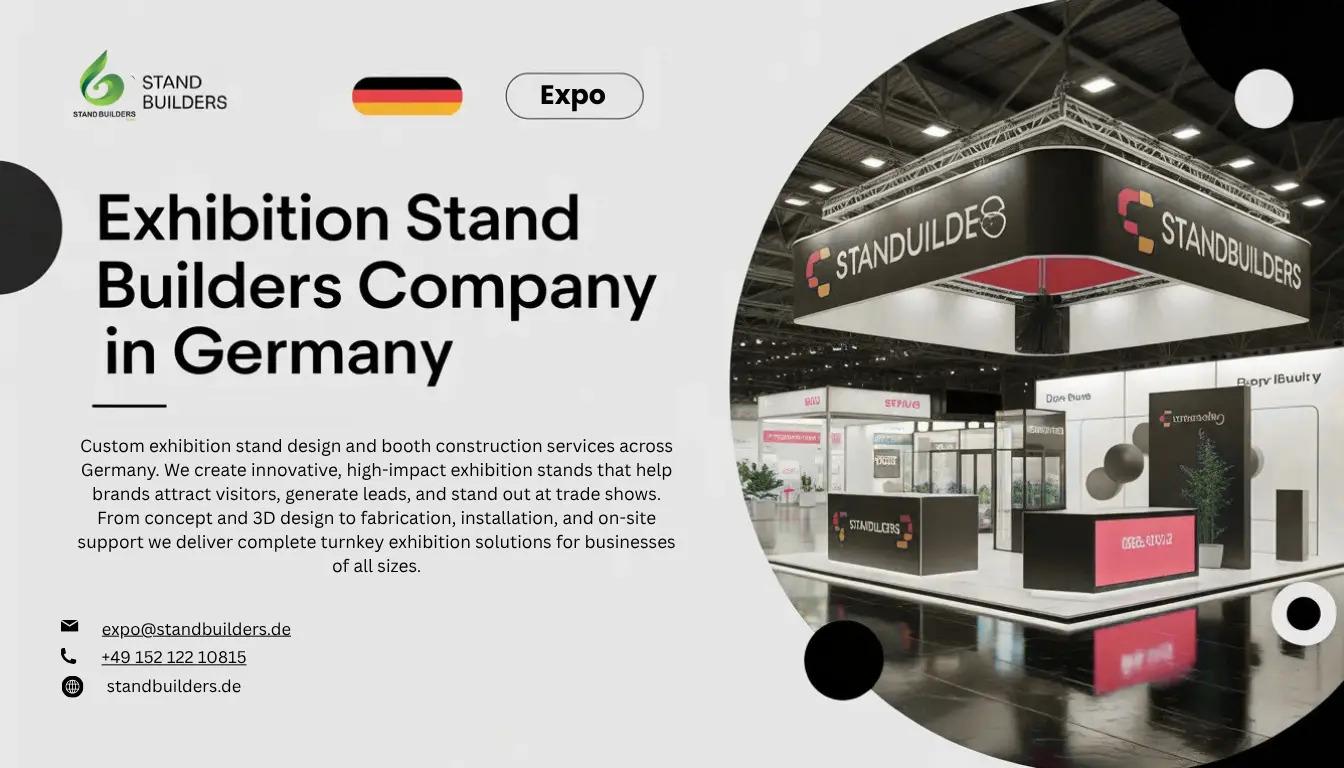
Germany has for a long time been a major destination for international trade exhibitions, providing a platform for manufacturers, technology companies, service providers, buyers, and various industry specialists from all over the world. Major events are regularly held in cities including Frankfurt, Düsseldorf, Munich, Cologne, and Berlin, the exhibitions covering areas such as the automotive industry, technology, healthcare, engineering, retail, and many other fields.
For any business that is entering this situation, taking part requires far more than just booking space on the floor. To achieve a successful exhibition presence it is necessary to carry out strategic planning, to select an appropriate Exhibition Stand Builders Company in Germany, to develop careful messaging, to design the stand in a thoughtful way and to manage the budget carefully. The stand must be used to communicate the identity of the brand as well as to support practical activities such as meetings, demonstrations, product presentations and visitor engagement.
It therefore follows that businesses can make better decisions before spending resources on an event if they understand how German exhibitions function.
Overview of Exhibitions in Germany
The exhibition sector in Germany is famous for its large size, the high level of professional organisation and its international scope. Since many of the events draw in visitors from a number of countries, exhibitions are especially beneficial for businesses that want to gain international exposure and make industry contacts.
Although major exhibition venues usually have an advanced infrastructure, exhibitors still have to look after a number of different aspects on their own. The matters concerning the construction of the stand, the graphics, the lighting, the furniture, the technology, the logistics, storage and dismantling can all have an effect on the overall exhibition experience.
For foreign exhibitors, there is also the question of the difference between just showing off products and setting up an environment in which substantial conversations can take place. Although a booth that is visually striking may draw the attention of people, its arrangement should likewise make it easy for visitors to understand the business and interact with the staff.
One reason why exhibition stand builders in Germany take projects into account from both a visual and a functional point of view is that...
Key Factors to Consider Before Participating
It is best to start planning for the exhibition several months in advance; waiting until the last minute can lead to unnecessary stress especially in cases where custom construction, international shipping, graphics or technical installations are concerned.
The first point to consider is the exhibition's objective. A company which is mainly there to generate leads will need a different layout from one that is focused on product demonstrations or private meetings. In the same way, an organization entering a new market will need more prominent brand communication and information sections.
The amount of floor space on hand is also important; with a smaller stand it will be necessary to make careful choices, but a larger one gives the possibility of including meeting rooms, demonstration areas, storage spaces, hospitality areas, and interactive displays.
The place where an exhibit is situated can as well have an effect on the movement of visitors. Before finalising the design, businesses should look at the entrance areas, the exhibitors next to them, the paths that visitors take, the restrictions imposed by the ceiling, the technical regulations, and the construction requirements particular to the venue.
Understanding Exhibition Stand Design in Germany
Generally, the design of exhibition stands in Germany combines effective visual communication with good management of space. Since German trade fairs usually have quite sophisticated stands, companies have to consider going beyond just putting their logo on a wall.
Good design typically establishes a clear visual hierarchy, so that the company name and main message can be identified from a reasonable distance, the detailed information being placed further inside the stand.
Lighting is also a major aspect of design; correct lighting can emphasize products, graphics, architectural features, and demonstration areas without causing the space to become uncomfortable or visually overwhelming.
Digital technology is becoming more and more common. Large screens, touchscreens, demonstrations of products, augmented experiences, and interactive presentations can all be used to engage visitors. Yet technology functions most effectively when it has a clear aim rather than simply being included for the sake of having a visual effect.
Types of Exhibition Stand Designs
Exhibition stands usually adopt one of several general design methods. Modular stands make use of components that can be arranged in different ways to suit various events and can be useful for companies taking part in more than one exhibition since some of the structural parts may be reused.
Because they are custom-built, the stands provide more flexibility with regard to architecture, materials, branding, lighting, and the visitor experience. They are especially useful when a company wishes to create a distinctive environment or when it needs special areas for demonstrating products.
By combining modular infrastructure with specially designed branding and architectural features one can achieve flexibility at the same time as obtaining a more individual look.
The method to be adopted will vary according to things like how often the event takes place, the size of the floor area, the requirements of the brand, the type of product, the number of visitors who are expected, and the budget available. Since no single format is suitable for all exhibitors, there is no one-size-fits-all solution.
Budget and Cost Insights
Exhibition budgets can differ a great deal. The size of the stand is obviously a factor, but construction is only one element of the overall cost.
A typical exhibition budget will have to take into account the cost of design, structural materials, graphics, furniture, lighting, audiovisual equipment, transportation, installation, dismantling, storage, utilities, internet connectivity, and venue-related services.
Since custom construction can involve specialized fabrication and extra labor, it may result in higher initial costs. Modular solutions, on the other hand, have better potential for reuse, especially when it comes to companies that take part in a number of events.
International exhibitors must also take into account the costs and scheduling issues associated with transportation and logistics. There can be extra costs and scheduling considerations when shipping materials across borders.
A budgeting procedure of a practical kind therefore distinguishes between essential requirements and optional improvements; for example, clear graphics, suitable lighting, and functional meeting areas can make a direct contribution to the visitor experience, while an expensive interactive installation may have only limited value if it does not support the exhibition's objective.
Common Mistakes Exhibitors Should Avoid
A frequent error is to begin the design process too late. Since complex exhibition projects usually go through various stages of approval, production, transportation, and installation, a delay in one of these areas can have an effect on the whole schedule.
A further problem is overcrowding. It often happens that companies try to show all their products, messages, and achievements in a small space. This can lead to a confusing visual appearance and make it hard for customers to move around.
Another practical problem is to ignore storage. Marketing materials, personal items, packaging, and equipment all need a place to go to. If there is not enough storage, the main area for visitors can soon become messy.
Some exhibitors also place a strong emphasis on looks while neglecting accessibility and the flow of visitors. A visually attractive stand which makes it difficult to have conversations or causes bottlenecks might not achieve the results it is intended to.
In fact, companies often fail to realise how important it is to maintain consistent messaging; the graphics, presentations, brochures, product demonstrations, and the way staff communicate should all tell a clear story.
When Businesses Consider Exhibition Stand Professionals
In the case of smaller or simple exhibitions, the internal teams might be capable of looking after a great many of the aspects of participation. But larger custom projects will require structural planning, technical coordination, compliance with venue regulations, fabrication, logistics, and installation.
An exhibition stand contractor in Germany might then be needed. Experienced teams are able to coordinate the practical link between the design ideas and the on-site requirements, especially since the exhibitors are not familiar with a German venue.
When they need local coordination International companies might also look into using Expo Stand builders in Germany since local knowledge can help with an understanding of the venue's procedures, the installation schedules, the approved materials, the technical requirements, and the regulations specific to the event.
When businesses are looking at different Exhibition Stand Builders Company in Germany, they should concentrate more on the scope of the project, the quality of communication, the builders' technical skills, their previous experience in similar exhibition settings, and the clarity concerning what is included in the project rather than just comparing the advertised prices.
Conclusion
To take part in a fair in Germany it is necessary to have more than just an attractive booth; successful involvement relies on understanding the audience of the event, setting clear objectives, planning the visitor's journey, keeping costs under control, and co-ordinating the design with the practical requirements of the exhibition.
An exhibition stand that has been well planned should not only support the business objectives but also ensure that the visitor experience is both simple and interesting. When it comes to complicated projects, it makes sense to consult a company specialised in building exhibition stands in Germany as part of the planning, especially since the aspects of construction, logistics, technical coordination and meeting venue requirements all have to be handled together.
In the end, proper preparation enables exhibitors to get more out of their exhibition investment, and the best results are achieved by combining careful planning with a stand that communicates clearly, works efficiently, and meets the expectations of a professional German trade-show environment.
FAQs
What is the importance of exhibitions in Germany for international businesses?
Germany holds large trade shows in a wide range of industries and draws in professional visitors from both within the country and from abroad. Because of this, trade shows provide useful settings for networking, product demonstrations, market research, and business discussions.
When should planning for an exhibition stand start?
The length of the planning timeline depends on the size of the stand and on how complex it is; custom projects usually need more preparation since design approval, fabrication, graphics, logistics, installation, and coordination with the venue all have to be arranged in advance.
What influences the price of an exhibition stand in Germany?
The total cost is affected by a number of factors such as the size of the stand, the method of construction, the materials used, the graphics, the lighting, the furniture, the technology, transportation, installation, dismantling and venue-related services.
What is the difference between modular and custom exhibition stands?
Modular stands make use of components that can generally be reused or reconfigured. Although custom stands offer more flexibility with regard to architecture, branding, materials, and functionality they may require more planning and fabrication.
When is it appropriate for a business to consider using professionals who specialize in exhibition stands?
Help is especially useful in the case of large or specially designed projects, when exhibiting internationally, for stands that involve a high degree of technical complexity, and for companies that are not familiar with the local venue regulations or with the requirements for exhibitions in Germany.

 English
 Arabic
 French
 Spanish
 Portuguese
 Deutsch
 Turkish
 Italiano
 Russian
 Romaian
 Portuguese (Brazil)
 Greek
Greek