


How Proper Concrete Compaction Improves Structural Quality
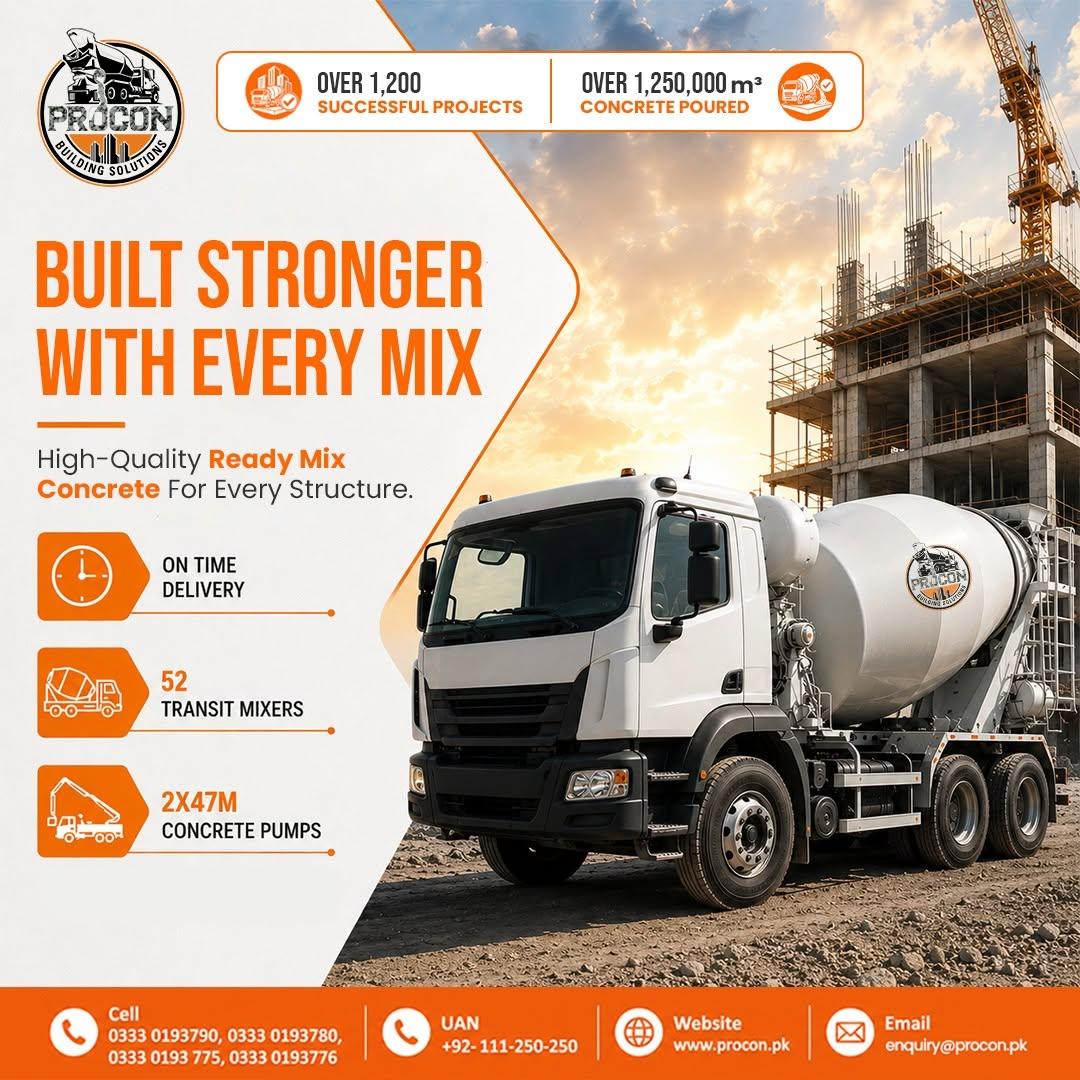
When fresh concrete is poured into formwork, it inevitably traps significant volumes of air. If left unmanaged, these trapped air pockets—alongside honeycombing and incomplete consolidation around steel reinforcement grids—can reduce the ultimate load-bearing capacity of a structure by up to thirty percent. Compaction is the vital engineering process of expelling entrapped air and consolidating the aggregate-cement matrix into a dense, uniform mass. While proper consolidation depends on skilled site execution, it begins with selecting quality materials. By utilizing factory-engineered ready mix concrete in Karachi, builders ensure optimal workability and cohesion, setting the stage for flawless mechanical compaction.
1. The Physics of Entrapped Air and Structural Voids
Freshly discharged concrete contains between one and two percent entrapped air, while hand-placed or stiff mixes can trap up to twenty percent air voids if improperly handled.
-
The Perils of Porosity: Every one percent of trapped air left inside hardened concrete translates to roughly a five percent loss in compressive strength.
-
Capillary Pathways: Unconsolidated pockets create interconnected capillary channels that invite moisture, chloride ions, and atmospheric gases deep into the core of the structure.
-
Loss of Steel Bond Strength: Voids surrounding steel rebar prevent the concrete from gripping the reinforcement bars, destroying the composite action required in reinforced concrete design.
2. Standard Methods of Concrete Compaction
Different structural elements—ranging from slender columns to massive foundation rafts—require specific mechanical compaction techniques to achieve maximum density.
-
Internal Mechanical Vibration: Needle or immersion vibrators are the most common tools used on site. They transmit high-frequency mechanical vibrations directly into the wet concrete mass, temporarily liquefying the mortar and forcing air bubbles upward.
-
External Formwork Vibration: Clamped external vibrators are utilized for thin walls, precast panels, or heavily congested rebar zones where immersion needles cannot easily fit.
-
Surface Screeding and Trowelling: Vibratory screeds and power floats compact flat floor slabs and industrial pavements, consolidating the top wearing surface.
3. Best Practices for Effective Consolidation
Executing mechanical compaction correctly requires strict adherence to industry standards to avoid both under-consolidation and over-vibration.
-
Vertical Insertion and Withdrawal: Immerse the vibrator needle vertically into the concrete quickly, and withdraw it slowly (at about 75 mm per second) to allow the insertion hole to close completely without trapping air.
-
Avoiding Formwork and Rebar Contact: Do not use the vibrator to push concrete horizontally across forms, and avoid striking steel rebar directly, as this can displace reinforcement and cause segregation.
-
Overlapping Insertion Points: Space insertions systematically at regular intervals (typically 45 to 75 cm apart) and vibrate each spot for 5 to 15 seconds until surface bubbles cease to appear and a thin layer of glistening mortar appears.
4. The Dangers of Over-Vibration
While under-vibration leaves dangerous air pockets, excessive or prolonged vibration introduces a new set of structural defects. Over-vibration causes the heavy coarse aggregates to sink to the bottom of the formwork while lighter water and fine cement mortar migrate to the top. This separation creates a weak, chalky surface layer prone to severe dusting, scaling, and plastic shrinkage cracking.
Conclusion
Proper concrete compaction is the defining bridge between pouring raw materials and achieving a certified, high-strength structural element. By eliminating entrapped air voids and locking aggregates tightly around steel rebar, compaction guarantees maximum density, impermeability, and load-bearing capacity. Sourcing consistent, high-workability formulations from a trusted provider of ready mix concrete in Karachi ensures that the mix responds perfectly to mechanical vibration. Prioritizing disciplined compaction techniques remains essential for delivering safe, durable, and enduring construction projects.
Survey No. 423, Ibrahim Hydri, behind Bol head quarter, Korangi creek road, Karachi-74900
+92 21 111 250 250

 English
 French
 Spanish
 Portuguese
 Deutsch
 Turkish
 Dutch
Dutch
 Italiano
 Russian
 Romaian
 Portuguese (Brazil)
 Greek
Greek