


Purge the Darkness and Corruption in Diablo II Resurrected by U4GM
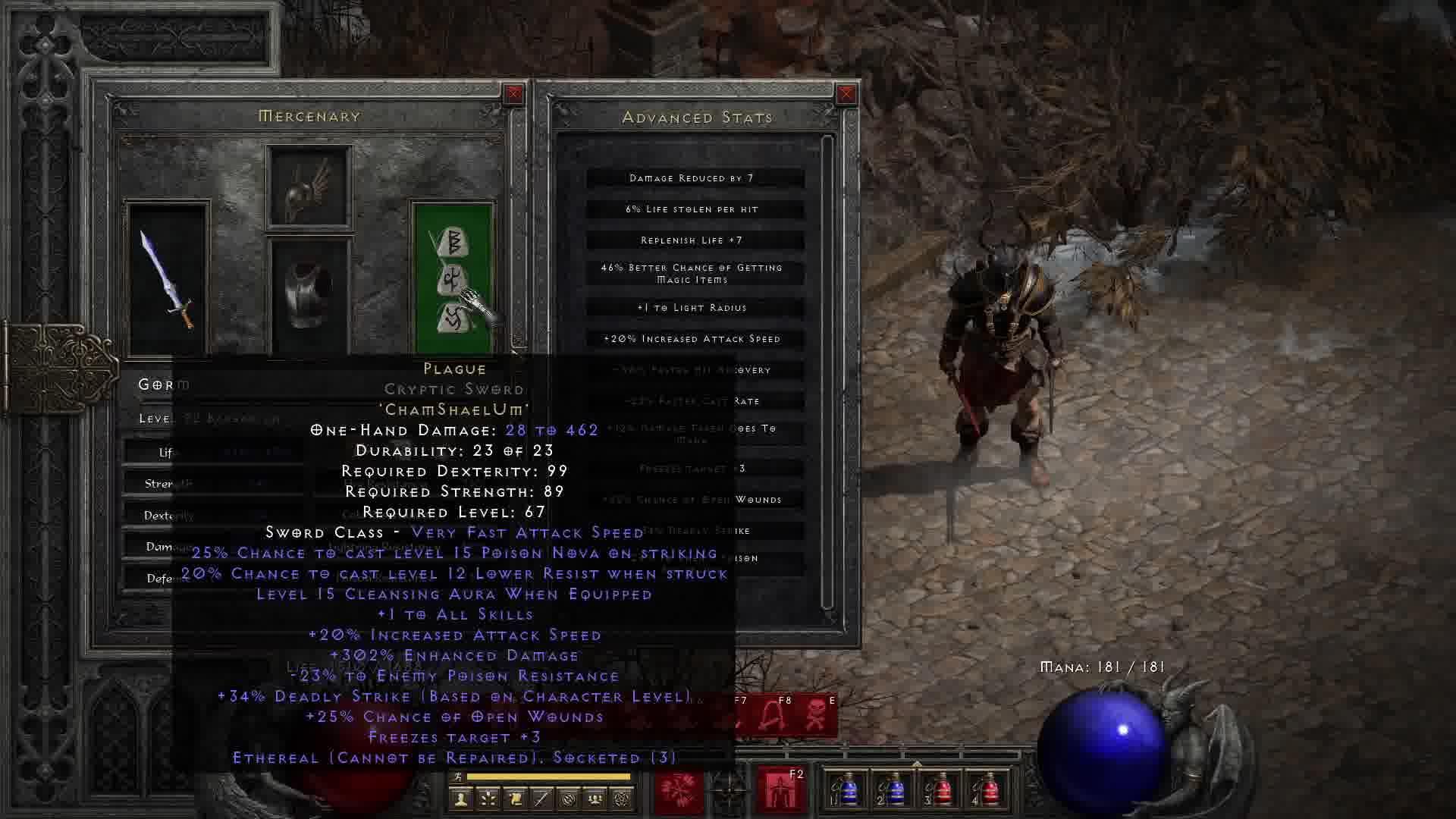
The gaming industry has spent more than two decades building upon ideas introduced by Diablo II. Loot-driven progression, randomized equipment, character builds, boss farming, crafting systems, seasonal repetition, and action-focused combat have become familiar components of modern games.
Yet D2R Items remains an unusually useful reference point because it demonstrates how these ideas work when they are tightly connected.
The game's success begins with a simple loop.
Fight monsters.
Find equipment.
Improve the character.
Fight stronger monsters.
Search for better equipment.
Repeat.
The important part is that none of these systems exists independently.
Combat is meaningful because enemies can provide valuable rewards.
Loot is meaningful because equipment changes combat.
Character progression is meaningful because stronger characters can reach more challenging content.
Difficulty is meaningful because it gives players reasons to improve.
This interconnected structure is one of the most important lessons modern developers can take from the game.
Another lesson concerns reward frequency.
Contemporary games often provide constant feedback. Players receive experience, currency, equipment, achievements, missions, and other rewards at frequent intervals. This can make progression feel active, but it can also reduce the importance of individual rewards.
Diablo II takes a different approach.
Most drops are not extraordinary.
Some are useful.
A small number are extremely valuable.
That creates contrast.
When something genuinely rare appears, the moment feels significant because the game has spent so much time refusing to guarantee it.
The system surrounding D2R Items demonstrates how much value can be created through scarcity and context. Players learn that equipment cannot be judged purely by its level or visual appearance.
A specific modifier may matter more than a larger statistic.
A socketed base may matter because of a future runeword.
An item may be valuable because it solves a particular problem for a specific build.
This is a more complex form of loot design than simply presenting a bigger number.
The game also teaches developers something about friction.
Not every inconvenience needs to be removed.
Some obstacles are important because they create meaningful decisions.
The possibility of losing equipment after death creates tension.
High difficulty exposes weaknesses.
Character choices have consequences.
Rare rewards require patience.
These mechanics can make the game less immediately comfortable, but they also create stronger emotional responses.
At the same time, Diablo II: Resurrected demonstrates that outdated inconvenience and meaningful friction are not the same thing.
The remaster removes some unnecessary annoyances through features such as Shared Stash and optional automatic gold pickup. It also allows cross-progression across supported platforms.
These improvements do not eliminate the central challenges.
That is an important distinction for remastering and modernization.
The goal does not have to be preserving every inconvenience simply because it existed in the original.
Instead, developers can identify which systems contribute to the game's identity and which merely reflect the limitations of older technology.
The visual remaster offers another lesson.
The team did not need to redesign Sanctuary's artistic identity. They needed to reveal it with modern technology.
The dark environments, gothic structures, grim character designs, and oppressive lighting remain recognizable because they were already strong artistic choices.
Modern graphics therefore become a tool for preservation rather than replacement.
The game's runeword system provides another valuable lesson.
Crafting can be more engaging when it creates long-term objectives rather than instant rewards. Collecting components, finding appropriate bases, and understanding combinations gives players reasons to remain engaged over time.
Players interested in buy D2R Items are participating in an ecosystem that exists partly because the underlying item system supports meaningful equipment value. The important point is not simply that players want powerful gear. It is that gear has enough complexity and scarcity to become an object of long-term interest.
That is difficult to reproduce.
It requires a system in which items interact with builds, scarcity, player knowledge, and future goals.
The Foundation Matters More Than the Trend
The larger lesson of Diablo II: Resurrected is that strong games do not necessarily depend on constantly changing formulas.
The technology surrounding games evolves quickly.
The principles behind engaging games can be much more durable.
Players still enjoy uncertainty.
They still enjoy mastering systems.
They still enjoy meaningful rewards.
They still enjoy overcoming difficult obstacles.
They still become attached to characters they have built over time.
D2R Items for sale brings these ideas together in a particularly durable form.
Its continued relevance is therefore less about nostalgia than about structure.
The game shows what happens when every major system supports the others instead of competing for attention.
The loot encourages combat.
Combat encourages progression.
Progression encourages experimentation.
Experimentation creates new goals.
New goals lead back to loot.
That loop is simple enough to understand immediately and deep enough to sustain players for years.
For an industry increasingly interested in retention, progression, and player engagement, that may be the most useful lesson of all.
A game does not need endless layers of systems to keep players returning.
Sometimes it needs one excellent loop—and enough uncertainty to make the next run worth taking.

 English
 Arabic
 French
 Spanish
 Portuguese
 Deutsch
 Dutch
Dutch
 Italiano
 Russian
 Romaian
 Portuguese (Brazil)
 Greek
Greek