


HCG 5000 IU: Understanding Structure, Research Applications, and Quality Standards
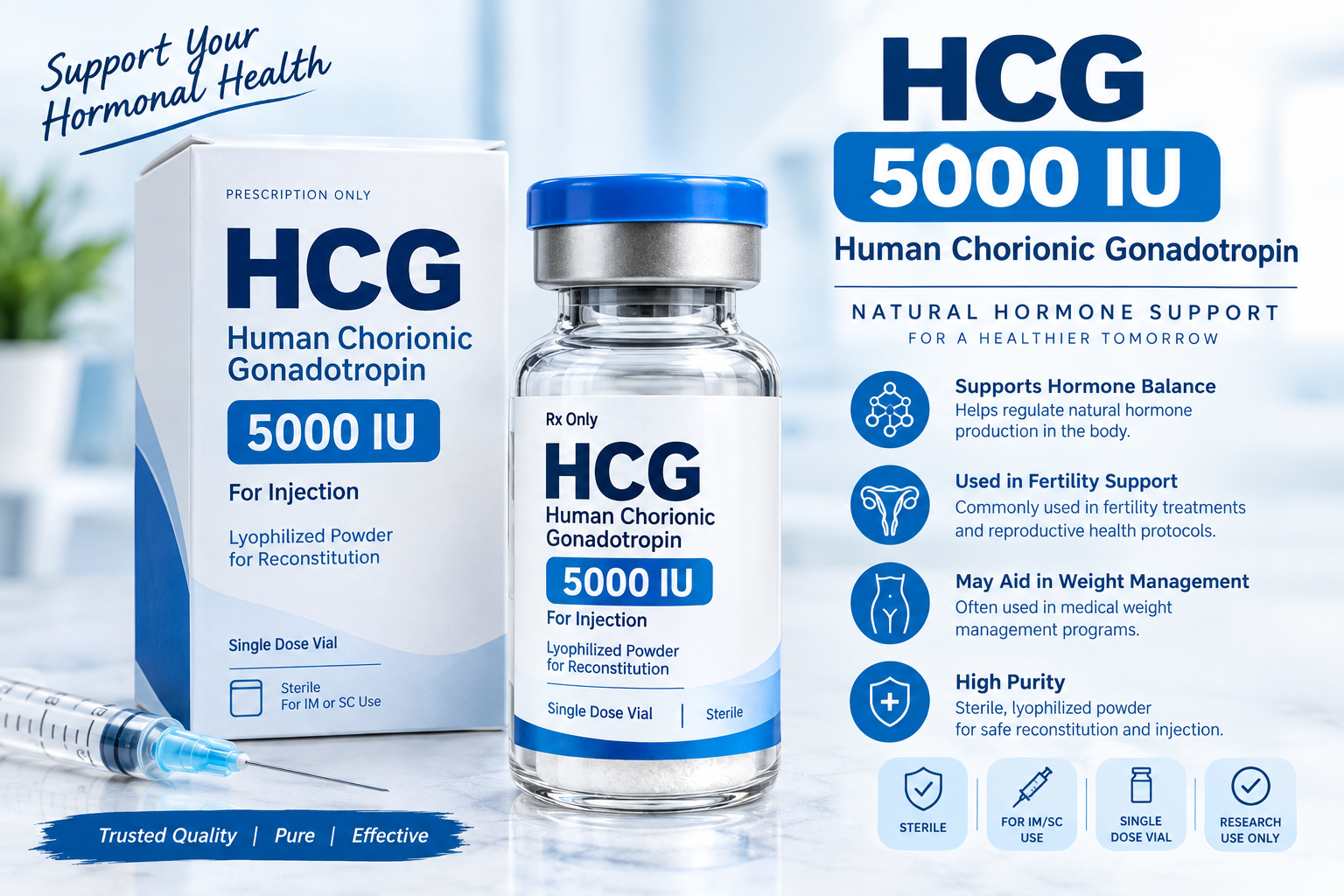
Human chorionic gonadotropin (HCG) is a glycoprotein hormone that has been widely studied in endocrinology, reproductive biology, and hormone-receptor research. Its well-characterized molecular properties make it relevant to laboratory investigations involving hormone signaling, receptor interactions, and related biological pathways.
For researchers working with reference materials or analytical samples, understanding the characteristics of an HCG formulation involves more than simply looking at the labeled strength. Factors such as molecular identity, analytical characterization, purity, documentation, and storage conditions can all be important when evaluating a research material.
This guide explores HCG 5000 IU from a laboratory and research perspective. It covers the basic molecular structure of HCG, its relevance in controlled research systems, approaches used to evaluate identity and quality, and key considerations when assessing an HCG research compound.
The discussion focuses on scientific background, laboratory evaluation, and responsible research use rather than medical treatment, therapeutic recommendations, or personal administration.
Understanding HCG and Its Biological Classification
HCG is a naturally occurring glycoprotein hormone associated with pregnancy. It is produced by placental tissue and shares structural similarities with other members of the glycoprotein hormone family, including luteinizing hormone (LH), follicle-stimulating hormone (FSH), and thyroid-stimulating hormone (TSH).
These hormones are composed of two subunits. The alpha subunit is shared among the family, while the beta subunit contributes much of the molecular specificity that distinguishes one hormone from another. This arrangement is important in laboratory research because biological activity depends on more than the presence of a particular name or nominal strength.
HCG is also notable for its interaction with the luteinizing hormone/chorionic gonadotropin receptor, commonly referred to as LHCGR. Research involving this receptor helps investigators examine signaling pathways connected to reproductive endocrinology and related cellular processes.
For researchers, the central point is straightforward: HCG is a defined biological molecule with a specific structural identity. Evaluating a research formulation therefore requires attention to the compound itself, its analytical documentation, and the conditions under which it is intended to be studied.
What Does 5000 IU Mean in HCG Research?
The abbreviation IU stands for International Units. Unlike a measurement expressed in milligrams, an IU value refers to a standardized measure of biological activity.
This distinction matters because two materials with the same mass may not necessarily have identical biological activity, while a biological preparation may be described by its activity rather than its weight. In the case of HCG, the IU designation is connected to established biological standardization.
The 5000 IU designation identifies the stated activity of the formulation. It does not, by itself, establish purity, molecular integrity, sterility, stability, or suitability for a particular experiment.
Researchers should therefore avoid treating the IU number as a complete quality assessment. A meaningful evaluation also considers:
-
The stated identity of the compound
-
The formulation and presentation
-
The analytical methods used for characterization
-
The availability of batch-specific documentation
-
The storage and handling requirements
-
The intended laboratory application
A strength label is useful, but it is only one part of the research documentation process.
Molecular Structure and Why It Matters
HCG belongs to a class of glycoprotein hormones whose activity depends on both protein structure and carbohydrate components. This makes it different from many smaller laboratory compounds that can be described primarily through a simple molecular formula.
The alpha and beta subunits contribute to the overall molecular structure, while glycosylation can influence properties such as molecular behavior, receptor interaction, and analytical detection. These characteristics are relevant when researchers study hormone-receptor systems or compare reference materials.
From an analytical perspective, the molecular identity of HCG should be considered alongside the methods used to confirm it. A single test may provide useful information, but no individual analytical technique necessarily answers every question about a complex biological molecule.
For example, researchers may distinguish between:
-
Identity confirmation
-
Purity assessment
-
Molecular characterization
-
Biological activity evaluation
-
Formulation quality
-
Stability under defined conditions
These are related but separate questions. A material may have a documented identity while still requiring additional evaluation for a specific research protocol.
HCG and the LHCGR Signaling System
One of the most important research connections involving HCG is its relationship with the luteinizing hormone/chorionic gonadotropin receptor.
LHCGR is a G protein-coupled receptor expressed in tissues involved in reproductive biology. When researchers examine HCG-related signaling, they may investigate receptor binding, intracellular signaling, gene expression, or other downstream biological responses.
This area of research is relevant to several scientific fields, including:
-
Endocrine signaling
-
Reproductive biology
-
Cell biology
-
Molecular pharmacology
-
Hormone-receptor interactions
-
Laboratory assay development
The receptor system also illustrates why biological activity should not be inferred from a label alone. Experimental outcomes can depend on receptor expression, assay design, cell type, experimental conditions, and the characteristics of the material being studied.
For a broader discussion of hormone-related research materials, researchers may also explore the CJC-1295 5mg + Ipamorelin 5mg Blend as a separate example of a research formulation involving hormone-signaling pathways.
How Researchers Evaluate HCG Identity
Identity confirmation is a fundamental part of laboratory material evaluation. The purpose is to establish that the material corresponds to the compound described in the documentation.
Depending on the research setting, identity assessment may involve analytical techniques such as mass spectrometry, chromatography, immunological methods, or other validated approaches appropriate to the material.
Each method answers a different question.
Mass spectrometry can provide information about molecular mass and related characteristics. Chromatographic methods can help separate and evaluate components. Immunological approaches may be useful when examining antigenic properties or specific molecular recognition.
However, researchers should distinguish between a method being capable of providing information and a particular test being sufficient for a specific research objective. The appropriate analytical approach depends on the formulation, the intended study, and the level of characterization required.
Purity, Identity, and Activity Are Not the Same
A common misunderstanding in laboratory purchasing is that purity, identity, and biological activity are interchangeable. They are not.
Identity asks: Is this the compound described?
Purity asks: What proportion of the material consists of the intended compound or relevant components?
Activity asks: Does the material demonstrate the expected biological function under the conditions of a defined assay?
These distinctions are especially important for glycoprotein hormones. A material may have a high reported purity while still requiring separate confirmation of biological activity. Similarly, an activity measurement does not automatically provide a complete picture of every impurity or formulation component.
For this reason, researchers should evaluate documentation according to the actual requirements of their study rather than relying on a single number.
Research Applications of HCG
HCG has a long history of scientific investigation, particularly in reproductive endocrinology and hormone biology. Laboratory studies may examine its molecular structure, receptor interactions, signaling pathways, or behavior in controlled experimental systems.
Potential research applications include:
Endocrine Biology
Researchers may investigate how glycoprotein hormones interact with receptor systems and contribute to broader endocrine signaling models.
Reproductive Biology
HCG is relevant to studies of reproductive hormone regulation, placental biology, and related cellular processes.
Molecular Pharmacology
The interaction between HCG and LHCGR provides a model for examining receptor activation and downstream signaling.
Analytical Research
HCG may also be used as a reference material in analytical method development, identification studies, and laboratory quality-control workflows.
These applications are distinct from clinical use. A research formulation should be evaluated according to its documented laboratory purpose and the requirements of the experimental system.
HCG Research and Laboratory Documentation
Documentation is one of the most useful tools available to researchers when comparing materials from different suppliers.
A complete research documentation package may include information about:
-
Compound identity
-
Stated strength or activity
-
Batch or lot identification
-
Analytical testing
-
Storage conditions
-
Formulation details
-
Intended research use
-
Relevant quality-control information
Batch-specific documentation is particularly valuable because it connects the analytical results to the actual material being evaluated.
Researchers should also consider whether the documentation is sufficiently detailed for their laboratory’s requirements. A general product description may be useful for initial screening, but a study involving sensitive analytical or biological endpoints may require more specific information.
Why Formulation Matters
The same compound can behave differently depending on its formulation and handling conditions. For biological research materials, formulation may influence stability, solubility, analytical behavior, and compatibility with a particular experimental system.
This is why researchers should not evaluate a material solely by its name or stated activity. The formulation itself may be relevant to the study design.
Important questions include:
-
What is the stated formulation?
-
What analytical information is available?
-
What storage conditions are specified?
-
Is the material supplied with batch identification?
-
Does the documentation match the intended research application?
These questions help laboratories establish a more consistent material-selection process.
HCG 5000 IU and Research Quality Assessment
When evaluating a 5000 IU HCG formulation, researchers should consider the complete quality profile rather than focusing only on the strength designation.
A practical quality assessment may include:
Identity: Is the compound clearly identified and supported by analytical information?
Activity: Is the stated IU value supported by appropriate documentation?
Purity: Is there information about the purity of the material and the methods used to assess it?
Consistency: Is batch-specific information available?
Storage: Are the handling and storage requirements clearly stated?
Research suitability: Does the formulation align with the intended laboratory application?
This approach is useful because it separates the questions of what a material is, how it has been characterized, and whether it is appropriate for a particular research workflow.
Comparing HCG With Other Research Compounds
HCG belongs to a different biological category from many other compounds found in research catalogs. Comparing them requires attention to their molecular identity, receptor targets, and intended research applications.

For example, researchers studying growth-hormone-related signaling may examine materials such as Tesamorelin 10mg as a separate research subject. That comparison should be based on documented molecular and biological characteristics rather than assuming that different compounds produce interchangeable experimental results.
Similarly, Semax 10mg represents a different research category and should be evaluated according to its own identity, analytical documentation, and intended laboratory use.
The broader lesson is that research compounds should be compared by scientific characteristics, not simply by product names or marketing descriptions.
Analytical Methods Used in HCG Research
Different analytical methods provide different types of information. Researchers may select methods based on the question they need to answer.
Chromatography
Chromatographic methods can help separate components and assess the composition of a material. Depending on the method, chromatography may provide useful information about purity or related substances.
Mass Spectrometry
Mass spectrometry can support molecular characterization by providing information about molecular mass and related analytical features.
Immunological Methods
Immunological methods may be used when researchers need to examine specific molecular recognition or antigenic properties.
Biological Assays
Biological assays can help evaluate activity under defined experimental conditions. However, assay results depend on the design of the system and should be interpreted within the context of the study.
A strong research workflow often combines more than one type of analytical evidence.
The Importance of Batch-Specific Information
Batch-specific information helps researchers connect a material to its documented analytical history.
This can be particularly important when a laboratory is comparing materials across experiments or attempting to maintain consistency over time. A batch identifier allows researchers to distinguish one preparation from another and retain a clearer record of the material used.
For laboratories that prioritize traceability, useful documentation may include:
-
Batch or lot number
-
Product identity
-
Stated activity
-
Analytical results
-
Testing date
-
Storage information
-
Supplier documentation
The more clearly these details are recorded, the easier it becomes to evaluate material consistency within a research workflow.
Research Use and Responsible Laboratory Practices
HCG research should be conducted within an appropriate laboratory framework and according to applicable institutional requirements.
Researchers should use materials only for their documented research purpose and follow the relevant laboratory procedures for handling, storage, and disposal. The appropriate requirements may vary depending on the institution, experimental system, and jurisdiction.
This article does not provide instructions for human administration, treatment, or personal use. The focus is on research documentation, scientific background, and material evaluation.
For additional information about research-oriented products and documentation, researchers can visit Ageless Vitality Research.
HCG Research in the Broader Endocrine Field
HCG is one part of a much larger field of endocrine research. Scientists studying hormone signaling often examine multiple molecular systems to understand how receptors, ligands, and intracellular pathways interact.
Research may involve comparing different hormone classes, examining receptor expression, or studying how experimental conditions influence biological responses.
For example, MOTS-c is another research compound that may be of interest to laboratories studying cellular biology and metabolic signaling. It should not be treated as interchangeable with HCG, but it illustrates how different research materials can be evaluated within distinct scientific frameworks.
Similarly, GHK-Cu belongs to a different molecular category and may be relevant to laboratories exploring other areas of biological research.
The value of a research catalog is not simply the number of compounds available. It is the ability to identify materials with clear scientific identities and documentation appropriate to the work being performed.
What Researchers Should Look for Before Selecting a Material
Before selecting an HCG research formulation, laboratories may wish to establish a checklist that reflects their own experimental requirements.
A useful checklist includes:
1. Confirm the compound identity.
Make sure the material is clearly identified and that the documentation supports the stated identity.
2. Review the activity designation.
Understand what the stated IU value represents and whether the available documentation is appropriate for the intended study.
3. Examine analytical information.
Review the methods used to characterize the material and determine whether they address the laboratory’s requirements.
4. Check batch information.
Look for batch or lot identification and associated documentation.
5. Review storage requirements.
Follow the supplier’s stated storage and handling information.
6. Consider the research application.
Evaluate whether the material is appropriate for the specific experimental system rather than assuming that all formulations are interchangeable.
7. Maintain laboratory records.
Record the material identity, batch information, and relevant analytical details for future reference.
This process helps researchers make more informed material-selection decisions without relying on a single specification.
Final Perspective
HCG remains an important subject in endocrine and reproductive biology research because of its distinctive molecular structure and relationship with hormone-receptor signaling.
For laboratories evaluating a 5000 IU formulation, the most useful approach is to look beyond the strength label. Identity, activity, purity, analytical characterization, batch information, and formulation details all contribute to a more complete understanding of the material.
Ageless Vitality Research provides a research-oriented catalog for laboratories and independent research teams seeking clearly identified compounds and supporting product information. Researchers should always evaluate materials according to their own experimental requirements and applicable laboratory standards.
Frequently Asked Questions
What is HCG?
HCG is a glycoprotein hormone associated with pregnancy and reproductive biology. It is part of a hormone family that includes luteinizing hormone, follicle-stimulating hormone, and thyroid-stimulating hormone.
What does 5000 IU mean?
The 5000 IU designation refers to the stated biological activity of the formulation. IU is different from a mass measurement such as milligrams.
Is HCG 5000 IU the same as 5000 milligrams?
No. IU and milligrams measure different things. IU refers to standardized biological activity, while milligrams refer to mass.
What is HCG studied for in research?
HCG is studied in areas such as reproductive biology, endocrine signaling, molecular pharmacology, and hormone-receptor research.
What is the LHCGR receptor?
LHCGR is the luteinizing hormone/chorionic gonadotropin receptor. It is a receptor involved in research on HCG-related signaling pathways.
Does the IU number prove purity?
No. The IU designation describes stated biological activity. Purity and identity require separate evaluation.
Why is batch-specific documentation important?
Batch-specific documentation connects analytical information to the actual material being evaluated. This can support traceability and consistency in laboratory workflows.
What analytical methods may be used to evaluate HCG?
Depending on the research objective, laboratories may use chromatography, mass spectrometry, immunological methods, biological assays, or other appropriate analytical techniques.
Can HCG be compared directly with other research compounds?
Comparisons should be based on molecular identity, receptor targets, biological characteristics, and research purpose. Different compounds are not necessarily interchangeable.
Where can researchers find HCG research information?
Researchers can review scientific literature, institutional resources, analytical documentation, and the research-oriented information available from Ageless Vitality Research.

 English
 Arabic
 French
 Spanish
 Portuguese
 Deutsch
 Turkish
 Dutch
Dutch
 Italiano
 Russian
 Romaian
 Greek
Greek