


The Cost of Driving Across Dubai Every Day: Fuel, Salik, Parking, Maintenance and Time
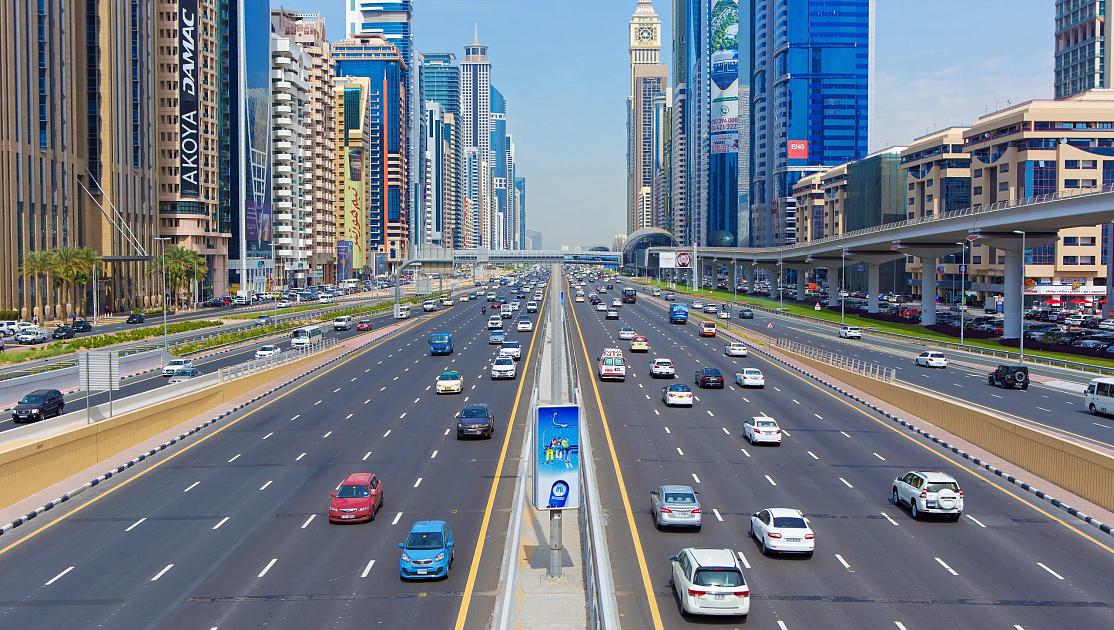
Driving across Dubai every day can cost considerably more than the amount paid at the fuel station. A daily commute can add fuel, Salik tolls, parking, vehicle maintenance, tyre wear and depreciation to the household or business budget. The actual cost depends on the distance travelled, vehicle type, route, traffic conditions and parking requirements. This guide breaks down those costs and shows how to calculate a realistic daily and monthly driving budget.
What Does Daily Driving Across Dubai Actually Cost?
The cost of driving across Dubai depends mainly on how far the vehicle travels and how often it uses toll roads. Fuel is usually the most visible running expense, but Salik and parking can add significant costs for regular commuters.
For example, a driver covering 80 km per day in a petrol vehicle that averages 12 km/L would use about 6.7 litres of fuel daily. The driver would then add any Salik charges, parking fees and vehicle running costs.
The calculation becomes more useful when you separate the costs into fixed and variable expenses:
-
Fuel: Changes with distance, fuel price and fuel economy.
-
Salik: Depends on the number and timing of toll-gate crossings.
-
Parking: Depends on the location, duration and parking zone.
-
Maintenance: Increases as mileage accumulates.
-
Tyres: Wear faster as annual mileage increases.
-
Depreciation: Reflects the vehicle's loss in value over time.
-
Time: Traffic can turn a short-distance commute into a long daily journey.
Fuel Cost for a Daily Dubai Commute
Fuel normally represents the largest direct running cost for a high-mileage petrol vehicle.
UAE fuel prices change monthly, so calculations should use the applicable price for the month being assessed. ENOC publishes the current retail prices for different fuel grades, including Special 95, Super 98 and E-Plus 91.
The basic formula is:
Daily fuel cost = Daily kilometres ÷ Fuel economy × Fuel price per litre
Consider a vehicle that travels 80 km per day and achieves 12 km/L:
-
Distance: 80 km
-
Fuel economy: 12 km/L
-
Fuel consumption: about 6.67 litres
-
At AED 3.55/L: about AED 23.68 per day
Over 26 commuting days, that becomes approximately AED 616 per month.
A larger SUV, luxury vehicle or performance car can consume considerably more fuel than a compact economy car. This makes vehicle selection particularly important for people who drive long distances every day. Drivers comparing different options can also review economy car rental options when they need a practical vehicle for a defined period rather than committing to a larger vehicle for every journey.
Salik Can Add a Significant Daily Cost
Dubai's Salik system uses variable toll pricing. Under the current structure, weekday peak periods are 6:00–10:00 am and 4:00–8:00 pm, when the charge is AED 6 per crossing. Off-peak crossings cost AED 4, while crossings from 1:00 am to 6:00 am have no charge. Sundays have a AED 4 charge during the applicable periods, except public holidays and events.
This matters because a driver who crosses several Salik gates during a daily commute can accumulate toll costs quickly.
For example:
|
Daily Salik crossings |
Approx. weekday peak cost |
26 commuting days |
|
1 |
AED 6 |
AED 156 |
|
2 |
AED 12 |
AED 312 |
|
4 |
AED 24 |
AED 624 |
These figures illustrate the toll component only. A route can pass through the same or different toll gates, and the actual charge depends on the applicable pricing period.
Route planning therefore affects the driving budget. A slightly different route or travel time can change the number and price of Salik crossings.
Parking Adds Another Layer to the Cost
Parking becomes important when the daily journey includes a workplace, shopping district, commercial area or other destination with paid parking.
Dubai's RTA states that parking costs vary according to the parking zone and duration. Drivers can pay for public parking through several channels, including RTA applications, SMS and other approved payment methods.
A driver who pays even a modest parking fee every working day can add hundreds of dirhams to annual transportation costs.
Parking also affects the effective cost of a commute because drivers sometimes spend additional time searching for a space. In busy commercial districts, the financial cost and time cost can therefore rise together.
Vehicle Maintenance Should Be Included
Fuel and Salik are easy to calculate because they produce visible transactions. Maintenance is less obvious because the expense arrives periodically.
Frequent driving increases mileage and therefore increases the need for:
-
Engine oil and filter servicing
-
Brake inspection and replacement
-
Tyre replacement
-
Wheel alignment and balancing
-
Battery replacement
-
Air-conditioning servicing
-
Suspension and steering component checks
-
Scheduled manufacturer maintenance
A vehicle travelling 2,000 km each month will generally accumulate wear much faster than one travelling 800 km.
This is one reason monthly car rental can be relevant for drivers who need a vehicle for an extended period but want the rental cost to be easier to budget. The comparison should include the rental price, mileage allowance, insurance terms, fuel and any additional charges rather than looking only at the advertised monthly rate.
Depreciation Is a Real Driving Cost
Depreciation represents the reduction in a vehicle's value over time.
High annual mileage can influence resale value because buyers generally consider mileage alongside the vehicle's age, condition, service history and model demand.
For someone driving across Dubai every day, depreciation can therefore become a meaningful part of the total cost of ownership.
A simple way to estimate it is:
Annual depreciation = Purchase price − Estimated resale value
Then divide the result by the expected annual mileage to estimate a depreciation cost per kilometre.
This calculation will not produce an exact market value, but it provides a more realistic picture than treating fuel as the entire cost of driving.
How Vehicle Type Changes the Daily Cost
Different vehicle categories create different cost profiles.
|
Vehicle category |
Typical cost characteristics |
|
Economy car |
Lower fuel consumption and generally lower running costs |
|
Sedan |
Balanced fuel economy, comfort and practicality |
|
SUV |
More space and capability but often higher fuel consumption |
|
Luxury car |
Higher purchase value, depreciation and maintenance exposure |
|
Sports car |
Higher fuel, tyre, insurance and maintenance costs can apply |
|
Hybrid |
Can reduce fuel consumption, particularly in suitable driving conditions |
|
EV |
Avoids petrol costs but introduces charging and electricity considerations |
The important point is that the cheapest vehicle to buy is not necessarily the cheapest vehicle to operate. Drivers should consider total cost over the period they actually expect to use the vehicle.
A Practical Example: 80 km Every Day
Consider a commuter who drives 80 km on each working day and travels 26 days per month.
Assume:
-
80 km daily distance
-
12 km/L fuel economy
-
AED 3.55/L petrol
-
Two AED 6 peak Salik crossings per day
-
AED 5 average daily parking cost
-
Maintenance, tyres and depreciation excluded from the basic calculation
The estimated direct daily cost becomes:
|
Cost |
Daily estimate |
|
Fuel |
AED 23.68 |
|
Salik |
AED 12 |
|
Parking |
AED 5 |
|
Total |
AED 40.68 |
At 26 working days, this equals approximately AED 1,058 per month.
That figure does not represent the complete cost of vehicle ownership. Maintenance, tyres, insurance, registration, depreciation and financing can increase the real cost considerably.
What Happens When the Daily Distance Reaches 120 km?
Long-distance commuters can see the difference quickly.
Using the same 12 km/L vehicle and AED 3.55/L petrol:
120 ÷ 12 × AED 3.55 = AED 35.50 per day in fuel
At 26 commuting days:
AED 35.50 × 26 = AED 923 per month in fuel alone.
Adding two peak Salik crossings each day would add another AED 312 per month, before parking and other vehicle expenses.
This demonstrates why distance matters so much. A vehicle that appears economical during occasional use can become expensive when driven several thousand kilometres every month.
Time Is Part of the Real Cost
Money is not the only resource consumed by a daily cross-city commute.
Dubai's road network connects residential, commercial and industrial areas across a large metropolitan area. Traffic conditions can change travel times significantly, particularly around major commuter periods.
The RTA continues to implement road and traffic improvements across Dubai. In 2026, for example, the authority announced traffic improvements at 28 locations as part of its summer road programme.
A driver should therefore consider:
Daily commute cost = Fuel + Salik + Parking + Maintenance + Tyres + Depreciation + Time
The final component is difficult to express in dirhams, but it matters when comparing different commuting arrangements.
How to Calculate Your Own Dubai Driving Cost
Use your actual figures instead of relying on a generic estimate.
Step 1: Calculate monthly kilometres
Daily kilometres × Number of driving days = Monthly kilometres
For example:
80 km × 26 days = 2,080 km per month
Step 2: Calculate fuel consumption
Monthly kilometres ÷ Vehicle km/L = Monthly litres
For a vehicle returning 12 km/L:
2,080 ÷ 12 = 173.3 litres
Step 3: Calculate fuel expenditure
Monthly litres × Current fuel price = Monthly fuel cost
Step 4: Add Salik
Count the actual toll crossings and apply the correct peak, off-peak or other applicable rate.
Step 5: Add parking
Use the actual daily, hourly or monthly parking cost for the destination.
Step 6: Add ownership costs
Include:
-
Insurance
-
Registration
-
Scheduled servicing
-
Repairs
-
Tyres
-
Battery
-
Depreciation
-
Financing costs, if applicable
This produces a much more useful estimate of the true cost of driving across Dubai every day.
Is Driving Every Day Expensive in Dubai?
Daily driving becomes increasingly expensive as distance, toll crossings, parking time and vehicle consumption increase. Fuel may appear to be the main expense, but Salik, maintenance, depreciation and parking can materially change the final figure.
For someone who only needs a vehicle temporarily, comparing the total ownership cost with weekly car rental or long-term car rental pricing can provide a more complete financial comparison. The relevant figure is the total cost for the required period, including mileage, insurance, fuel, deposits and other applicable charges.
For high-mileage commuters, the most useful approach is to calculate the cost per kilometre and per month rather than focusing on the fuel bill alone. That method reveals how vehicle category, route choice and driving frequency affect the overall transportation budget.

 English
 Arabic
 French
 Spanish
 Deutsch
 Turkish
 Dutch
Dutch
 Italiano
 Russian
 Romaian
 Portuguese (Brazil)
 Greek
Greek