


Botulinum Toxin Market Finds Fresh Momentum in Aesthetic Treatment Demand
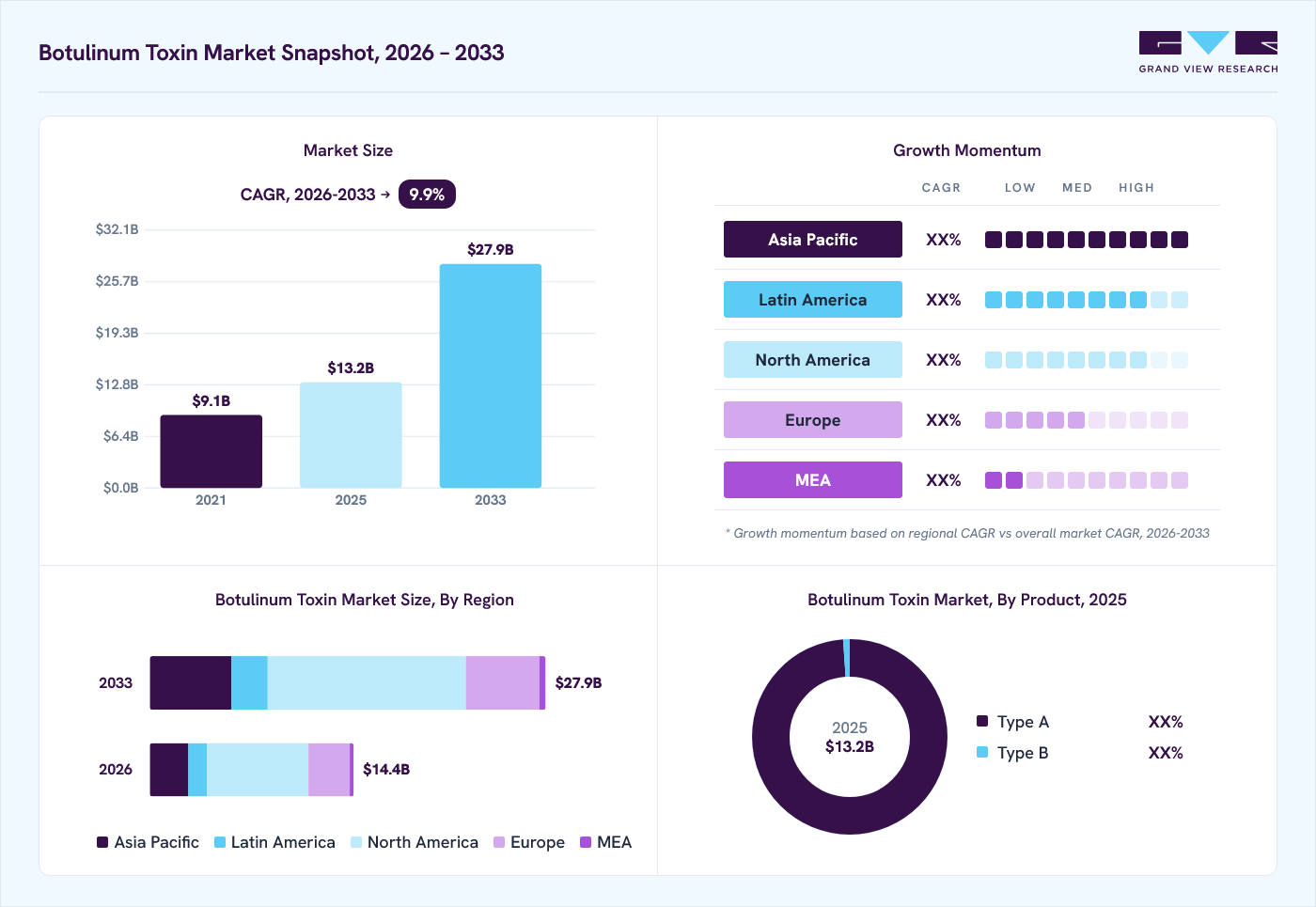
The botulinum toxin market is expanding as demand grows for minimally invasive aesthetic procedures and therapeutic applications across multiple medical specialties. The market was valued at USD 13.2 billion in 2025 and is projected to reach USD 27.9 billion by 2033, growing from USD 14.4 billion in 2026 at a 9.9% CAGR from 2026 to 2033. North America accounted for a 49.8% revenue share in 2025, while Asia Pacific is identified as the fastest-growing regional market during the forecast period.
Market Breakdown at a Glance
Botulinum toxin is a protein and neurotoxin produced by the bacterium Clostridium botulinum. The market is segmented by product, application, end use, and region. Product categories include botulinum toxin Type A and Type B, while applications span therapeutic and aesthetic uses. End-use settings include hospitals, dermatology clinics, and medspas and cosmetic centers.
The Type A segment held the largest product share at 98.8% in 2025. Products such as Botox, Dysport, and Xeomin are included within the Type A category. The availability of multiple products and their use across both aesthetic and therapeutic procedures are supporting continued demand.
Aesthetic Applications Remain a Major Growth Engine
The aesthetic segment accounted for the largest application share at 57.5% in 2025. Rising consumer preference for minimally invasive facial rejuvenation, increasing awareness of anti-aging treatments, and the temporary nature and relatively short treatment time of botulinum toxin injections are contributing to segment expansion.
Botulinum toxin is used for the temporary improvement of dynamic facial wrinkles, including glabellar lines, forehead lines, and lateral canthal lines, commonly known as crow’s feet. The market page also identifies chemical browlift and other aesthetic procedures as applications supporting industry growth.
Therapeutic Demand Broadens the Market Opportunity
Beyond aesthetic treatments, expanding therapeutic applications are supporting recurring demand for botulinum toxin. The product is used across several medical specialties and is associated with conditions including chronic migraine, cervical dystonia, spasticity, overactive bladder, and hyperhidrosis.
Growing clinical validation, regulatory approvals, and inclusion in treatment pathways are supporting adoption across healthcare settings. Chronic conditions can require periodic intervention, creating recurring treatment patterns. The report notes that botulinum toxin remains incorporated within clinical guidelines across multiple neurological and urological indications.
Medspas and Cosmetic Centers Strengthen End-Use Demand
Medspas and cosmetic centers represented the largest end-use segment, accounting for 44.9% in 2025. This segment is expected to grow at a 10.4% CAGR. Increasing preference for aesthetic procedures in dermatology clinics, cosmetic centers, and medspas is contributing to this growth.
Hospitals accounted for 43.0% of revenue in 2025. Advanced healthcare facilities and growing awareness of aesthetic procedures are supporting hospital-based activity, while therapeutic procedures involving dystonia, spasticity, chronic migraine, and other conditions contribute to hospital demand.
Minimally Invasive Procedures Influence Market Expansion
A shift from invasive procedures toward minimally invasive treatments is an important factor supporting botulinum toxin demand. Such procedures offer benefits including smaller incisions, shorter hospital stays, quick outpatient services, rapid wound healing, less pain, and a lower risk of complications compared with invasive surgeries.
The market is also being supported by increasing awareness of aesthetic enhancement, rising disposable incomes, growing acceptance of aesthetic procedures among men and younger demographics, and the increasing availability of skilled practitioners.
Regional Dynamics Create Different Growth Opportunities
North America dominated the market with a 49.8% revenue share in 2025. Increasing disposable income and the growing number of cosmetic procedures are contributing to demand. The U.S. held the largest market share in 2025.
Asia Pacific is expected to record the fastest CAGR of 11.3% over the forecast period. Favorable reimbursement, a large patient population, developed healthcare facilities, advanced techniques, and cost-effective treatment options are identified as important growth factors.
Europe followed North America in revenue share in 2025 and is expected to maintain its position over the forecast period. Latin America presents untapped opportunities in developing countries, while the Middle East and Africa market is gaining momentum from increasing demand for facial injectables and aesthetic products.
Cost and Affordability Remain Key Market Considerations
Despite expanding demand, the high cost of treatment remains a restraint. Botulinum toxin procedures can be discretionary and predominantly out-of-pocket, while the recurring nature of injections can increase the cumulative financial burden. This can limit patient penetration and treatment frequency, particularly in price-sensitive markets.
Botulinum Toxin Market Outlook
The combination of aesthetic demand, expanding therapeutic indications, minimally invasive treatment preferences, clinical evidence, and regulatory approvals is shaping the market outlook. With the market projected to increase from USD 14.4 billion in 2026 to USD 27.9 billion by 2033, product development and broader therapeutic adoption are expected to remain important areas of market activity.
FAQ
How big is the botulinum toxin market?
The botulinum toxin market was valued at USD 13.2 billion in 2025 and is estimated at USD 14.4 billion in 2026. It is projected to reach USD 27.9 billion by 2033, expanding at a 9.9% CAGR from 2026 to 2033.
What challenges are affecting the botulinum toxin market?
High treatment costs and limited affordability remain important constraints. The recurring nature of injections can increase the cumulative financial burden, while aesthetic procedures are generally out-of-pocket expenses, limiting adoption among price-sensitive patient groups.
Key Botulinum Toxin Companies:
· Ipsen Group
· Allergan, Inc.
· Metabiologics
· Merz Pharma
About us:
Grand View Research, a market research and consulting company, provides syndicated research reports, customized research reports, and consulting services. Grand View Research database is used by the world's renowned academic institutions and Fortune 500 companies to understand the global and regional business environment. Our database features thousands of statistics and in-depth analysis on 46 industries in 25 major countries worldwide.

 English
 Arabic
 French
 Spanish
 Portuguese
 Deutsch
 Turkish
 Italiano
 Russian
 Romaian
 Portuguese (Brazil)
 Greek
Greek