


How Can Ready-Made Media Improve Control in Routine Microbiology?
A Practical Approach to Faster Culture Setup, Consistent Testing and Better Microbial Monitoring
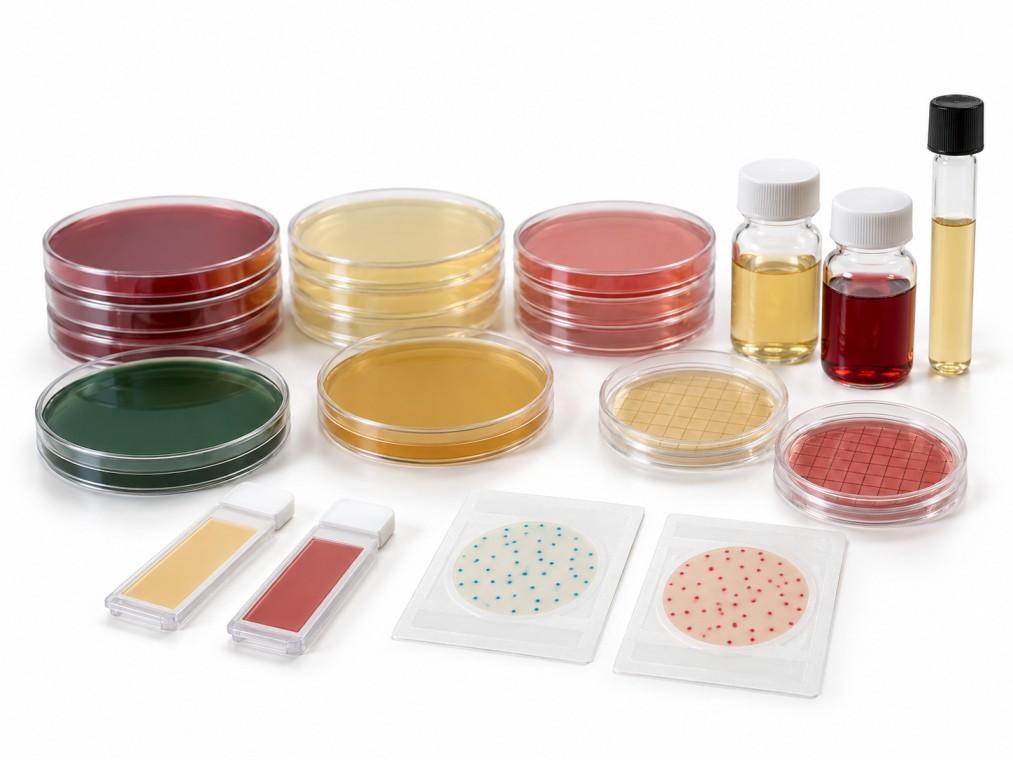
Reliable microbiology depends on creating suitable and repeatable conditions for microorganisms to grow. In laboratories where many samples are processed, Ready-Made Media can provide a practical way to reduce preparation work while supporting consistent culture procedures. Instead of preparing every medium from basic ingredients before testing begins, laboratories can select prepared formats appropriate to the organism, sample and analytical purpose, allowing more attention to be given to inoculation, incubation and interpretation.
Why Is Culture-Media Consistency So Important?
Microbial growth is strongly influenced by the environment provided by the culture medium. Changes in nutrient composition, pH, moisture or preparation conditions can affect how organisms develop.
For routine microbiological work, uncontrolled variation can make results harder to compare. A change observed between two samples should ideally reflect the samples themselves rather than differences in how their media were prepared.
Ready-made formats can reduce several preparation variables because the medium is supplied in a prepared form. Laboratories still need to follow the product requirements and test method, but fewer manual preparation steps can make routine workflows easier to standardise.
This is especially valuable when the same procedure is performed repeatedly by different analysts or across multiple testing days.
When Are Ready-Made and Dehydrated Media Used Differently?
Prepared media are not the only option available for microbiological cultivation. Laboratories may also work with Dehydrated Nutrient Media For Microbiology when they prefer to prepare required volumes internally.
Dehydrated formulations can provide flexibility when laboratories need to produce larger quantities or control the timing of media preparation. Ready-made formats, by comparison, can be convenient when reducing preparation stages is a higher priority.
The correct choice depends on workload, laboratory resources, required media volume and the method being followed. Both approaches can form part of the same microbiology facility, with each selected for different testing situations.
How Can Prepared Media Support Faster Sample Turnaround?
Media preparation can involve several individual stages before an actual sample is tested. Depending on the formulation, analysts may need to measure ingredients, dissolve them, adjust conditions, sterilise the mixture and dispense it into suitable vessels.
Using prepared media can reduce the time between receiving a sample and beginning cultivation.
This does not shorten the biological incubation period itself, but it can make the surrounding workflow more efficient. When laboratories receive multiple samples during a busy period, reducing preparation demands can help staff organise testing schedules more effectively.
Prepared media can also be useful for unplanned testing where suitable culture material is needed without beginning a complete media-preparation process.
Ready-Made Media in Hygiene Programmes
Routine microbial testing often extends beyond research samples. Production areas, laboratory surfaces and controlled workspaces may need to be evaluated as part of a structured Hygiene Monitoring programme.
Culture-based monitoring can help laboratories detect changes in microbial conditions over time. The value comes not simply from obtaining one result, but from performing tests consistently enough to recognise trends.
Prepared media can make recurring monitoring easier because laboratories can maintain a defined sampling routine without repeatedly preparing small batches of culture medium specifically for each monitoring session.
Sampling location, timing, incubation and interpretation should remain consistent so results from different monitoring periods can be meaningfully compared.
Why Does the Culture Container Matter?
A suitable medium is only one part of microbial cultivation. The vessel in which the culture is handled can also influence how conveniently the procedure is performed.
Appropriate Culture Vials can support microbiology workflows involving small-volume cultures, sample handling or controlled incubation procedures.
The choice of vessel should reflect the sample volume, type of culture, closure requirements and laboratory method. Containers should also be handled aseptically so that microorganisms from the surrounding environment are not accidentally introduced.
When media and culture vessels are selected as part of one coordinated workflow, laboratories can improve organisation and reduce unnecessary sample transfers.
What Should Be Checked Before Using Prepared Media?
Convenience should never replace basic quality checks.
Before inoculation, analysts should inspect the medium and its packaging. Damage, unexpected changes in appearance or evidence of contamination may indicate that the material is unsuitable for use.
Storage instructions and expiry information should also be followed. Some prepared media may require specific temperature or light conditions to maintain performance during storage.
Once opened, exposure to the surrounding environment should be kept appropriate to the procedure. Good aseptic practice remains essential even when the medium itself arrives ready for use.
Contamination Control Beyond the Culture Medium
Unexpected microbial growth does not always originate from the sample being investigated. Work surfaces, tools and handling procedures can introduce microorganisms during preparation or inoculation.
For this reason, microbiology laboratories often combine culture procedures with appropriate cleaning practices. Disinfectants And Biocides can form part of broader laboratory hygiene programmes designed to control microbial contamination on suitable surfaces and equipment.
Cleaning and disinfection procedures should be selected according to the laboratory environment and material compatibility. They should also be kept separate from open culture handling so that residues or aerosols do not unintentionally interfere with microbiological work.
How Can Ready-Made Media Improve Workflow Traceability?
Standardised testing becomes more useful when laboratories can reconstruct how a result was obtained.
Records may include the media type, batch or lot information, sample identification, inoculation date, incubation conditions and observation time. Maintaining these details helps analysts investigate unusual results and compare current findings with previous testing.
Ready-made media can fit well into this documentation structure because the supplied product and its associated batch information can be linked directly to the testing record.
If unexpected growth patterns occur, traceability makes it easier to determine whether the issue may relate to the sample, handling conditions, incubation or the media used.
Selecting Ready-Made Media by Application
Prepared media should be chosen according to the biological question rather than simply by format. A medium suitable for general cultivation may not be appropriate when a method requires selective or specialised growth conditions.
Laboratories should therefore consider the organism or microbial group being investigated, sample source, incubation requirements and intended interpretation before choosing a product.
The most useful ready-made medium is the one that fits the validated workflow while reducing unnecessary preparation without changing the purpose of the test.
Creating a More Controlled Microbiology Workflow
Ready-made media can support more efficient microbiological operations by simplifying preparation and helping laboratories maintain consistent culture conditions. Their value becomes even greater when they are combined with suitable culture vessels, documented hygiene monitoring, careful storage and effective contamination-control practices.
Rather than treating prepared media only as a convenience product, laboratories can use them as part of a broader strategy for repeatable, organised and traceable microbiological testing. This approach can make routine culture work easier to manage while preserving the controlled conditions required for dependable laboratory results.

 English
 Arabic
 French
 Spanish
 Portuguese
 Deutsch
 Turkish
 Dutch
Dutch
 Italiano
 Romaian
 Portuguese (Brazil)
 Greek
Greek