


Solar Panels vs. Solar Water Heaters: PV vs. Solar Thermal (2026 Guide)
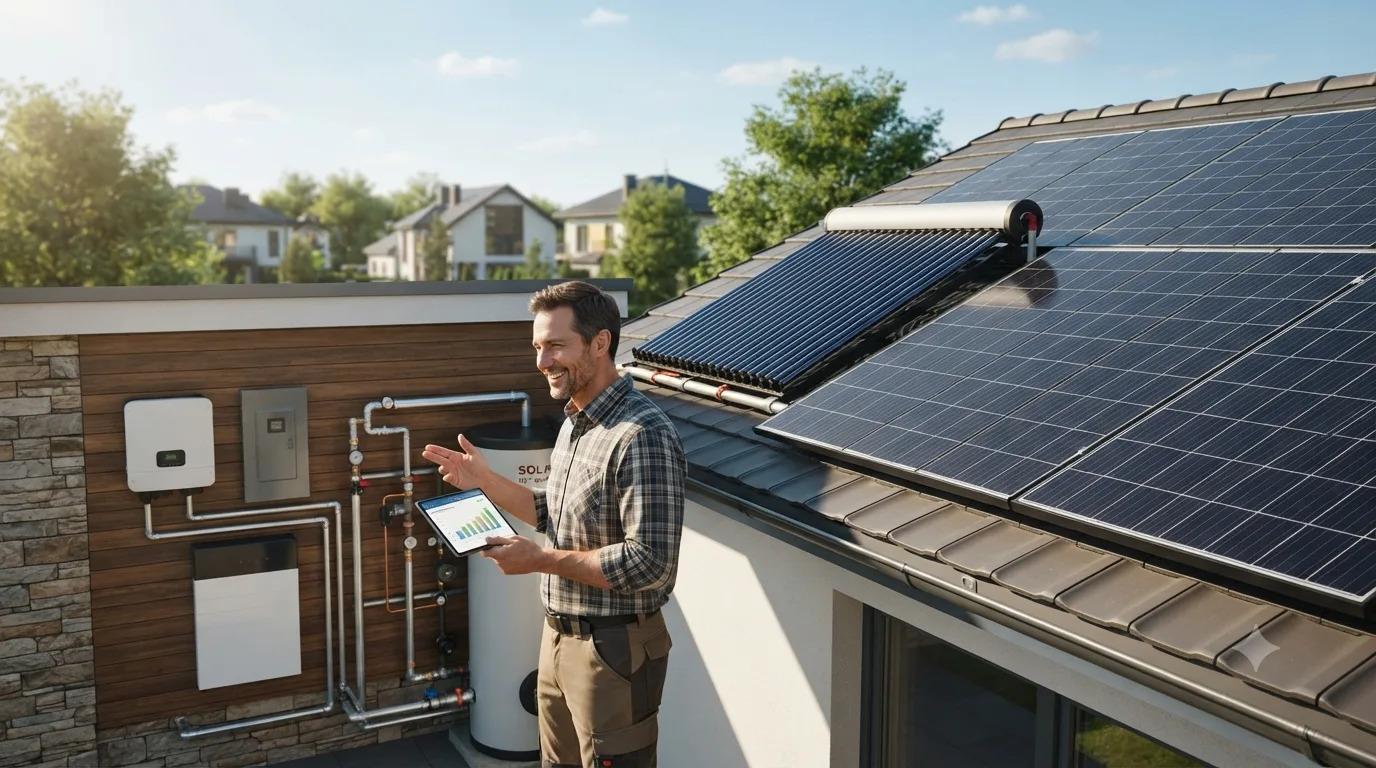
When people think about harnessing the sun, the traditional black rooftop solar panel is usually the first thing that comes to mind. However, solar energy technology branches into two entirely different systems: Solar Photovoltaic (PV) and Solar Thermal.
While both use the sun's energy, they serve entirely different purposes, operate on different physics, and yield different outputs. Understanding the contrast between PV and solar thermal helps homeowners and businesses choose the right solution for their specific energy needs.
1. Core Differences & How They Work
Solar Photovoltaic (PV)
-
What it does: Converts sunlight directly into electricity using semiconductor materials (silicon solar cells).
-
The Process: When photons hit the PV cells, they excite electrons and generate Direct Current (DC) electricity. An inverter then converts this DC power into Alternating Current (AC) to power household appliances, lights, or equipment, or feed excess power back into the grid.
Solar Thermal (Solar Water Heaters)
-
What it does: Captures sunlight to produce heat rather than electricity.
-
The Process: Solar thermal collectors (often flat-plate or evacuated tubes) absorb solar radiation and transfer that heat to a fluid (water or an antifreeze mixture) running through pipes. This heated fluid is then pumped or circulated into a storage tank to provide domestic hot water or space heating.
2. Efficiency and Performance
-
Energy Efficiency: Solar thermal systems are significantly more efficient at capturing energy, converting roughly 40% to 70% of incident sunlight directly into usable heat. In contrast, standard PV panels convert roughly 15% to 23% of sunlight into electricity.
-
The Versatility Catch: While solar thermal wins on raw conversion efficiency, its output is strictly heat. PV-generated electricity, on the other hand, is vastly more flexible. Electricity can run appliances, charge electric vehicles, power cooling systems, or be turned into heat via electric resistance elements or heat pumps.
3. Applications and Maintenance
Solar PV
-
Best For: Universal power needs—running whole homes, commercial buildings, agricultural water pumps, and industrial operations.
-
Maintenance: Extremely low maintenance. PV systems have no moving parts, requiring only occasional surface cleaning and periodic inverter replacements every 10 to 12 years.
Solar Thermal
-
Best For: High-demand hot water applications, such as residential homes, hospitals, hotels, and community swimming pools.
-
Maintenance: Slightly more complex. Because they rely on moving fluids, pumps, valves, and specialized storage setups, they require more regular mechanical checks and fluid upkeep over time.
Conclusion: Which One Do You Need?
Choosing between the two comes down to what your property requires most:
-
If your primary goal is to lower overall electricity bills, run household appliances, and achieve broad energy independence, Solar PV is the industry standard and most versatile choice.
-
If your property has a massive, constant demand for hot water and you want a dedicated, highly efficient thermal setup to offset gas or electric water heating costs
https://solarbazaar.io/uk/comparisons/solar-basics/solar-panels-vs-solar-water-heater

 English
 French
 Spanish
 Portuguese
 Deutsch
 Turkish
 Dutch
Dutch
 Italiano
 Russian
 Romaian
 Portuguese (Brazil)
 Greek
Greek