


The Technology Shift Behind Nuclear Medicine Market Growth Through 2033
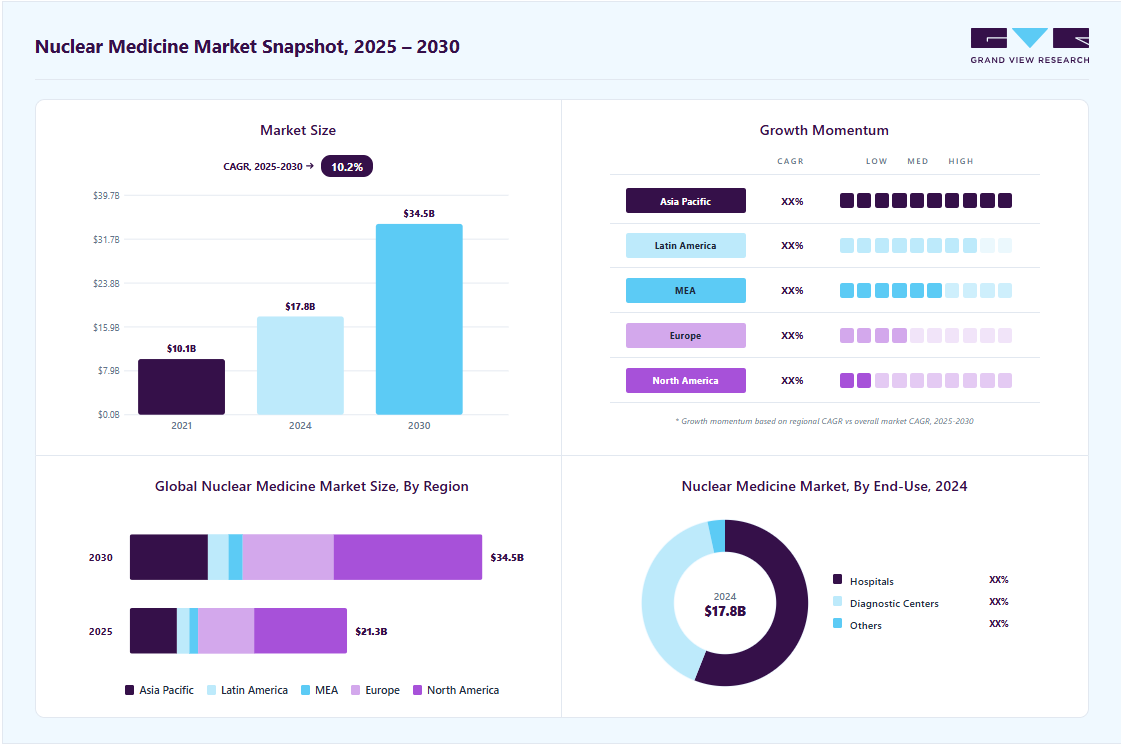
The nuclear medicine market is entering a period of steady expansion as healthcare systems increasingly adopt precision diagnostics and targeted therapies. The market was valued at USD 21.3 billion in 2025 and is projected to reach USD 38.2 billion by 2033, growing at a 6.8% CAGR from 2026 to 2033. The market is estimated to reach USD 24.1 billion in 2026. Growth is being supported by a robust product pipeline, favorable government initiatives, rising demand for advanced imaging, and increasing adoption of radiopharmaceutical-based therapies.
Precision Diagnostics and Targeted Therapies Strengthen Demand
The increasing demand for precision diagnostics and targeted treatment is a major factor shaping nuclear medicine market growth. PET and SPECT imaging technologies are being increasingly used across oncology, cardiology, and neurology applications. At the same time, theranostics is bringing diagnosis and treatment closer together by combining complementary radiopharmaceuticals for patient selection, disease assessment, and targeted therapy.
The rising emphasis on early disease detection and personalized medicine is also supporting adoption. Nuclear medicine can deliver radiation directly to targeted tumor sites while limiting exposure to surrounding healthy tissues, strengthening its role in precision oncology.
Diagnostic Products Lead the Market
The diagnostic segment held the largest product share at 76.8% in 2025 and is expected to register the fastest CAGR during the forecast period. A large patient base and increasing availability of technologies such as PET and SPECT are supporting this segment.
About 50 million nuclear medicine procedures are performed annually, while demand for radioisotopes increases by around 5% every year. The expanding use of radiotracers for tumor diagnosis, combined with technological advancements, is creating additional opportunities for diagnostic nuclear medicine.
Theranostics Creates New Growth Opportunities
The increasing adoption of theranostics in oncology is a key market driver. By combining diagnostic imaging with targeted radionuclide therapy, theranostic approaches can help identify suitable patients, assess disease progression, and support personalized treatment decisions.
A growing pipeline of radiopharmaceuticals is further strengthening this opportunity. Products including betalutin, yttrium-90 microspheres, PNT2003, and 177Lu-PNT2002 are among those identified in clinical trials. Continued research, clinical validation, regulatory approvals, and investment in isotope production are expected to support further development.
Urology Emerges as a Major Application Area
The urology segment accounted for the largest application share at 23.6% in 2025 and is anticipated to grow at the fastest CAGR during the forecast period. Increasing prevalence of urological diseases, particularly prostate cancer, is contributing to demand for advanced diagnostic and therapeutic solutions.
In 2022, around 1,467,854 new cases of prostate cancer were reported worldwide. The growing requirement for novel approaches to diagnosis and treatment is creating additional opportunities for nuclear medicine technologies within urological care.
Hospitals Remain the Leading End-Use Setting
Hospitals represented the largest end-use share at 57.0% in 2025. Most therapeutic nuclear medicine procedures are performed in hospital settings, where advanced imaging and radiopharmaceutical therapies can be integrated into specialized care pathways.
The approval of therapeutic radioisotopes such as Pluvicto and Lutathera, along with additional products in the pipeline, is expected to encourage greater adoption in hospitals. Around 20 million nuclear medicine procedures were performed annually in the U.S. in 2023, highlighting the importance of hospital-based nuclear medicine services.
Medical Isotope Supply Remains a Critical Challenge
Despite strong demand, limited availability of medical isotopes and supply chain constraints remain important restraints. Many isotopes are produced at a limited number of specialized nuclear reactors and facilities, creating vulnerability to maintenance shutdowns, operational disruptions, regulatory restrictions, and geopolitical uncertainty.
Short half-lives also require rapid transportation and efficient distribution. Delays in manufacturing, customs clearance, logistics, or transportation can reduce availability and lead to product wastage. These challenges can affect hospital operations, diagnostic procedures, treatment capacity, and procurement costs.
Alpha-Emitting Radiopharmaceuticals Open New Possibilities
The development of alpha-emitting radiopharmaceuticals represents an important opportunity. Alpha therapies can deliver highly localized radiation to cancer cells while limiting damage to surrounding healthy tissues. Increasing research activity, clinical trials, and investment in radiopharmaceutical development are supporting innovation.
Advances in isotope production and radiochemistry are also improving commercialization prospects. As precision oncology gains importance, next-generation targeted treatment modalities could expand the clinical applications of nuclear medicine.
Regional Expansion Supports the Market Outlook
North America dominated the nuclear medicine market with a 42.8% revenue share in 2025. Advanced imaging adoption, innovative therapeutic radiopharmaceuticals, and the rising prevalence of cancer and chronic conditions are supporting market development.
Asia Pacific is anticipated to experience the fastest growth over the forecast period. Increasing awareness of nuclear medicine therapies, rising investments, expanding healthcare infrastructure, and greater demand for advanced diagnostic technologies are supporting the region's market opportunity.
FAQs
What trends are shaping the nuclear medicine market?
Growing adoption of precision diagnostics, PET and SPECT imaging, theranostics, radioligand therapies, isotope production technologies, and targeted radiopharmaceutical treatments are shaping market development.
What is the outlook for the nuclear medicine market?
The market is projected to grow from USD 24.1 billion in 2026 to USD 38.2 billion by 2033, at a 6.8% CAGR from 2026 to 2033. Continued radiopharmaceutical innovation, expanding clinical applications, and increasing use of precision medicine are expected to support long-term growth.
Key Nuclear Medicine Companies:
· GE Healthcare
· Jubilant Life Sciences Ltd
· Nordion (Canada), Inc.
· Bracco Imaging S.P.A
About us:
Grand View Research, a market research and consulting company, provides syndicated research reports, customized research reports, and consulting services. Grand View Research database is used by the world's renowned academic institutions and Fortune 500 companies to understand the global and regional business environment. Our database features thousands of statistics and in-depth analysis on 46 industries in 25 major countries worldwide.

 English
 Arabic
 French
 Spanish
 Portuguese
 Deutsch
 Turkish
 Italiano
 Russian
 Romaian
 Portuguese (Brazil)
 Greek
Greek