


Aquaponics Water Quality: How Ozone Keeps Systems Balanced
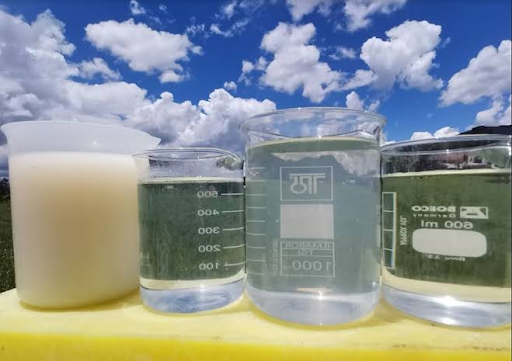
Aquaponics water quality ozone applications have become one of the most reliable ways growers keep a closed loop system stable, and the reason comes down to how much a single tank of water has to do in this kind of setup. In aquaponics, the same water carries waste from fish to plants, delivers oxygen and nutrients to root systems, and cycles back to the fish tank again, all without the dilution or replacement that traditional aquaculture or hydroponics can rely on. That closed loop makes water quality the single variable that determines whether a system thrives or collapses, and it is exactly why ozone has become a standard tool for growers running systems at any meaningful scale.
Why Water Quality Is Harder to Manage in a Closed Loop
A standalone hydroponic operation can flush and replace nutrient solution on a schedule, and a standalone fish farm can rely on water exchange to dilute waste. Aquaponics has neither option, since fish, bacteria, and plants all depend on the same recirculating volume staying within a narrow band of parameters. Ammonia excreted by fish has to be converted into nitrite and then nitrate by beneficial bacteria before plants can use it, and any disruption to that biological chain, whether from pathogen load, organic buildup, or oxygen depletion, cascades through the entire system rather than staying contained to one component. Pathogens and organic waste that would simply be diluted out of a flow through system instead accumulate, and biofilm can build up along tubing and grow beds in ways that quietly reduce flow and oxygen transfer over time.
What Is Ozone Water Treatment
What is ozone water treatment comes down to a single distinguishing fact: ozone is a molecule made of three oxygen atoms instead of the two found in the air people breathe, and that unstable third atom makes it one of the strongest oxidizers available for water treatment. Ozone is generated on site by passing dried air or concentrated oxygen through a high voltage electrical field, a process called corona discharge, because the gas is too unstable to be manufactured elsewhere and delivered later. Once injected into water, ozone reacts almost instantly with bacteria, viruses, and organic material, destroying cell walls and breaking down molecular structures through oxidation rather than the slower poisoning action of chlorine. When the reaction finishes, the leftover ozone simply reverts to ordinary dissolved oxygen, leaving no chemical residue or lingering taste behind.
Why Ozone Fits Aquaponics Specifically
This combination of strength and clean breakdown is what makes ozone particularly well suited to aquaponics, where any chemical residue introduced into the water risks harming both fish and the beneficial nitrifying bacteria the system depends on. Ozone clears out the organic load and pathogens that chlorine or other chemical disinfectants would leave chemical traces behind to remove, while adding dissolved oxygen back into the water as a byproduct rather than depleting it.
How Growers Apply Ozone Safely Around Live Fish
Ozone's power is also why it has to be applied carefully in any system holding live animals. Fish gills are extremely sensitive to oxidizers, and ozone that reaches the fish tank at an active concentration can cause serious gill damage or death within minutes. Well designed aquaponics and recirculating aquaculture systems solve this by injecting ozone into a dedicated contact chamber positioned in the sump or filtration loop, physically separated from the fish tank, where the gas has time to react fully with organic matter and pathogens before that water ever reaches the fish. Growers monitor oxidation reduction potential, commonly called ORP, as a real time indicator of ozone activity in the water, using it to confirm that residual ozone has dropped to a safe level before water returns to the tank. Degassing towers or extended contact time in the treatment loop provide an additional safety margin, allowing any trace of gaseous ozone to off gas before recirculation.
Dosing and System Sizing
Because the margin between an effective dose and a harmful one is narrower in aquaponics than in most other ozone applications, sizing the generator to the system's actual bioload and organic loading matters more here than almost anywhere else. Underdosing leaves organic waste and pathogen pressure only partially addressed, while overdosing risks ORP spikes that stress fish even after passing through a contact chamber. Growers running larger systems typically pair ozone generation with continuous ORP monitoring and automated shutoff, so the system adjusts dosing in response to real time water conditions rather than a fixed schedule.
The Practical Benefits Growers See
Systems that introduce ozone into their filtration loop report clearer water almost immediately, since ozone oxidizes the fine organic particles and dissolved compounds responsible for water turning yellow or cloudy over time. Reduced pathogen load lowers disease pressure on fish stock, which matters enormously in a closed system where an outbreak has no dilution to fall back on. Growers also see less biofilm accumulation throughout tubing, grow beds, and biofilters, which keeps flow rates consistent and reduces the labor spent on manual cleaning. Because ozone adds oxygen rather than depleting it, many operations find dissolved oxygen levels easier to maintain across the system, benefiting fish, nitrifying bacteria, and plant roots at the same time.
Building Ozone Into a Long Term Water Quality Strategy
Aquaponics water quality ozone treatment works best as part of an ongoing water management routine rather than a one time fix. Regular ORP and dissolved oxygen monitoring lets growers catch shifts in organic loading or bioload before they become visible problems, and pairing ozone with proper mechanical filtration reduces the particulate load the ozone stage has to handle, extending generator life and improving overall efficiency. For growers scaling up from a hobby system to a commercial operation, understanding how ozone generation, contact time, and ORP control work together is foundational groundwork before selecting equipment, since a properly sized and safely integrated ozone system tends to be the difference between a stable closed loop and one that requires constant manual intervention to stay balanced.

 English
 Arabic
 French
 Spanish
 Portuguese
 Deutsch
 Turkish
 Dutch
Dutch
 Russian
 Romaian
 Portuguese (Brazil)
 Greek
Greek