


What Is 57 Rock? Understanding 57 Stone and Crusher Run
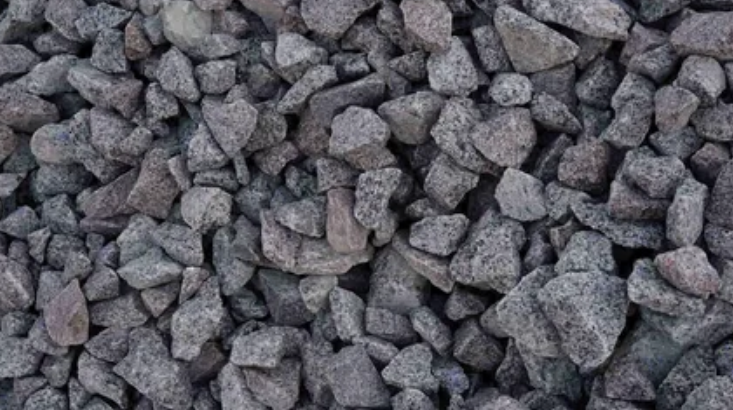
When planning a driveway, drainage system, walkway, patio, or landscaping project, choosing the right aggregate can make a major difference in durability and performance. Two materials that are often compared are 57 stone and crusher run. If you have been wondering what is 57 rock, the answer starts with understanding how this aggregate is sized and processed.
57 rock, commonly called #57 stone, is a clean crushed aggregate made up of relatively uniform stone pieces with most fine dust removed. Depending on the supplier and regional specifications, the exact size range can vary, but it is commonly associated with roughly three-quarter-inch stone. Its open spaces allow water to pass through much more easily than a dense material containing stone dust.
What Is 57 Rock Used For?
If you are asking what is 57 rock because you are preparing for a construction or landscaping project, it is important to know that this material has several practical applications. It is frequently used for drainage systems, French drains, pipe bedding, retaining-wall drainage, concrete aggregate, and certain driveway applications.
The biggest advantage of #57 stone is its ability to allow water to move through the spaces between individual stones. Because it contains little or no fine material, the pieces do not pack together as tightly as a dense-graded aggregate. This makes it useful in locations where drainage is more important than creating a tightly compacted surface.
For example, a French drain needs aggregate that allows water to travel through the trench. Clean #57 stone can provide the open structure needed for this type of application. It can also be placed around drainage pipes to provide a pathway for water while helping protect the pipe from surrounding soil.
Understanding the Difference Between 57 Stone and Crusher Run
The question of crusher run vs 57 stone comes down primarily to the way these materials are graded.
Crusher run contains a mixture of crushed stone and smaller particles, including stone dust or fines. Those smaller particles fill the spaces between larger pieces when the material is compacted. As a result, crusher run can form a dense, stable layer that is useful for supporting traffic and structures.
#57 stone works differently. It is screened to remove most fines, leaving larger, relatively uniform pieces. Because there is less fine material to fill the gaps, water can move through the aggregate more easily. The tradeoff is that #57 stone does not compact into the same dense, solid surface that crusher run can create.
This distinction is especially important when selecting material for a driveway. A material that drains extremely well is not necessarily the best choice for a compacted driveway base.
Crusher Run vs 57 Stone for Driveways
When comparing crusher run vs 57 stone for a driveway, consider what role the aggregate needs to perform.
Crusher run is generally the better choice when you need a stable base that can be compacted. Its combination of different particle sizes allows the material to interlock as it is compacted. This can help create a firm foundation for driveways, walkways, paver installations, shed pads, and similar projects.
#57 stone can also be used in driveway projects, but it behaves differently. Because it remains relatively open and loose, it is better suited to situations where drainage is a priority. It may be used as a surface or drainage layer depending on the design of the driveway and the local material specifications.
For a driveway on wet or poorly drained ground, using different aggregates in separate layers can sometimes provide the benefits of both. A drainage-oriented layer can help manage water, while a properly compacted base material can provide structural stability above it. The appropriate design depends on soil conditions, expected traffic, drainage requirements, and local construction practices.
Why Fines Matter
The simplest way to understand the difference between these materials is to think about the spaces between the rocks.
Imagine filling a container with only large stones. There will be plenty of empty spaces between them. Water can move through those spaces relatively easily.
Now imagine adding sand or stone dust between those large pieces. The smaller particles fill many of the gaps. The resulting mixture becomes much denser and can compact into a firm mass.
That is essentially the difference between clean #57 stone and crusher run. #57 stone has limited fines and therefore maintains more open space. Crusher run contains fines that fill those spaces and help the material compact.
Drainage Applications for 57 Stone
One of the strongest reasons people choose #57 stone is drainage. French drains, drainage trenches, pipe bedding, foundation drainage, and retaining-wall backfill are examples of projects where open aggregate can be beneficial.
When water reaches clean stone, it can travel through the voids between the pieces. This is very different from a compacted material containing substantial fines, where water movement can be significantly restricted.
For drainage projects, however, material selection should be based on the actual engineering or construction requirements. Soil type, pipe size, trench dimensions, filter fabric, slope, and expected water volume can all influence how a drainage system should be constructed.
When Crusher Run Makes More Sense
Crusher run is particularly useful when you need a material that can be spread, graded, and compacted into a stable foundation. Driveway bases are one of its most common applications.
It can also be used beneath pavers, patios, sheds, and other areas where a firm sub-base is needed. Once compacted, the mixture of different stone sizes and fines can create a tightly packed layer.
This is why simply substituting #57 stone for crusher run may not produce the same results. Even though both materials are crushed stone products, their physical behavior is different.
Can You Use Both Materials?
Yes. In some projects, using both materials can be an effective approach.
For example, a project may require a drainage layer where water needs to move freely and a compacted base where weight needs to be supported. In such cases, #57 stone and crusher run can serve different functions rather than competing with each other.
The key is to use each aggregate where its characteristics provide the greatest benefit. #57 stone can help create an open drainage layer, while crusher run can provide a dense, compactable foundation where structural stability is required.
How to Choose the Right Material
Before ordering aggregate, consider four basic questions:
- Does the project need drainage? If yes, clean #57 stone may be appropriate.
- Does the material need to compact firmly? If yes, crusher run may be the better option.
- Will vehicles or heavy equipment travel over it? Load requirements should influence the base material.
- Are multiple layers being installed? Different aggregates can sometimes be used together to address drainage and stability.
The exact product name and size can also vary between suppliers, so it is worth confirming the aggregate specifications before ordering.
Final Thoughts
Understanding what is 57 rock makes it easier to choose the right aggregate for your project. #57 stone is generally a clean, open aggregate valued for drainage and applications where water needs to move through the material.
When comparing crusher run vs 57 stone, the most important distinction is the presence of fines. Crusher run contains smaller particles that help it compact into a dense, stable layer, while #57 stone maintains more open space for drainage.
Neither material is universally better. The right choice depends on whether your project primarily needs drainage, compaction, load support, or a combination of these functions. By understanding how each aggregate behaves, you can select a material that is better suited to the conditions and purpose of your project.

 English
 Arabic
 French
 Spanish
 Portuguese
 Deutsch
 Turkish
 Dutch
Dutch
 Italiano
 Russian
 Portuguese (Brazil)
 Greek
Greek