


How Can PLL Clock Buffers Strengthen Clock Management in Next-Generation Electronics?
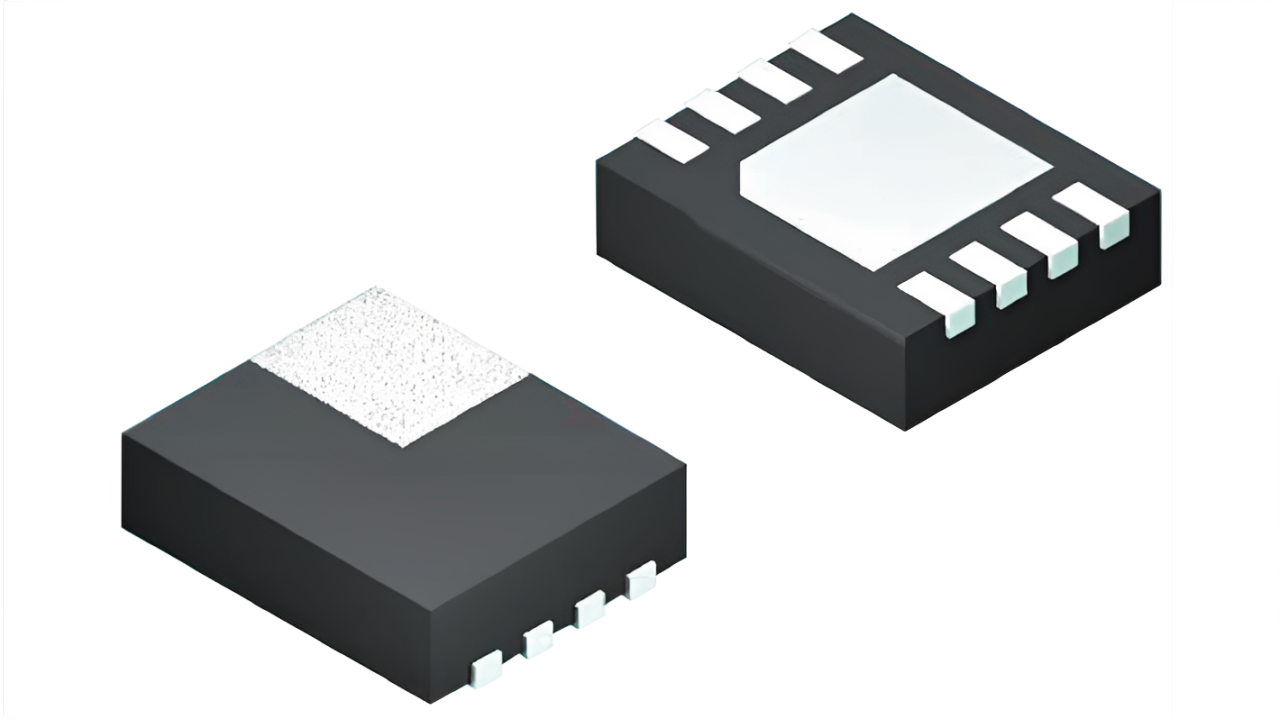
As electronic systems become faster and more compact, timing control becomes one of the most important parts of circuit performance. Every digital operation depends on a stable clock signal, from data transfer and signal conversion to processing and communication. When the clock path is weak, noisy, or poorly distributed, the complete system can lose accuracy and reliability. PLL Clock Buffers help designers manage these timing challenges by producing stable, synchronised, and well-controlled outputs for advanced electronic circuits.
PLL Clock Buffers are widely used in systems where one timing reference must serve several devices without losing quality. They combine phase-locked loop operation with clock distribution, allowing them to align output timing, reduce variation, and support clean signal delivery across the board. This makes them highly valuable for engineers working on networking, computing, industrial, automotive, telecom, and embedded hardware.
What Makes PLL Clock Buffers Important in Clock Management?
Clock management is not only about sending a signal from one device to another. It is about ensuring that every connected component receives the right timing at the right moment. A PLL Clock Buffer helps by taking an input reference and creating controlled outputs that can be sent to different parts of the circuit.
This is important because many modern boards include several timing-sensitive devices. Processors, FPGAs, memory components, converters, and interface controllers may all depend on accurate clock coordination. A PLL Clock Buffer helps maintain this coordination by improving the structure and quality of the clock network.
Main advantages include:
- Cleaner timing distribution across complex boards
- Better synchronisation between multiple ICs
- Reduced clock uncertainty in high-speed systems
- Support for multiple output channels
- Improved reliability in demanding applications
- Flexible frequency handling for different circuit sections
How Do PLL Clock Buffers Support Reliable Data Movement?
Data movement depends heavily on timing. When a device sends data, the receiving device must sample that data at the correct instant. If the clock signal shifts too much or arrives at different devices unevenly, errors can occur.
PLL Clock Buffers support reliable data movement by keeping timing signals stable and aligned. They help reduce unwanted variations that may affect when data is captured or transferred. This is especially important in systems using fast communication links, memory interfaces, and precision signal processing.
Reliable timing helps reduce:
- Missed data samples
- Communication instability
- Interface timing errors
- Reduced data throughput
- Random performance issues
- System-level faults caused by poor clock delivery
By improving timing discipline, PLL Clock Buffers help circuits operate more smoothly under real working conditions.
Why Are PLL Clock Buffers Useful for Multi-Device Designs?
In a multi-device design, one timing source often needs to feed several components. Directly routing that signal to many loads can weaken the signal and create routing difficulties. It may also increase timing mismatch if the board layout is dense or the devices are placed far apart.
A PLL Clock Buffer gives designers a more controlled method of distribution. It can drive several outputs while maintaining signal quality and keeping timing relationships consistent. This makes board design easier and improves the chance of stable performance after production.
They are useful in multi-device systems because they can:
- Distribute one reference signal to several destinations
- Reduce loading on the original timing source
- Support matched timing between related outputs
- Provide stronger signal drive for board-level routing
- Help organise separate timing paths for different functions
Which Performance Factors Matter Most?
When comparing PLL Clock Buffers, engineers usually focus on timing performance, compatibility, and system requirements. The right device should match the speed, output format, voltage, and environmental needs of the application.
Key factors to review include:
- Input frequency range
- Output frequency range
- Number of output channels
- Supported output formats
- Jitter level
- Output skew
- Phase noise behaviour
- Supply voltage
- Power consumption
- Package size
- Temperature rating
- Configuration options
Jitter and skew are two of the most important specifications. Jitter affects the stability of each clock edge, while skew affects the timing difference between outputs. Lower values generally support better timing accuracy, especially in fast digital systems.
How Do PLL Clock Buffers Improve High-Speed Signal Quality?
High-speed boards are sensitive to timing noise, route length differences, impedance issues, and power supply disturbance. A PLL Clock Buffer can help improve signal quality by conditioning the reference signal and distributing cleaner outputs to target devices.
This does not remove the need for good PCB design, but it gives the timing network a stronger foundation. When combined with careful layout, proper termination, clean grounding, and suitable power filtering, PLL Clock Buffers can significantly improve signal behaviour.
Good design practices include:
- Keeping clock traces short where possible
- Using controlled impedance routing
- Matching trace lengths for timing-sensitive outputs
- Placing decoupling capacitors close to the device
- Avoiding noisy switching areas near clock traces
- Following the layout guidance from the manufacturer
- Choosing the correct output logic standard
These steps help preserve low jitter and low skew performance in the final circuit.
Where Are PLL Clock Buffers Commonly Applied?
PLL Clock Buffers are used in many industries because accurate timing is required in almost every advanced electronic design. Their role becomes even more important when systems process large amounts of data or operate at high frequency.
Common application areas include:
- Telecom infrastructure
- Network switches and routers
- Server motherboards
- Storage systems
- FPGA and ASIC platforms
- Industrial automation equipment
- Video and imaging systems
- Automotive control modules
- Wireless communication devices
- Data acquisition hardware
- Test and measurement instruments
- Embedded computing boards
In these applications, a stable clock network supports better speed, cleaner communication, and improved long-term reliability.
What Benefits Do PLL Clock Buffers Bring to Product Design?
For product designers, the benefit of PLL Clock Buffers is not limited to timing performance. They also support cleaner architecture, easier routing, and better system planning. Instead of relying on one overloaded timing source, designers can build a more organised clock tree with controlled outputs.
This can help reduce redesign risk, improve board performance, and support future scalability. A product that uses proper clock distribution is more likely to perform consistently across different operating conditions.
Important product-level benefits include:
- Stronger system reliability
- Better timing consistency
- Easier support for high-speed interfaces
- Reduced risk of random clock-related faults
- More flexible board architecture
- Improved performance in compact layouts
Conclusion
PLL Clock Buffers play an essential role in modern clock management. They help distribute timing signals with accuracy, reduce jitter, control skew, and support synchronised operation across complex electronic systems. Their ability to combine phase-locked loop control with reliable output distribution makes them valuable for high-speed and precision-based designs.
From telecom hardware and FPGA boards to industrial controllers, servers, and embedded systems, PLL Clock Buffers help create the stable timing foundation needed for dependable performance. As next-generation electronics continue to demand higher speed and tighter timing control, these components will remain a key part of successful circuit design.

 English
 Arabic
 French
 Spanish
 Portuguese
 Deutsch
 Turkish
 Dutch
Dutch
 Italiano
 Russian
 Portuguese (Brazil)
 Greek
Greek