


Why Infection-Resistant Catheters Could Shape Future Market Opportunities
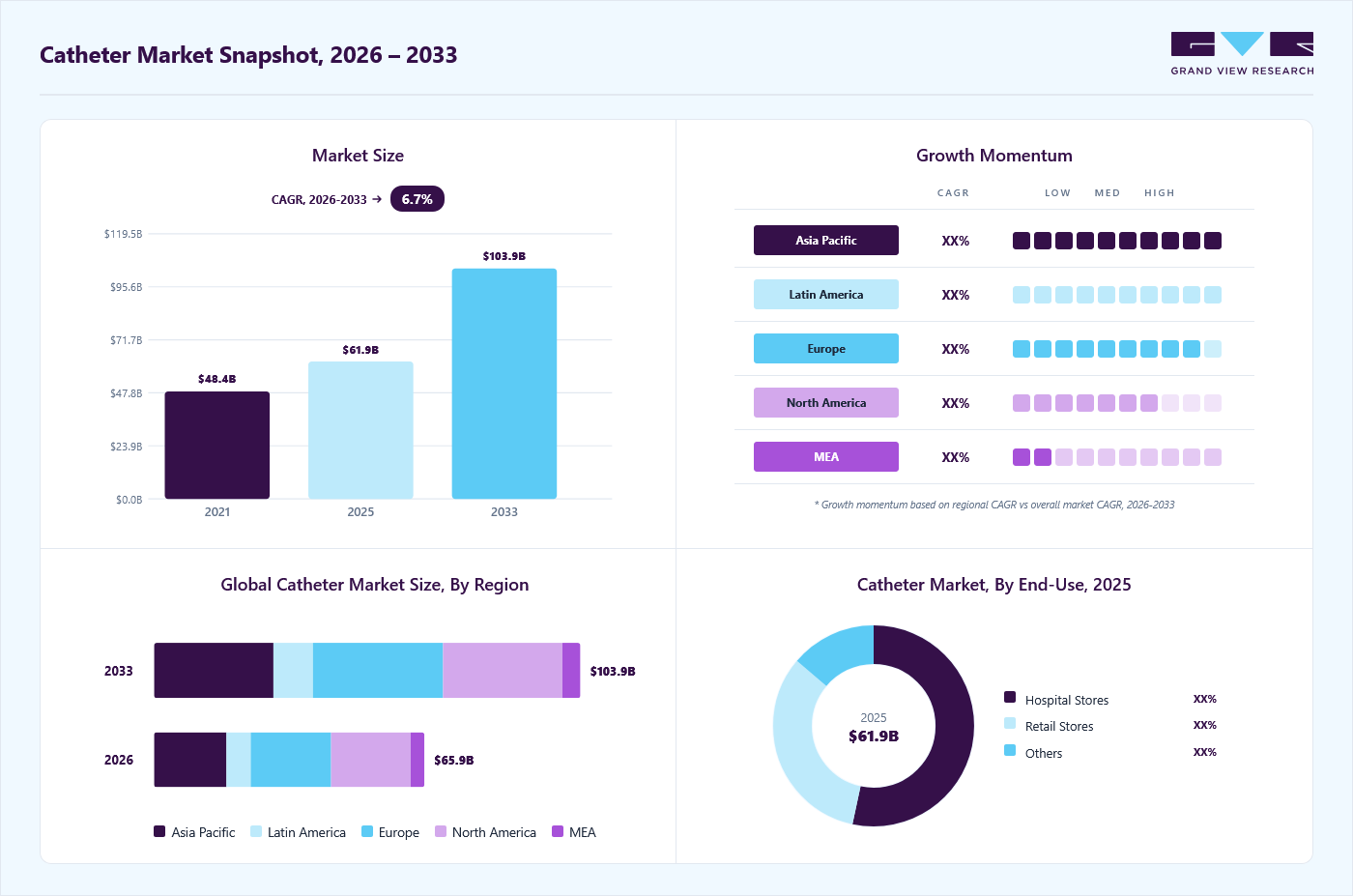
The catheter market is expanding as healthcare systems increasingly rely on minimally invasive procedures for the diagnosis and treatment of cardiovascular, urological, neurological, and other medical conditions. Catheters are essential medical devices used across a broad range of clinical procedures, creating consistent demand as chronic diseases become more prevalent and hospitalization rates increase.
The catheter market was valued at USD 61.9 billion in 2025 and is projected to grow from USD 65.9 billion in 2026 to USD 103.9 billion by 2033, registering a CAGR of 6.7% from 2026 to 2033. Increasing cases of cardiovascular, neurological, and urological disorders, combined with the shift toward minimally invasive surgical procedures, are supporting continued market expansion.
Chronic Diseases Strengthen Catheter Demand
The rising prevalence of chronic conditions is one of the important factors supporting catheter adoption. Cardiovascular diseases, urinary disorders, neurological conditions, and urinary incontinence frequently require catheterization for diagnosis, treatment, or long-term patient management.
Urological applications represent a high-volume area of catheter use. The increasing prevalence of urinary tract infections is also contributing to demand. According to the information cited by Grand View Research, urinary tract infections affect approximately 250 million people annually worldwide, increasing the need for short-term and long-term catheterization.
The cardiovascular segment is similarly benefiting from the increasing requirement for interventional cardiac procedures. The growing occurrence of coronary artery disease, congenital heart problems, cardiac arrhythmia, and peripheral artery disease is creating opportunities for catheter-based diagnostic and therapeutic procedures.
Cardiovascular Catheters Hold a Leading Position
Cardiovascular catheters accounted for the largest product revenue share of 28.39% in 2025. Their importance in minimally invasive cardiovascular procedures makes this segment a major contributor to overall market development.
Catheters support procedures involving vascular access, diagnosis, treatment, and intervention. As healthcare providers increasingly focus on minimally invasive approaches, catheter technologies that enable precise access and improved procedural control are gaining importance.
At the same time, specialty catheters are projected to register the fastest CAGR over the forecast period. Increasing demand for minimally invasive procedures, the rising prevalence of target diseases, and regulatory approvals are supporting opportunities in this category.
Innovation Is Reshaping Catheter Manufacturing
Product innovation is becoming an important competitive factor. Manufacturers are developing catheter designs that improve flexibility, trackability, visibility, infection resistance, and patient safety.
In February 2024, Junkosha launched its 1.8:1 shrink ratio Translucent PHST solution, which helps catheter manufacturers incorporate complex shapes and designs while streamlining production. Such manufacturing innovations can support more efficient development of intricate catheter products.
Manufacturers are also focusing on infection-resistant products, including silicone and antimicrobial-coated devices. These developments address concerns surrounding catheter-associated infections and support demand for products designed with infection prevention in mind.
Infection Prevention Creates New Opportunities
Healthcare-associated infections remain an important consideration in catheter use. Catheter-associated urinary tract infections and central line-associated bloodstream infections have encouraged healthcare professionals and manufacturers to focus more strongly on infection prevention, device maintenance, securement, and disinfection.
According to data cited by Grand View Research from the CDC in July 2024, approximately 75% of urinary tract infections acquired in hospitals are associated with urinary catheters, while around 15-25% of hospitalized patients receive these catheters during their stay. These concerns are encouraging manufacturers to develop antimicrobial and infection-resistant solutions.
Clinical trials and regulatory approvals for antimicrobial catheter technologies are also creating opportunities for product innovation. This focus on reducing infection risks is likely to remain an important factor influencing catheter product development.
Hospital Stores Drive End-Use Demand
Hospital stores represented the largest end-use revenue share of 53.3% in 2025. These facilities maintain inventories of catheters required for surgical and minimally invasive procedures and operate under strict storage, dispensing, and record-keeping requirements.
Modern hospital stores increasingly use automated dispensing systems, electronic prescribing platforms, and inventory tracking technologies. These systems help improve efficiency and ensure timely access to medical devices needed during treatment.
Meanwhile, retail stores are projected to experience the fastest CAGR during the forecast period. The availability of catheters through e-commerce platforms is improving convenience and product accessibility while supporting sales through alternative distribution channels.
Technology and Manufacturing Capacity Support Growth
Catheter manufacturers are increasing investments in advanced technologies and production capabilities. New product launches, manufacturing facility expansions, acquisitions, partnerships, and regulatory approvals are shaping the competitive environment.
The market is characterized by a moderate-to-high degree of growth, with accelerating momentum. Companies are expanding catheter portfolios, improving coating materials, introducing specialized designs, and developing technologies that enhance procedural performance and patient safety.
FAQs
What trends are shaping the catheter market?
Key trends include the development of infection-resistant and antimicrobial catheters, greater adoption of minimally invasive procedures, advanced catheter manufacturing technologies, specialized catheter designs, and increased investment in product development. Manufacturers are also focusing on improving flexibility, trackability, visibility, and patient safety.
Which segment leads the catheter market?
The cardiovascular catheter segment led the product category with a 28.39% revenue share in 2025, while hospital stores held the largest end-use share at 53.3% during the same year.
Key Catheter Companies:
· Hollister Incorporated
· Medtronic
· Boston Scientific Corporation
· Edward Lifesciences
About us:
Grand View Research, a market research and consulting company, provides syndicated research reports, customized research reports, and consulting services. Grand View Research database is used by the world's renowned academic institutions and Fortune 500 companies to understand the global and regional business environment. Our database features thousands of statistics and in-depth analysis on 46 industries in 25 major countries worldwide.

 English
 Arabic
 French
 Spanish
 Portuguese
 Deutsch
 Turkish
 Dutch
Dutch
 Italiano
 Russian
 Portuguese (Brazil)
 Greek
Greek