


How Online Charity Platforms Make Giving More Accessible in 2026
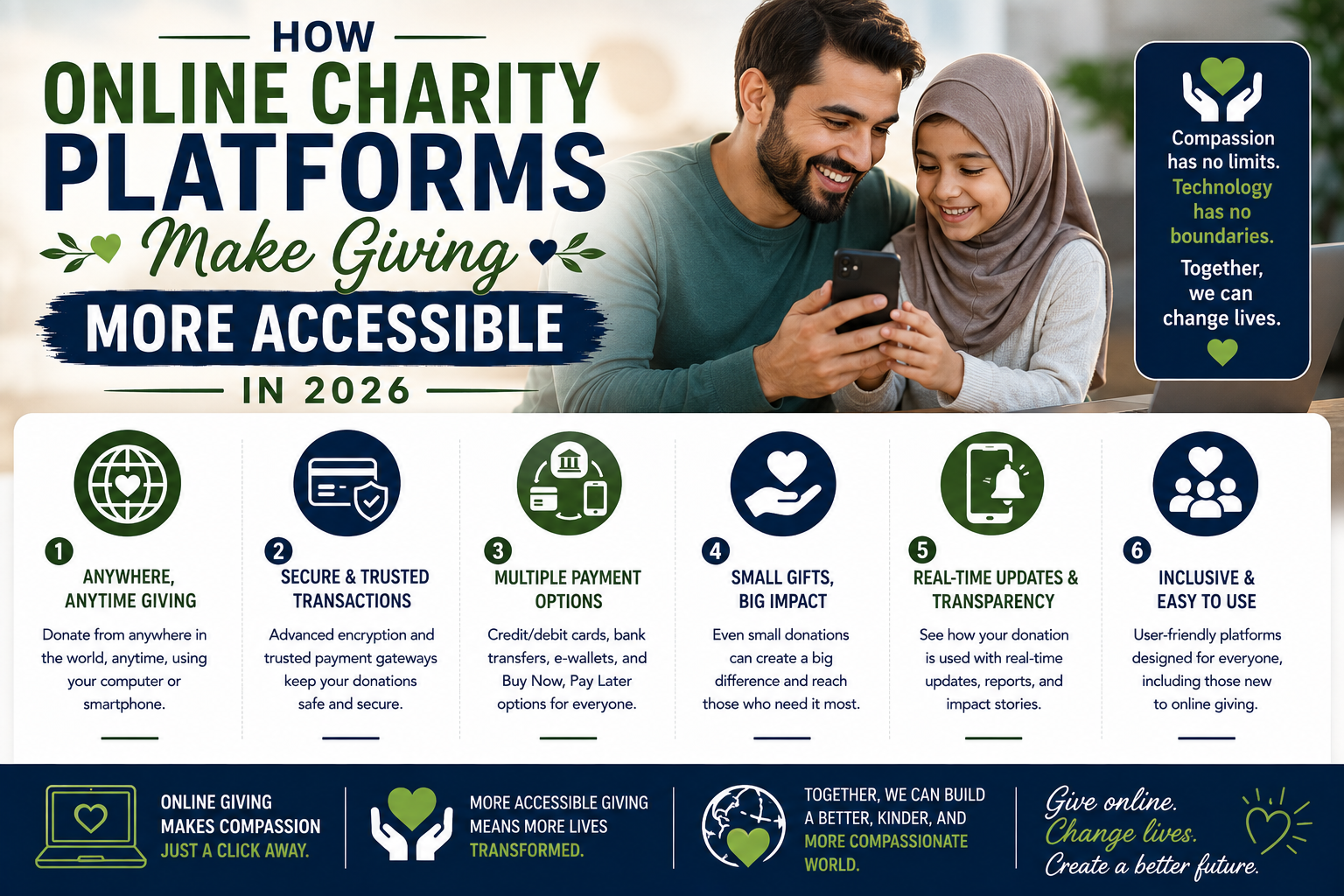
Giving to a good cause has become easier than ever. A person can support a family facing hardship, contribute to a community project, help provide food or clean water, or support an emergency campaign without needing to visit an office or charity center. Digital fundraising has changed how people connect with causes and how communities respond to urgent needs.
For donors, madinah donation provides a convenient way to find fundraising opportunities and contribute to causes that matter to them. For campaign organizers, online fundraising can provide access to a wider community while making it easier to communicate updates, share campaign information, and manage support.
But accessibility is about more than making a payment online. A trustworthy fundraising experience should also make information easy to understand, provide appropriate transparency, protect donor and beneficiary dignity, and help people make informed decisions.
What Makes Online Charity More Accessible?
Traditional charitable giving can sometimes involve geographical, logistical, or communication barriers. Someone may want to help but not know which organization to contact or how to make a contribution from another location.
Online fundraising platforms can reduce some of these barriers by bringing campaigns into one digital environment. Donors can review campaign information, understand the purpose of a fundraiser, and choose whether a particular cause aligns with their interests.
This accessibility can be especially useful when communities are responding to urgent needs. A campaign can be shared through digital channels, allowing supporters to learn about it quickly and pass the information to friends, relatives, colleagues, and community groups.
However, accessibility should never come at the expense of responsible giving. Donors should still review campaign details and consider whether the information provided is sufficiently clear before contributing.
Why Digital Giving Matters for Communities
Communities often respond quickly when someone experiences an unexpected challenge. A medical emergency, financial difficulty, displacement, educational need, or community project can require support from many people rather than one individual.
Online fundraising makes this collective response easier to coordinate.
Instead of relying only on people living nearby, organizers can reach supporters across cities and even countries. A community member who moved abroad, for example, may still want to contribute to a local mosque project or help a family in their former community.
This broader reach can turn small individual contributions into meaningful collective support.
The process can also encourage people who may not regularly visit physical charity centers to participate in giving. With digital access, charitable support can become part of everyday online activity.
Choosing a Fundraising Cause Responsibly
More choice also means donors need to be careful.
Before donating, take a few moments to understand the campaign. Read its description and identify what the money is intended to support. If the campaign provides information about the organizer, beneficiary, organization, project, or expected use of funds, review it carefully.
For larger contributions, donors may want to look for additional information about the organization or campaign organizer. Where relevant, check whether there are updates, supporting documents, contact information, or other indicators that help establish credibility.
A compelling story can encourage people to give, but emotional appeal should not replace basic due diligence.
Responsible giving combines compassion with informed decision-making.
How Fundraising Platforms Can Support Transparency
Transparency is one of the most important parts of digital fundraising.
A campaign page should communicate its purpose clearly. Donors should be able to understand why funds are being raised and, where appropriate, how the campaign is progressing.
Campaign updates can also help maintain communication between organizers and supporters. Updates may explain progress, changes in circumstances, completed milestones, or continuing needs.
This communication is valuable because donors are not simply making a transaction. They are supporting a person, family, organization, or community initiative.
A well-managed campaign therefore benefits from clear descriptions, realistic goals, regular updates, and responsible communication.
The Role of Technology in Community Giving
Technology can simplify several parts of the fundraising process.
Campaign organizers can create a fundraiser, describe their purpose, add relevant images or videos, and share the campaign digitally. Supporters can then access the campaign through links shared by email, messaging applications, social networks, or community groups.
For organizations and community leaders, digital tools can also make fundraising easier to coordinate. Rather than managing information across several disconnected channels, an online platform can provide a central place for campaign information and donor activity.
This can be particularly useful for community-based initiatives where volunteers may have limited time and resources.
Supporting Muslim Communities Through Digital Fundraising
Digital fundraising also has an important role in Muslim communities.
Muslims regularly support causes connected to food, water, education, healthcare, orphan care, mosque projects, emergency assistance, refugees, and other forms of community support. Online platforms can help connect these needs with people who are willing to contribute.
A platform such as madinah charity can provide a digital environment where supporters can find fundraising opportunities while campaign organizers can communicate their needs to a broader audience.
For donors, Islamic giving also requires attention to the nature of the contribution. Depending on the purpose and the donor's circumstances, people may be considering Zakat, Sadaqah, Sadaqah Jariyah, or general charitable giving. These forms of giving can have different considerations, so donors should understand the purpose of their contribution and seek qualified religious guidance when they have specific questions about Islamic rulings.
Protecting the Dignity of People Receiving Help
Digital fundraising creates opportunities to tell powerful stories, but campaign organizers should use those opportunities responsibly.
People experiencing poverty, illness, displacement, or other difficult circumstances deserve dignity and respect. Images, names, personal information, and sensitive details should not be shared unnecessarily.
A fundraiser can communicate genuine need without turning someone's hardship into a source of embarrassment.
Before publishing personal information, organizers should consider whether it is necessary for the campaign and whether appropriate permission has been obtained. The goal should be to help people receive support while respecting their privacy.
This principle is especially important when campaigns involve children or other vulnerable individuals.
Making Small Donations Count
Many people believe that meaningful charity requires a large contribution. In reality, community fundraising often depends on participation from many people.
A small donation can become significant when hundreds or thousands of supporters contribute according to their ability.
Digital fundraising makes this model easier to organize because campaigns can be shared widely. One supporter may contribute a modest amount and then share the campaign with several people who choose to participate themselves.
The result is a network effect in which individual acts of generosity contribute toward a shared objective.
This is one reason online fundraising can be particularly valuable for community projects and urgent needs.
What Campaign Organizers Can Do to Build Trust
Trust is not created by a single sentence on a campaign page. It develops through consistent and responsible communication.
Campaign organizers should explain the purpose of the fundraiser clearly, use accurate information, set realistic goals, and avoid misleading claims. If circumstances change, supporters should receive appropriate updates.
Images and videos should also accurately represent the campaign rather than creating a misleading impression.
After receiving support, organizers should continue communicating when meaningful updates are available. A simple thank-you message can acknowledge the generosity of supporters, while progress updates can help donors understand what their contributions are helping to accomplish.
These practices can make a fundraising campaign more credible and easier for supporters to evaluate.
The Future of Accessible Charity
As digital technology continues to develop, charitable giving is likely to become increasingly connected to online communities.
The biggest opportunity is not simply faster donations. It is the ability to connect people with causes, simplify communication, improve access to fundraising, and help communities organize support around genuine needs.
At the same time, responsible platforms and campaign organizers will need to maintain strong standards for transparency, privacy, security, and ethical communication.
The future of digital charity should therefore focus on both convenience and trust.
Conclusion
Online fundraising has made it easier for people to participate in charitable giving regardless of where they live. With responsible campaign management, clear information, respectful storytelling, and transparent communication, digital platforms can help communities respond to needs more efficiently.
For donors looking for accessible ways to support meaningful causes, madinah global represents the broader idea of connecting generosity with communities through digital fundraising. The most valuable online giving experiences are those that combine convenience with accountability and compassion with informed decision-making.
As digital charity continues to grow in 2026, donors and organizers can play an important role in building a more responsible culture of giving—one contribution, campaign, and community connection at a time.
Frequently Asked Questions
Is online charity safe?
Online charity can be safe when donors use reputable platforms and carefully review campaign information before contributing. Donors should look for clear campaign details, trustworthy payment processes, and transparent communication.
How can I choose a trustworthy fundraising campaign?
Review the campaign description, organizer information, fundraising purpose, updates, and other available details. For significant donations, consider conducting additional research before contributing.
Can small donations make a difference?
Yes. Community fundraising often relies on many people contributing according to their individual ability. Small donations can collectively provide substantial support.
What information should a fundraising campaign include?
A campaign should clearly explain why funds are being raised, who or what will benefit, the fundraising goal, and relevant information about how the funds are expected to be used.
Should campaign organizers share personal information about beneficiaries?
Only information that is genuinely necessary should be shared, and organizers should consider privacy, consent, safety, and dignity—particularly when children or vulnerable people are involved.
What types of causes can online fundraising support?
Online campaigns can support many causes, including emergency assistance, food and water projects, education, healthcare, orphan support, mosque and community projects, refugee assistance, and other charitable needs.

 English
 Arabic
 French
 Spanish
 Portuguese
 Deutsch
 Turkish
 Dutch
Dutch
 Italiano
 Russian
 Romaian
 Greek
Greek