


What Are the Benefits of CAN Transceivers and How Do They Power Advanced Electronic Networks?
Introduction:
The demand for efficient communication between electronic devices has increased significantly as industries move toward automation, intelligent systems, and connected technologies. Modern machines, vehicles, and embedded devices often contain multiple control units that must exchange information quickly and accurately. To achieve this, engineers rely on communication solutions that can provide stability, speed, and reliability in challenging environments.
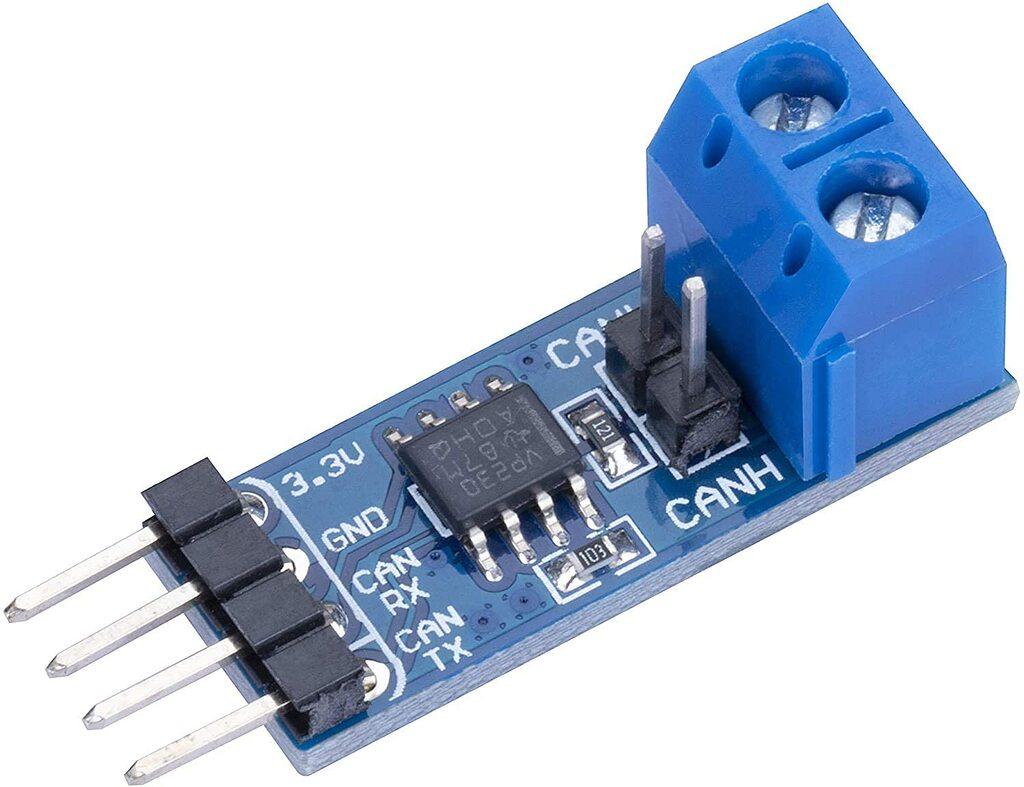
CAN transceivers are a fundamental part of Controller Area Network (CAN) systems, providing the physical connection required for data exchange between electronic modules. These components allow CAN controllers to communicate across a shared network by converting digital signals into electrical signals and managing communication across the physical bus.
Because of their durability and ability to operate in environments with electrical noise, CAN transceivers have become an essential technology in automotive electronics, industrial equipment, and intelligent control systems.
Why Are CAN Transceivers Required in CAN Networks?
A CAN controller is responsible for preparing and managing communication data, but it cannot directly send signals through the physical communication lines. A CAN transceiver performs the essential task of connecting the controller to the CAN bus.
The transceiver works as an interface between the digital world of electronic processors and the physical world of electrical communication.
Its primary functions include:
- Converting controller output signals into CAN bus-compatible electrical signals.
- Receiving data from the CAN network and transferring it to the controller.
- Controlling signal transmission and reception between connected devices.
- Protecting communication circuits from electrical damage.
- Maintaining stable network performance under different conditions.
Without a CAN transceiver, the communication system would not have the necessary physical interface to exchange information between devices.
How Do CAN Transceivers Maintain Reliable Signal Transmission?
Reliable communication is one of the biggest challenges in electronic systems, especially when devices operate near sources of electrical interference. CAN transceivers solve this problem by using differential communication technology.
Instead of transmitting information through a single electrical signal, CAN systems use two separate communication wires. The difference between the signals on these wires represents the transmitted data.
This approach helps CAN transceivers achieve:
- Reduced impact from electromagnetic interference.
- Improved communication accuracy.
- Greater reliability across long cable connections.
- Stable operation in industrial and automotive environments.
The ability to maintain communication quality in difficult conditions is one of the main reasons CAN technology continues to be widely adopted.
What Types of CAN Transceivers Are Available?
CAN transceivers are available in different variations to meet the requirements of specific applications. The choice of transceiver depends on factors such as communication speed, power requirements, and environmental conditions.
Common categories include:
- High-speed CAN transceivers designed for fast data communication in automotive and industrial systems.
- Low-power CAN transceivers developed for energy-efficient applications.
- Fault-protected CAN transceivers designed for improved system safety.
- Extended temperature CAN transceivers suitable for harsh operating environments.
- Standby-mode transceivers used in systems requiring reduced power consumption.
Selecting the correct type helps engineers achieve the desired balance between performance, efficiency, and reliability.
Where Are CAN Transceivers Used in Modern Technology?
CAN transceivers are used in a wide range of applications where electronic components need dependable communication. Their ability to support multiple connected devices makes them suitable for complex systems.
Major application areas include:
- Automotive networks connecting electronic control units and vehicle sensors.
- Electric vehicles managing battery, charging, and power control systems.
- Industrial automation equipment coordinating machines and production processes.
- Robotics applications requiring communication between motors, sensors, and controllers.
- Agricultural machinery using advanced monitoring and control technology.
- Medical systems containing multiple electronic control modules.
- Smart infrastructure systems requiring reliable device communication.
The versatility of CAN transceivers allows them to support both commercial products and advanced engineering solutions.
How Do CAN Transceivers Improve Automotive Electronics?
Vehicles today contain hundreds of electronic components that need to work together efficiently. Communication between these systems is essential for safety, performance, and user experience.
CAN transceivers support communication between important vehicle systems, including:
- Engine control modules.
- Transmission management systems.
- Vehicle safety systems.
- Sensor networks.
- Infotainment controls.
- Electric power management systems.
By enabling fast and dependable data exchange, CAN transceivers help automotive manufacturers develop safer and more efficient vehicles.
What Protection Features Make CAN Transceivers More Reliable?
Electronic components often face challenges such as voltage spikes, temperature changes, and accidental electrical faults. Modern CAN transceivers include protection features that improve system durability.
Common protection capabilities include:
- Electrostatic discharge protection.
- Short-circuit prevention.
- Over-temperature protection.
- Voltage fault tolerance.
- Enhanced electromagnetic compatibility.
These protective features allow CAN transceivers to operate effectively in demanding environments where component failure could impact the entire communication network.
How Should You Select the Right CAN Transceiver?
Choosing an appropriate CAN transceiver requires understanding the requirements of the communication system. Different applications may require different levels of speed, protection, and power efficiency.
Important selection factors include:
- Compatibility with the existing CAN controller.
- Required communication speed.
- Operating voltage range.
- Environmental temperature conditions.
- Power consumption limitations.
- Required protection features.
- Physical design requirements.
A carefully selected CAN transceiver improves system reliability and ensures long-term communication performance.
What Is the Future of CAN Transceiver Technology?
The development of connected devices, autonomous systems, and intelligent automation continues to increase the need for dependable communication technologies. CAN transceivers are evolving to support these changing requirements with improved efficiency and advanced capabilities.
Future improvements are expected to focus on:
- More energy-efficient communication solutions.
- Enhanced integration with compact electronic designs.
- Greater protection against environmental challenges.
- Improved support for advanced vehicle technologies.
- Increased reliability for industrial applications.
Although new communication protocols continue to emerge, CAN transceivers remain valuable because of their proven reliability and widespread industry adoption.
Conclusion:
CAN transceivers are an essential component of modern electronic communication networks. They provide the connection between controllers and physical bus systems while ensuring accurate, reliable, and efficient data transmission.
Their ability to operate in noisy environments, support multiple devices, and provide strong protection makes them suitable for applications ranging from automotive systems to industrial automation.
As technology continues moving toward smarter and more connected solutions, CAN transceivers will continue playing an important role in creating reliable communication networks for future electronic systems.

 English
 Arabic
 French
 Spanish
 Portuguese
 Deutsch
 Turkish
 Dutch
Dutch
 Italiano
 Russian
 Romaian
 Portuguese (Brazil)