


What Chemicals Are Inside a Fire Extinguisher and How Do They Work?
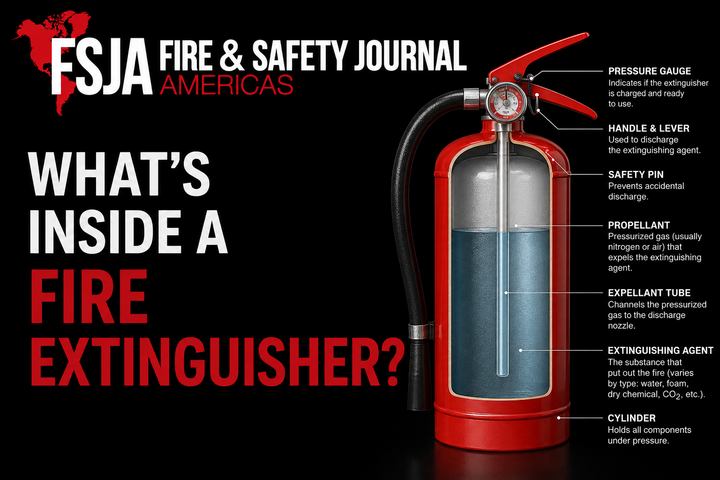
Fire extinguishers contain specially selected agents designed to control particular types of fires. Depending on the extinguisher, the contents may include dry chemical powders, carbon dioxide, foam, wet chemical solutions, or water-based agents. Each works differently because fires involving wood, flammable liquids, electrical equipment, and cooking oils have different characteristics.
The chemical or agent inside an extinguisher is chosen according to the type of fire it is intended to suppress. Some agents cool burning materials, while others separate fuel from oxygen or interfere with the chemical reactions that keep flames burning.
What Chemicals Are Inside a Fire Extinguisher?
What’s inside a fire extinguisher depends on its type, fire rating, and intended application. Common extinguishing agents include monoammonium phosphate, sodium bicarbonate, potassium bicarbonate, carbon dioxide, foam solutions, wet chemicals, and water-based formulations. The extinguisher may also contain a pressurizing gas, such as nitrogen, which helps force the agent through the hose and nozzle when the extinguisher is operated.
Dry chemical extinguishers are particularly common because certain powders can be effective against several fire classes. Carbon dioxide extinguishers contain CO₂ under pressure and are commonly used for suitable flammable-liquid and electrical equipment hazards. Wet chemical extinguishers contain specially formulated solutions for high-temperature cooking oils and fats. Foam extinguishers use a solution that produces a layer over suitable burning surfaces, while water extinguishers rely mainly on cooling.
The label attached to the extinguisher provides the most reliable information about its contents and approved applications. Extinguishers should not be opened simply to inspect their chemical contents because they are pressurized safety equipment.
What Chemicals Are Used in Dry Chemical Extinguishers?
Dry chemical extinguishers contain finely powdered compounds that help suppress flames by interfering with combustion. The exact chemical depends on the fire rating, with different powders selected for different hazards.
Monoammonium Phosphate
Monoammonium phosphate is widely used in multipurpose dry chemical extinguishers. When exposed to the heat of a flame, it helps interfere with the chemical reactions that sustain combustion.
It is commonly found in extinguishers rated for Class A, Class B, and electrical fire applications, depending on the specific product certification. The powder can also form a coating over burning material, helping reduce continued combustion.
Sodium Bicarbonate
Sodium bicarbonate is used in certain dry chemical extinguishers designed for flammable-liquid and flammable-gas fires. When exposed to high temperatures, it participates in reactions that interfere with flame chemistry.
It is not a substitute for every type of extinguishing agent. Its suitability depends on the fire classification and the rating displayed on the extinguisher.
Potassium Bicarbonate
Potassium bicarbonate is another dry chemical agent used for certain flammable-liquid and flammable-gas hazards. It can interrupt combustion efficiently by interfering with reactions occurring within the flame.
Because different dry powders have different performance characteristics, the chemical formulation and extinguisher rating should always be considered together rather than assuming that all dry powders work in exactly the same way.
How Do Firefighting Chemicals Put Out a Fire?
Firefighting agents suppress combustion by removing one or more conditions required for a fire to continue. Depending on their formulation, they can cool the fuel, restrict oxygen, isolate the fuel, or interrupt chemical reactions within the flame.
-
Cooling: Water absorbs heat from burning materials and lowers their temperature below the level needed to sustain combustion.
-
Smothering: Foam can cover a burning surface, reducing contact between the fuel and surrounding oxygen.
-
Oxygen displacement: Carbon dioxide can reduce the oxygen concentration immediately around a flame, helping suppress combustion.
-
Chemical interruption: Dry chemical powders interfere with the chain reactions responsible for maintaining flames.
-
Fuel isolation: Some agents create a barrier between the fuel and the air, reducing the availability of combustible vapors.
-
Re-ignition prevention: Certain agents provide continued surface coverage or cooling, helping prevent the fire from restarting.
The mechanism matters because not every method is appropriate for every fuel. For example, water can be highly effective on burning paper or wood but can create dangerous conditions when applied to burning cooking oil.
How Does Carbon Dioxide Work in a Fire Extinguisher?
Carbon dioxide extinguishers release pressurized CO₂ around a small fire. The gas helps suppress combustion by reducing available oxygen and provides a cooling effect as it rapidly expands during discharge.
-
Oxygen reduction: CO₂ mixes with the surrounding air and reduces the oxygen concentration near the flame.
-
Flame suppression: With insufficient oxygen available at the combustion zone, the flame can be extinguished.
-
Cooling effect: Rapid expansion of CO₂ during discharge produces a cooling effect that contributes to suppression.
-
No powder residue: CO₂ leaves little to no solid residue, which can be useful around suitable electrical equipment and sensitive machinery.
-
Suitable applications: CO₂ extinguishers are commonly selected for certain electrical equipment and flammable-liquid fire hazards.
-
Limited outdoor performance: Wind can disperse carbon dioxide quickly, reducing its effectiveness in open or exposed areas.
-
Enclosed-space risk: High concentrations of CO₂ can displace breathable air, so its use in confined spaces requires particular caution.
Carbon dioxide is therefore useful in specific situations but should not be treated as a universal extinguishing agent.
How Do Wet Chemical Agents Work?
Wet chemical extinguishers are primarily designed for fires involving cooking oils and fats. Their agents cool the extremely hot fuel while creating a protective layer that helps prevent the fire from reigniting.
-
Cooling the cooking oil: The water-based solution absorbs heat and reduces the temperature of the burning oil.
-
Saponification: Alkaline components in the agent can react with fats and oils to produce a soap-like layer.
-
Creating a protective barrier: This layer helps separate the hot cooking fuel from oxygen.
-
Reducing vapors: Surface coverage limits the release of flammable vapors that could continue feeding the flames.
-
Preventing re-ignition: Cooling combined with the protective layer helps keep the cooking medium from reaching conditions where it can ignite again.
-
Kitchen applications: These extinguishers are particularly important around deep fryers and commercial cooking equipment where ordinary water can be dangerous.
For instance, throwing water onto a deep-fat fryer fire can cause the water to rapidly turn into steam and violently spread burning oil. A wet chemical agent is specifically formulated for this hazard.
How Do Foam Chemicals Extinguish Fires?
Foam extinguishing agents work by forming a layer across suitable burning surfaces. This blanket separates fuel from oxygen, limits vapor release, and can provide cooling through the water contained within the foam.
-
Surface coverage: Foam spreads over the fuel and creates a continuous layer across the burning area.
-
Oxygen separation: The foam reduces direct contact between the fuel surface and atmospheric oxygen.
-
Vapor suppression: Covering the fuel can reduce the release of flammable vapors that feed the fire.
-
Cooling: Water within the foam absorbs some of the heat from the burning material.
-
Re-ignition control: Maintaining the foam blanket can help prevent vapors from reaching an ignition source again.
-
Fire applications: Foam is commonly used for certain Class A and Class B hazards, depending on the formulation and extinguisher rating.
Foam performance varies between formulations, so the specific extinguisher label should be checked before deciding whether it is appropriate for a particular fire.
Why Are Different Chemicals Used for Different Fires?
Different fuels burn in different ways, making some extinguishing agents effective for one hazard but unsuitable for another. Fire classification and extinguisher ratings help determine the appropriate agent.
-
Ordinary combustibles: Water or suitable multipurpose dry chemicals can be used for materials such as paper, wood, cardboard, and textiles.
-
Flammable liquids: Foam, carbon dioxide, and certain dry chemical agents may be suitable depending on the fuel and extinguisher rating.
-
Flammable gases: Appropriate dry chemical agents can be used for certain gas fires when the extinguisher is specifically rated for them.
-
Electrical equipment: Non-conductive agents such as carbon dioxide or suitable dry chemicals are commonly used around energized electrical equipment.
-
Cooking oils and fats: Wet chemical extinguishers are designed for high-temperature cooking media.
-
Combustible metals: Specialized dry powders are required because ordinary agents may react dangerously or fail to control the fire.
Selecting an extinguisher based only on its appearance or size can be unsafe. The fire rating and agent type should always be checked before use.
Are Fire Extinguisher Chemicals Harmful?
Fire extinguisher agents are formulated for emergency use, but exposure can still cause irritation or other hazards. The risk depends on the specific chemical, quantity released, ventilation, and circumstances surrounding the discharge.
-
Dry chemical powder: Dispersed powder can irritate the eyes, skin, nose, and respiratory system.
-
Carbon dioxide: High concentrations can displace breathable air and create a serious hazard in enclosed spaces.
-
Foam agents: Some formulations may irritate the skin or eyes and require appropriate cleanup after discharge.
-
Wet chemical agents: Direct contact can cause irritation, making proper handling important.
-
Water-based agents: These generally present fewer chemical exposure concerns, although discharged material may become contaminated during a fire.
-
Indoor discharge: A large amount of any extinguishing agent can reduce visibility and make movement more difficult.
-
After use: A discharged extinguisher should be inspected and serviced or replaced according to applicable requirements rather than simply returned to its storage location.
Following the manufacturer's safety instructions is important whenever an extinguisher is discharged or its contents come into contact with a person.
Conclusion
Fire extinguishers contain different agents because different fires require different suppression methods. Dry chemical powders can interrupt combustion, carbon dioxide reduces oxygen around suitable flames, foam creates a protective barrier over fuel, and wet chemical agents cool and react with cooking oils to reduce the chance of re-ignition.
Knowing how these chemicals work helps explain why the correct extinguisher must be selected for each hazard. An extinguisher designed for ordinary combustibles may not be appropriate for cooking oil or certain electrical equipment. Fire and Safety Journal Americas can provide broader context around fire protection, prevention, and workplace safety practices.
Frequently Asked Questions
What is the main chemical inside a fire extinguisher?
There is no single chemical used in every fire extinguisher. The agent may be a dry chemical powder, carbon dioxide, foam, wet chemical solution, water-based formulation, or another specialized extinguishing agent.
What chemical powder is used in fire extinguishers?
Common dry chemical powders include monoammonium phosphate, sodium bicarbonate, and potassium bicarbonate. The selected compound depends on the extinguisher's fire rating and intended application.
How does fire extinguisher powder put out a fire?
Dry chemical powder can interrupt the chemical reactions that sustain a flame. Depending on the formulation, it may also coat burning surfaces and help prevent continued combustion.
What chemical is used for electrical fires?
Carbon dioxide and certain dry chemical agents are commonly used for appropriate electrical fire hazards because they do not conduct electricity in the same way as water. The extinguisher must have the appropriate rating.
Are fire extinguisher chemicals harmful?
Some extinguishing agents can irritate the eyes, skin, or respiratory system. Carbon dioxide can also become dangerous at high concentrations because it can displace breathable oxygen, particularly in enclosed spaces.

 English
 Arabic
 French
 Spanish
 Portuguese
 Deutsch
 Turkish
 Dutch
Dutch
 Russian
 Romaian
 Portuguese (Brazil)
 Greek
Greek