


Top 10 Premium Wedding Bridal Outfits in India
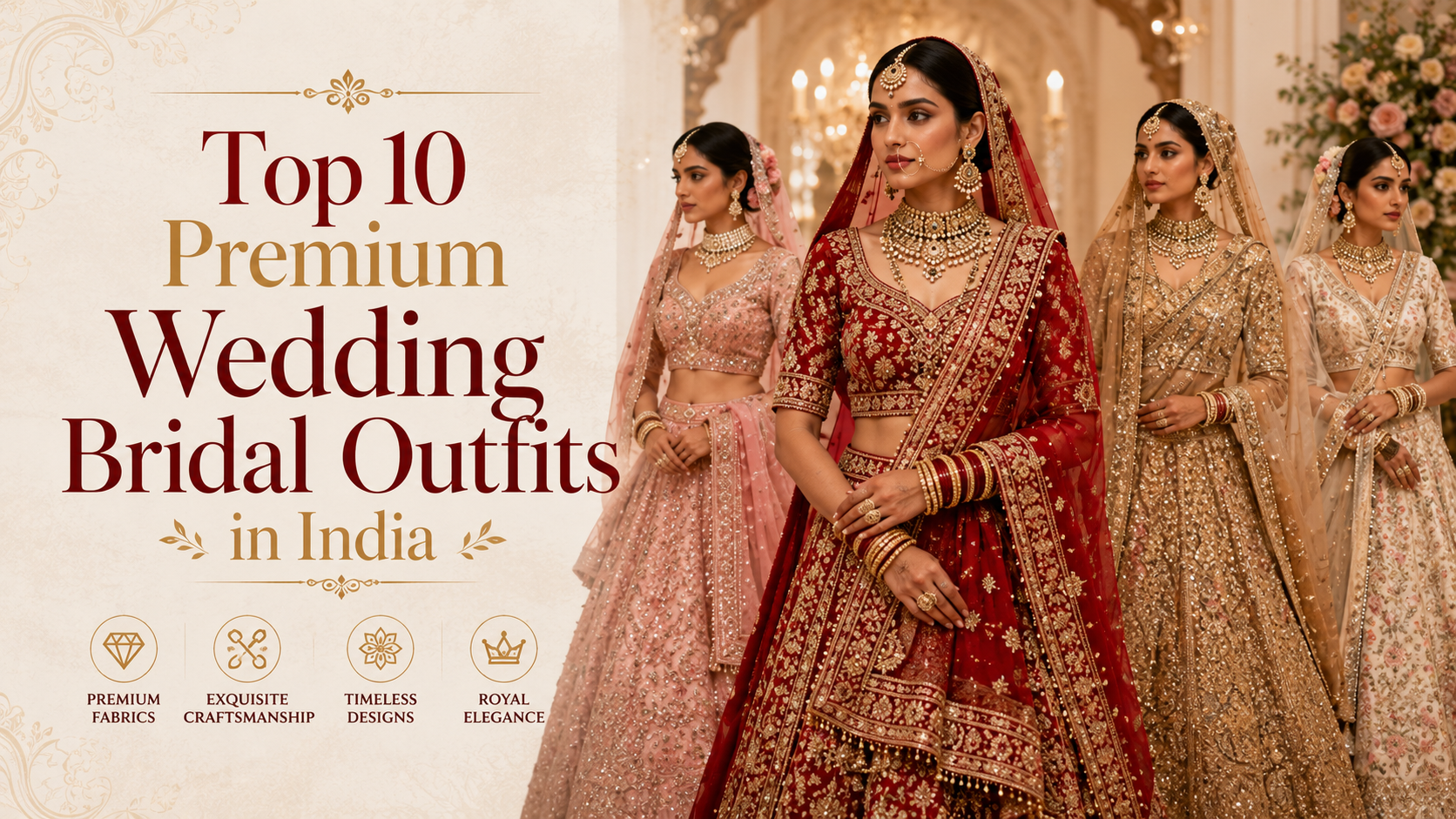
Choosing a bridal outfit is one of the most important decisions in wedding planning. For an Indian bride, the wedding ensemble is not simply an outfit. It reflects personal style, family traditions, cultural heritage, and the overall character of the celebration.
India offers an extraordinary variety of bridal fashion. From heavily embroidered lehengas and handwoven Banarasi sarees to regal Kanjeevarams and contemporary designer gowns, brides have numerous options for creating a distinctive wedding look.
From my experience observing Indian weddings and changing bridal fashion preferences, I have noticed that premium bridal fashion is increasingly focused on craftsmanship rather than excessive embellishment alone. Brides today often look for hand embroidery, heritage textiles, customised silhouettes, quality craftsmanship, and outfits that remain timeless in photographs.
This guide explores ten premium wedding bridal outfit styles that Indian brides should consider for their wedding celebrations.
What Makes a Bridal Outfit Premium?
A premium bridal outfit is generally distinguished by several factors beyond its price.
These may include:
- Handcrafted embroidery
- High-quality fabrics
- Detailed workmanship
- Heritage weaving techniques
- Customised fittings
- Intricate embellishments
- Unique design elements
- Designer craftsmanship
- Timeless styling
Premium bridal fashion is often about the quality of construction and artistic detail. A carefully crafted silk saree with traditional weaving can be just as luxurious as a heavily embroidered bridal lehenga.
1. Traditional Red Bridal Lehenga

The traditional red bridal lehenga remains one of the most popular choices for Indian weddings.
Red has strong cultural associations with Indian bridal traditions and continues to dominate wedding fashion despite the growing popularity of pastel colours.
A premium red lehenga may feature:
- Zardozi embroidery
- Gold threadwork
- Hand embroidery
- Sequins
- Kundan embellishments
- Silk fabric
- Detailed borders
The richness of a red lehenga makes it particularly suitable for grand wedding ceremonies.
For a more timeless appearance, brides can choose classic embroidery patterns rather than highly trend-driven designs.
2. Royal Velvet Bridal Lehenga
Velvet bridal outfits create a rich and regal appearance.
The fabric works particularly well for winter weddings because of its heavier texture and luxurious finish.
Popular colours include:
- Deep maroon
- Emerald green
- Royal blue
- Burgundy
- Wine
- Dark purple
A velvet lehenga with gold embroidery can create a heritage-inspired bridal look.
However, the overall outfit can become heavy. Brides should consider the comfort of wearing velvet and elaborate embroidery for several hours.
3. Pastel Designer Lehenga
Pastel bridal fashion has become increasingly popular among modern Indian brides.
Colours such as blush pink, ivory, peach, lavender, champagne, and powder blue offer an alternative to traditional bridal palettes.
Premium pastel lehengas often feature:
- Pearl embroidery
- Floral motifs
- Silver threadwork
- Crystal embellishments
- Delicate sequins
- Three-dimensional embroidery
Pastel outfits are particularly popular for daytime and destination weddings.
The key is selecting a colour that complements the bride's complexion and the overall wedding setting rather than simply following a trend.
4. Banarasi Silk Bridal Saree

A Banarasi silk saree represents timeless Indian craftsmanship.
Known for its intricate weaving and zari work, the Banarasi saree remains a prestigious choice for brides who prefer traditional elegance.
Common features include:
- Gold or silver zari
- Floral motifs
- Brocade patterns
- Silk weaving
- Detailed borders
A premium Banarasi saree can also become a family heirloom.
For brides who value heritage textiles, this option offers cultural depth alongside a luxurious appearance.
5. Kanjeevaram Bridal Saree
Kanjeevaram silk sarees are particularly significant in South Indian wedding traditions.
These sarees are recognised for their rich silk texture, contrasting borders, and traditional motifs.
Popular bridal colours include:
- Red and gold
- Mustard and red
- Green and gold
- Pink and orange
- Deep maroon
A premium Kanjeevaram bridal saree can be paired with temple jewellery, traditional bangles, and an elaborate hairstyle.
The combination creates a bridal appearance that remains strongly connected to regional heritage.
6. Gold Embroidered Ivory Lehenga
Ivory and gold have become popular choices for brides looking for understated luxury.
An ivory lehenga with intricate gold embroidery can create a sophisticated appearance without relying on bright colours.
This style works particularly well for:
- Daytime weddings
- Palace weddings
- Destination weddings
- Intimate ceremonies
The richness of the embroidery becomes especially important when the colour palette is minimal.
Hand embroidery, textured fabrics, and layered embellishments can add visual depth to an ivory bridal outfit.
7. Heritage-Inspired Rajputana Bridal Look

Brides planning palace or heritage-themed weddings may consider Rajputana-inspired bridal fashion.
This style often incorporates:
- Deep colours
- Heavy gold embroidery
- Traditional jewellery
- Layered necklaces
- Odhni or dupatta styling
- Heritage motifs
Colours such as maroon, red, emerald, and deep pink complement this aesthetic.
The objective is not necessarily to recreate historical clothing exactly. Instead, modern designers often reinterpret heritage silhouettes for contemporary brides.
8. Floral Embroidered Bridal Lehenga
Floral embroidery offers a softer alternative to traditional geometric or heavily ornate patterns.
Premium floral bridal lehengas may feature:
- Hand embroidery
- Threadwork flowers
- Three-dimensional floral elements
- Pearl embellishments
- Delicate sequins
This style is particularly suitable for:
- Garden weddings
- Daytime ceremonies
- Spring weddings
- Destination celebrations
A floral lehenga can appear contemporary while still maintaining traditional bridal craftsmanship.
9. Contemporary Bridal Gown With Indian Embroidery
Some modern brides prefer silhouettes inspired by gowns while retaining Indian craftsmanship.
These outfits can combine contemporary cuts with:
- Zardozi work
- Hand embroidery
- Silk fabrics
- Beadwork
- Traditional motifs
This option may work well for receptions or destination weddings.
However, brides should ensure that the silhouette suits the formality and cultural expectations of the specific ceremony.
A contemporary outfit can be paired with traditional jewellery to create an interesting balance between modern fashion and cultural heritage.
10. Customised Bridal Lehenga

A customised bridal outfit offers greater control over the final design.
Rather than selecting a ready-made lehenga, the bride can work with a designer or boutique to personalise:
- Colour palette
- Embroidery
- Fabric
- Blouse design
- Dupatta
- Silhouette
- Sleeve length
- Neckline
Customisation can be particularly valuable for brides who have a specific vision or want to incorporate family heritage into their outfit.
For example, a bride may use a traditional embroidery pattern inspired by her family's region while selecting a modern silhouette.
How to Choose the Right Premium Bridal Outfit
The most expensive outfit is not always the best choice.
A bridal ensemble should be selected based on several practical factors.
Consider the Wedding Venue
The venue can influence your outfit choice.
A palace wedding may suit elaborate heritage-inspired clothing, while a beach destination wedding may require lighter fabrics.
Consider the Season
Heavy velvet and multiple layers may be uncomfortable during a summer wedding.
Similarly, lightweight fabrics may not provide the desired appearance for a winter evening ceremony.
Consider Comfort
Indian wedding ceremonies can last several hours.
Consider the weight of:
- The lehenga
- Dupatta
- Jewellery
- Embroidery
- Fabric layers
Always try moving, sitting, and walking in the outfit before finalising it.
Consider Photography
Your outfit will be photographed in different lighting conditions.
Try to understand how the colours and embellishments appear in:
- Natural daylight
- Indoor lighting
- Evening photography
- Flash photography
Premium Fabrics Worth Considering
Fabric quality plays a major role in the overall appearance of a bridal outfit.
Some premium options include:
| Fabric | Best For | Key Characteristic |
|---|---|---|
| Silk | Traditional weddings | Rich and timeless |
| Velvet | Winter weddings | Regal appearance |
| Organza | Daytime weddings | Lightweight and structured |
| Raw silk | Lehengas | Textured finish |
| Brocade | Heritage looks | Detailed woven patterns |
| Satin | Contemporary gowns | Smooth and refined |
| Georgette | Lightweight lehengas | Soft movement |
The fabric should support the design rather than simply add weight to the outfit.
Bridal Jewellery Should Complement the Outfit
The jewellery should be considered while selecting the bridal outfit.
For example:
- Heavy Kundan jewellery works well with traditional lehengas.
- Temple jewellery complements Kanjeevaram sarees.
- Pearl jewellery can enhance pastel outfits.
- Gold jewellery suits heritage silk ensembles.
Avoid selecting the jewellery and outfit completely independently.
A coordinated approach creates a more refined bridal appearance.
Traditional Versus Contemporary Bridal Fashion
Modern Indian brides increasingly combine traditional and contemporary elements.
A bride may choose:
- A traditional saree with modern jewellery
- A contemporary lehenga with family heirlooms
- A classic colour with a modern blouse
- Traditional embroidery with a minimalist silhouette
This flexibility reflects the changing nature of Indian weddings.
The goal is not to follow every current trend. A wedding outfit should still feel relevant when viewed years later.
Personal Experience: What Makes a Bridal Look Memorable
From what I have observed, the most memorable bridal outfits are not always the ones with the maximum amount of embroidery.
A well-designed outfit usually has balance.
The colour complements the bride. The jewellery works with the neckline. The silhouette allows comfortable movement. The embroidery adds detail without overpowering the overall look.
I have seen brides become uncomfortable because an outfit looked impressive during a trial but was extremely heavy during the actual wedding.
This is why comfort should never be ignored in premium bridal fashion.
Luxury should enhance confidence, not create discomfort.
Bridal Fashion and Personal Preferences
Wedding fashion decisions are increasingly becoming more personal.
Brides today often want their outfits to reflect their individual identity rather than simply meeting traditional expectations.
This broader preference for personalisation can also be seen in other aspects of marriage planning.
For example, individuals using personalized matchmaking may value an approach that considers lifestyle preferences, family expectations, professional goals, and personal compatibility.
Similarly, people exploring luxury matchmaking may prefer a more curated experience when considering significant life decisions.
In both fashion and relationships, personal preferences increasingly play an important role.
Common Mistakes to Avoid When Buying a Bridal Outfit
Avoid these common mistakes:
- Buying solely because a design is trending
- Ignoring comfort and outfit weight
- Finalising jewellery after the outfit without coordination
- Choosing colours without considering the venue
- Waiting too long for alterations
- Ignoring the season
- Wearing too many competing design elements
- Copying another bride's look exactly
Your bridal outfit should reflect your personal style and cultural preferences.
Final Bridal Outfit Checklist
Before finalising your wedding outfit, ask:
- Does the outfit suit my wedding venue?
- Is it comfortable for several hours?
- Does the colour complement my complexion?
- Does the jewellery coordinate with it?
- Is the fabric suitable for the season?
- Can I walk comfortably?
- Have I planned alterations?
- Will the design remain timeless?
- Does it reflect my personality?
These questions can help narrow down the options.
Conclusion
Indian bridal fashion offers an exceptional range of premium options, from traditional red lehengas and Banarasi sarees to Kanjeevarams, floral ensembles, heritage-inspired designs, and contemporary embroidered gowns.
The right outfit depends on more than current fashion trends. It should reflect the bride's personality, cultural traditions, comfort requirements, and wedding setting.
From my experience, the best bridal looks are those that combine thoughtful craftsmanship with individual expression. A premium outfit should not only look beautiful in photographs but also allow the bride to feel comfortable and confident throughout the celebration.
Whether you choose a timeless silk saree or a customised couture lehenga, investing time in understanding fabrics, craftsmanship, fit, and styling can help create a bridal look that remains meaningful long after the wedding day.

 English
 Arabic
 French
 Spanish
 Portuguese
 Turkish
 Dutch
Dutch
 Italiano
 Russian
 Romaian
 Portuguese (Brazil)
 Greek
Greek