


How Much Does It Cost to Develop a Golf App in 2026?
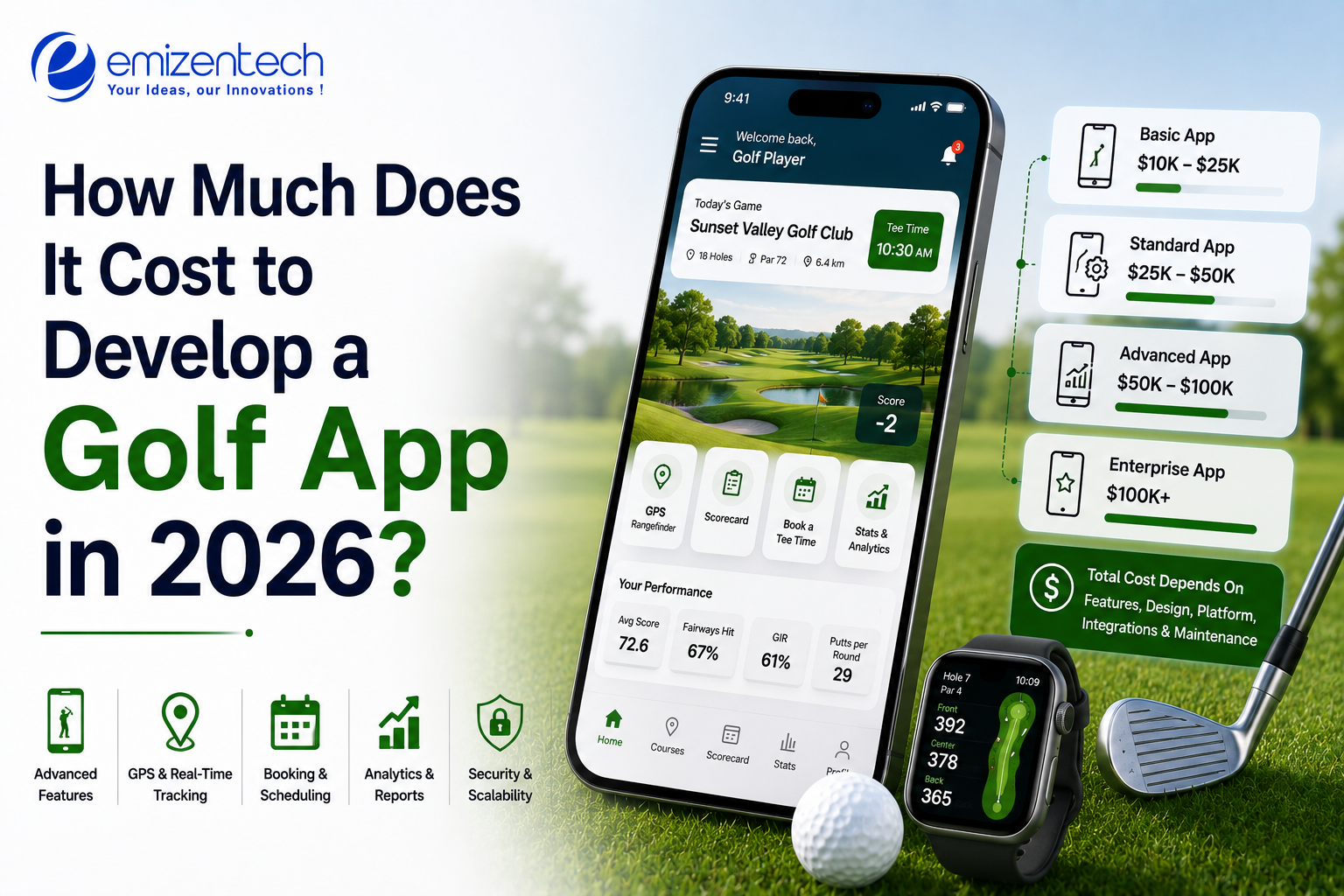
Golf has moved firmly into the digital era. Golfers now expect GPS yardages, digital scorecards, and tee-time booking on their phones, and that shift has created real business opportunity for course owners, startups, and sports-tech entrepreneurs entering this space in 2026.
On average, a golf app costs between $25,000 and $150,000 to build, though specialized platforms with AI coaching or live tournament features can exceed that. Pricing ultimately comes down to feature complexity, the data an app depends on, and how much custom engineering each function requires.
Golf App Market Growth in 2026
Golf participation has grown steadily in recent years, and that growth has carried over into how golfers use their phones on and off the course. Course operators are digitizing bookings, players are tracking performance through apps instead of paper cards, and wearable integration has become a common expectation rather than a bonus feature. This shift has opened space for course-specific tools, independent apps built for casual golfers, and platforms aimed at leagues or tournament organizers, each with different technical requirements and budgets.
Golf App Development Cost by App Type
Different golf apps solve different problems, and that difference shows up directly in the budget. Understanding what each type actually requires helps set realistic expectations before development begins.
Golf Score Tracking App
The simplest starting point, focused on digital scorecards, round history, and basic stats. Since it avoids live location data or outside data providers, it remains the most affordable category to build.
Golf GPS & Rangefinder App
Adds real course mapping and yardage accuracy, which usually means licensing external course data. That ongoing data relationship, more than the interface itself, is what drives the higher price.
Golf Swing Analysis App
Ranges widely based on sophistication. A simple video upload-and-review tool costs far less than a system using real-time motion tracking and automated feedback for players.
Golf Tee-Time Booking App
Requires syncing with a course's existing reservation software and handling secure payments reliably, which adds meaningful backend complexity beyond a typical booking form.
Golf Community & Tournament App
Built around live scoring across many players at once, requiring careful handling of simultaneous updates, group management, and real-time leaderboard accuracy during events.
Key Factors That Affect Golf App Development Cost
Two apps with similar features can still land at very different price points. The details behind each feature, not the feature list itself, usually explain that gap most clearly.
App Complexity and Feature Requirements
A straightforward scorecard tool costs less than a platform combining booking, GPS, and live scoring, since each added function increases backend and testing work.
GPS Mapping and Course Data Integration
Precise yardage data is either licensed from a provider or mapped independently, and sub-meter accuracy for rangefinder-level output adds noticeably to the budget.
AI-Powered Coaching and Analytics
Features like automated swing feedback require specialized engineering, and whether a model runs on-device or needs custom training data changes the cost significantly.
Third-Party Integrations
Payment processors, weather data, and wearable device SDKs each need separate integration and testing, and some, like official handicap access, involve their own approval process.
Platform Selection
Building separately for iOS and Android costs more than one cross-platform build, though native development can be worthwhile for camera-based or GPS-heavy features.
Development Team Structure
Rates vary by team location and experience, and choosing between an agency, freelancers, or an in-house team shapes both cost and project oversight.
Golf App Development Cost Breakdown by Feature
Breaking a golf app into individual components, rather than pricing it as one lump sum, makes budgeting far more manageable and transparent for anyone planning a project.
User Profiles and Authentication
A foundational feature covering account creation and login, generally inexpensive since it relies on well-established, reusable development patterns across app types.
GPS Course Mapping
One of the costlier features, since it depends on accurate, regularly updated location data covering hazards, greens, and fairways across many golf courses.
Digital Scorecards and Handicap Tracking
Moderately priced, though official handicap integration can add cost if it connects to a governing body's verified data system.
Tee-Time Booking System
Involves real-time availability syncing and payment handling, making it more involved than a standard reservation form found in other industries.
Wearable Device Integration
Connecting with smartwatches adds engineering time for each supported device, since platforms like Apple Watch and Garmin use different development requirements.
AI-Based Performance Insights:
AI-powered performance insights help golfers better understand their game through data-driven feedback and performance tracking. In golf app development, implementing these features often requires additional development effort due to the advanced analytics involved.
Golf App Development Timeline and Cost Impact
Timelines scale directly with feature complexity, and understanding each phase helps set expectations for both cost and delivery before a project formally begins.
-
Discovery and Planning: Defining scope and target users, typically two to four weeks
-
Design and Prototyping: Wireframes and UI flow, often three to six weeks
-
Development: The largest phase, ranging from three to nine months depending on scope
-
Testing and Quality Assurance: Verifying GPS accuracy, payments, and live scoring reliability
-
Launch and Deployment: App store submission and early post-launch monitoring
How to Monetize a Golf App
A well-planned golf app development strategy considers monetization early, since revenue model choices often influence which features are prioritized during the build itself.
-
Subscription plans for premium GPS or analytics features
-
Paid unlocks for specific course packs or training tools
-
Advertising placements from relevant equipment or travel brands
-
Booking commissions through partnerships with golf courses
-
Optional add-ons like extended stat history or AI insights
-
Freemium model offering core scorecard and GPS tools for free
-
In-app purchases for virtual coaching sessions or swing reviews
-
Tiered membership levels tied to clubs or private course networks
-
Sponsored content or leaderboard placements during tournaments
-
Data-sharing partnerships with sports analytics or wearable companies
How to Reduce Golf App Development Costs
Cost control doesn't have to mean cutting core functionality. Small, deliberate choices early in planning often reduce spending without weakening the final product.
-
Start with a focused MVP covering only essential features
-
Rank features by user value before adding anything advanced
-
Choose cross-platform development unless native performance is essential
-
License existing course data and payment APIs instead of building custom systems
-
Reuse proven design templates instead of custom UI for every screen
-
Delay AI-based features until core functionality is validated with real users
-
Outsource specialized work like GPS mapping rather than building in-house
-
Test with a smaller course library before scaling to full coverage
-
Combine related features that share the same backend to reduce rework
Conclusion
Golf app development costs in 2026 can range from around $25,000 for a basic score-tracking app to more than $300,000 for a feature-rich platform with AI, GPS navigation, booking systems, and advanced analytics. The final cost depends on factors such as app complexity, integrations, platform choice, and ongoing maintenance requirements. Rather than launching with every possible feature, many organizations start with a focused product and expand it based on user feedback and evolving business needs. Careful planning, feature prioritization, and realistic budgeting can help ensure long-term success while keeping costs under control. EmizenTech recognizes the importance of aligning development goals, functionality, and budget to create sustainable golf app solutions.
FAQs
1. How much does it cost to develop a golf app in 2026?
Most golf apps cost between $25,000 and $150,000, depending on features like GPS mapping, booking systems, and AI-based analysis.
2. How much does a golf GPS app cost?
A GPS and rangefinder app typically costs $35,000 to $80,000, largely influenced by the accuracy and source of course mapping data used.
3. What is the cost of building an AI golf swing analysis app?
Basic video-based coaching tools start around $60,000, while real-time motion tracking with automated feedback can reach $150,000 to $300,000 or more.
4. How long does golf app development take?
A focused MVP usually takes three to four months, while a full-featured app with GPS, booking, and AI can take six to nine months.

 English
 Arabic
 French
 Spanish
 Portuguese
 Deutsch
 Turkish
 Dutch
Dutch
 Italiano
 Russian
 Romaian
 Portuguese (Brazil)