


google voice generator text to speech

google voice generator text to speech
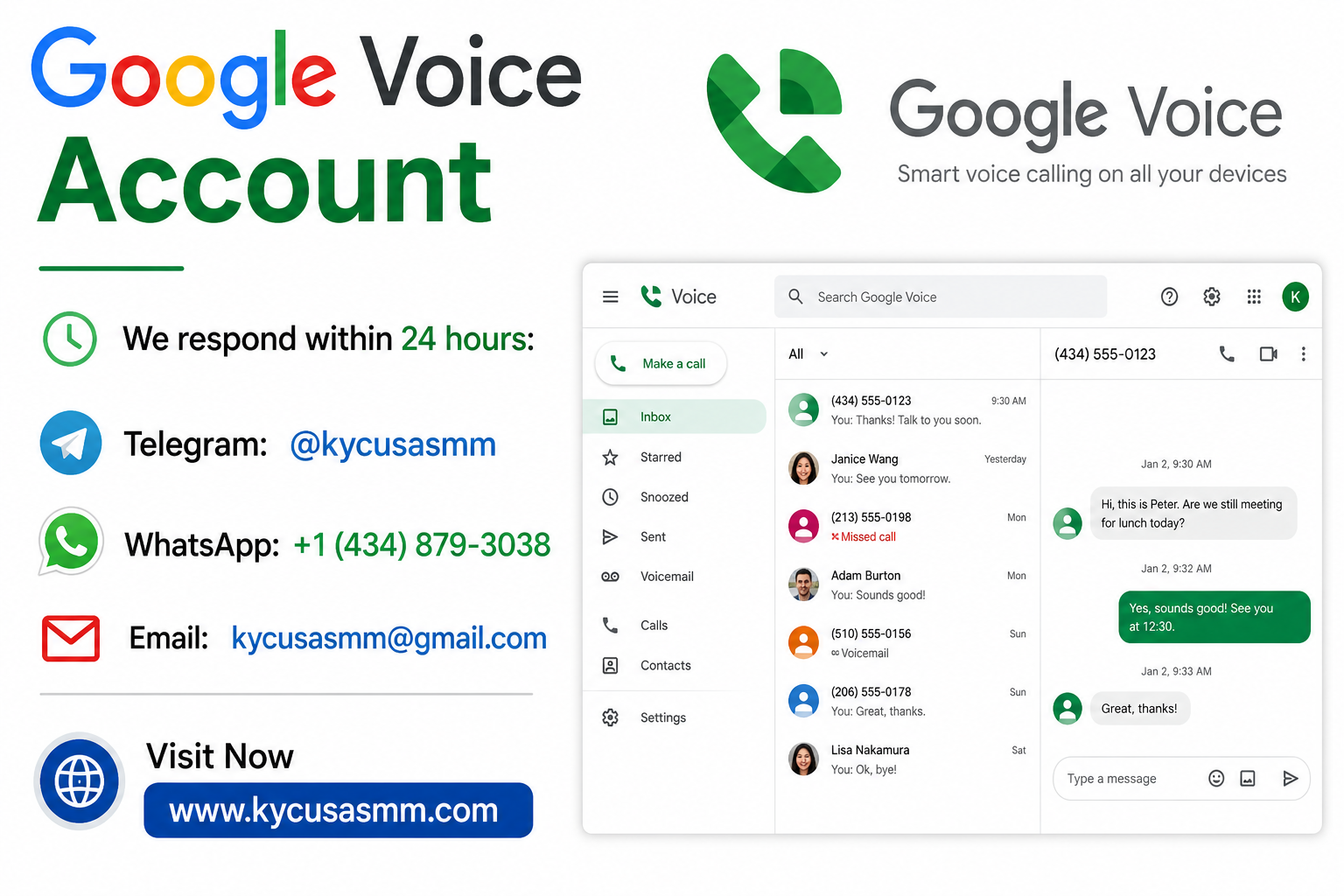
We respond within 24 hours:
➤ Telegram: @kycusasmm
➤ WhatsApp: +1 (434) 879-3038
➤ Email: [email protected]
Visit Now Website:-
https://kycusasmm.com/product/buy-google-voice-account/
Google Voice is a communication service that provides a phone number for calling, text messaging, and voicemail through supported devices and applications. It can help users separate different types of communication while managing calls and messages through a digital interface.
The service is useful for understanding how modern communication systems combine traditional telephone functions with internet-based software. It also provides practical lessons in digital organization, privacy, account management, and responsible technology use.
Google Voice features and availability can vary by country, account type, and Google's current policies. Users should therefore check official information when a particular feature or eligibility requirement matters.
What Is Google Voice?
Google Voice is a Google communication service that can provide users with a separate phone number. Depending on the account and available features, users can use that number for calls, text messages, and voicemail.
The service can be accessed through supported web interfaces and mobile applications. This allows communication to be managed digitally rather than relying exclusively on a traditional mobile-phone interface.
How Google Voice Differs From a Traditional Mobile Number
A traditional mobile number is generally provided as part of a cellular service. Google Voice is a software-based communication service that operates through Google's systems and supported internet-connected devices.
The distinction can be useful when users want to understand the difference between a carrier-provided phone number and a number managed through an online communication platform.
How Google Voice Works
Creating or Using a Google Voice Number
Eligible users can access Google Voice through a supported Google account and, where available, select or obtain a Voice number according to Google's current procedures.
The number then becomes associated with the user's Voice account and can be used for supported communication features.
Calling
Google Voice can support calls through compatible devices and interfaces. Depending on configuration, users may be able to place or receive calls through the web or mobile application.
The exact calling behavior depends on the account, device, location, and current service features.
Text Messaging
Google Voice can provide text messaging through supported interfaces. Users can organize conversations similarly to other digital messaging systems.
As with any communication service, users should avoid sending sensitive information unnecessarily through text messages.
Voicemail
Incoming calls can be directed to voicemail when appropriate. Users can review voicemail through supported interfaces, helping them keep calls and messages in one communication environment.
Number Management
Google Voice can provide tools for managing how calls and messages are handled. Some configurations can help users distinguish personal, professional, educational, or other communication activities.
Educational Benefits of Understanding Google Voice
Digital Communication Literacy
Learning how Google Voice works introduces concepts such as internet-based communication, digital phone numbers, account authentication, voicemail systems, and message management.
Organization
A separate communication number can help users keep different communication contexts organized when used appropriately.
Productivity
Managing calls, messages, and voicemail through one interface can help users keep track of communication and reduce unnecessary switching between systems.
Privacy Awareness
Understanding which number is being shared with whom encourages users to think carefully about digital identity and personal information.
Responsible Technology Use
Using communication services responsibly includes respecting privacy, following applicable policies, recognizing suspicious messages, and communicating appropriately.
Practical Applications
Managing Professional Communication
A separate communication number can help some people distinguish professional conversations from personal communication.
Users should still follow workplace rules about approved communication channels and records.
Educational Projects
Students may use approved communication tools to coordinate group work, schedule meetings, or communicate about projects. Whether Google Voice is appropriate depends on the school's policies and the nature of the information involved.
Managing Calls From Organizations
A separate number can help users organize calls from legitimate organizations, services, or projects without necessarily sharing their primary personal number.
Voicemail Organization
Voicemail provides a way to keep a record of missed calls and messages. Reviewing voicemail regularly can help users respond to important communications on time.
Privacy and Security Considerations
Protecting the Google Account
Google Voice is connected to a Google account, so protecting that underlying account is important. Users should use strong authentication and available security features.
Avoiding Sensitive Information
Phone calls and text messages should not automatically be treated as secure channels for highly sensitive information. Users should follow appropriate organizational policies when communicating confidential data.
Recognizing Scams and Phishing
Users may receive suspicious calls or messages regardless of the communication platform they use. Requests for passwords, verification codes, financial information, or urgent action should be treated cautiously.
Managing Shared Devices
If Google Voice is used on a shared computer or device, users should take care with account sign-in and logout practices to prevent unauthorized access.
Real-Life Case Studies
Case Study 1: Separating Professional and Personal Communication
A freelancer receives frequent messages from clients but wants to keep those conversations separate from personal calls. The freelancer uses a dedicated communication number and organizes conversations by client. This helps establish clearer boundaries and provides a practical lesson in digital communication management.
Case Study 2: A Student Coordinating a Project
A group of students needs to coordinate a project involving several meetings. They use institution-approved communication tools and, where appropriate, a separate communication channel for scheduling. They keep project documents in the approved collaboration system rather than storing important information only in messages. This demonstrates the difference between communication and document management.
Case Study 3: Managing Missed Calls
A user receives calls while attending classes or working and cannot always answer immediately. Voicemail allows callers to leave messages, which the user reviews later. The user maintains a routine for checking voicemail so important communications are not overlooked.
Case Study 4: Responding to a Suspicious Message
A user receives a text message claiming to represent an organization and requesting a verification code. The user does not provide the code and independently checks the organization's official contact information. This demonstrates why users should evaluate communication requests instead of trusting a message solely because it arrives through a familiar service.
Case Study 5: Organizing Multiple Communication Channels
A small project team uses email for formal documents, a shared workspace for files, and a designated communication number for calls. Each tool has a specific purpose, making information easier to manage. The example shows how combining communication tools with clear organizational rules can improve productivity.
Step-by-Step Guide to Using Google Voice Responsibly
Step 1: Understand Eligibility and Availability
Check whether Google Voice is available for your location and account type and review Google's current requirements.
Step 2: Sign In Securely
Use the appropriate Google account and make sure its security settings are properly configured.
Step 3: Set Up the Service
Follow the current Google Voice setup process and configure the available communication options.
Step 4: Review Number Settings
Understand how the assigned or selected number works and which communication features are available to your account.
Step 5: Configure Notifications
Choose appropriate notification settings so that important calls and messages are visible without creating unnecessary interruptions.
Step 6: Organize Conversations
Use available tools to keep conversations manageable. Separate different communication contexts when appropriate.
Step 7: Review Voicemail
Check voicemail regularly and respond to important messages through appropriate channels.
Step 8: Protect Your Account
Use strong authentication, avoid sharing credentials, and review security notifications associated with the Google account.
Step 9: Handle Suspicious Messages Carefully
Do not provide passwords, authentication codes, financial information, or other sensitive data in response to unexpected messages or calls.
Step 10: Review Policies
If Google Voice is being used for school or work, make sure its use complies with the organization's communication and privacy requirements.
Skills People Can Learn
Communication Management
Users learn how different communication channels can be assigned specific purposes.
Digital Organization
Managing calls, texts, voicemail, notifications, and contacts develops practical organizational skills.
Privacy Management
Users become more aware of how phone numbers and communication records can form part of a digital identity.
Cybersecurity Awareness
Learning to protect the underlying Google account and identify suspicious messages builds useful security habits.
Productivity
Clear communication systems can reduce missed messages and help users manage their time more effectively.
Frequently Asked Questions
1. What is Google Voice?
Google Voice is a communication service from Google that can provide a phone number for supported calling, texting, and voicemail features.
2. How does Google Voice work?
It connects a Google account with a Voice number and supported communication features. Users can manage calls, messages, and voicemail through compatible Google Voice interfaces.
3. Is Google Voice the same as a mobile phone plan?
No. Google Voice is a software-based communication service, while a traditional mobile phone plan is generally provided through a cellular carrier. Their features and availability can differ.
4. Can Google Voice be used for school or work?
It may be appropriate for some situations, but users should follow their school's or employer's communication policies. Some organizations require specific approved systems.
5. Can Google Voice improve organization?
It can help some users separate communication contexts and manage calls, messages, and voicemail in one system. Organization still depends on how the user configures and maintains the service.
6. Is Google Voice completely private?
Users should not assume that any online communication system is completely private. They should understand the provider's privacy practices and avoid sharing sensitive information unnecessarily.
7. What should I do if I receive a suspicious Google Voice message?
Do not provide passwords, verification codes, or other sensitive information. Verify the sender independently and use appropriate reporting or security procedures when necessary.
8. Can Google Voice replace every type of phone service?
No. Its features and availability differ from those of traditional mobile and landline services. Users should consider the specific communication requirements of their situation.
Google Voice and Online Information
Information about Google Voice can appear on many technology and account-related websites. Third-party articles can help explain general concepts, but service availability and features can change.
For example, kycusasmm.com may discuss Google Voice or related account topics. When information concerns eligibility, security, account settings, or current functionality, users should verify important details through Google's official documentation.
Conclusion
Google Voice illustrates how traditional telephone functions can be integrated into a modern digital communication system. By providing supported calling, messaging, and voicemail features through a Google account, it can help users manage different forms of communication in an organized way.
Understanding Google Voice also provides broader lessons in digital literacy. Users can learn about online communication, account security, privacy, information organization, and responsible technology use.
The most important skills are not simply knowing how to place a call or send a message. They include choosing appropriate communication channels, protecting digital identities, recognizing suspicious requests, organizing information, and following the policies that apply to educational, professional, and personal communication.

 English
 Arabic
 French
 Spanish
 Portuguese
 Deutsch
 Turkish
 Italiano
 Russian
 Romaian
 Portuguese (Brazil)
 Greek
Greek