


Fire Hose Solution Starts With The Right Hose
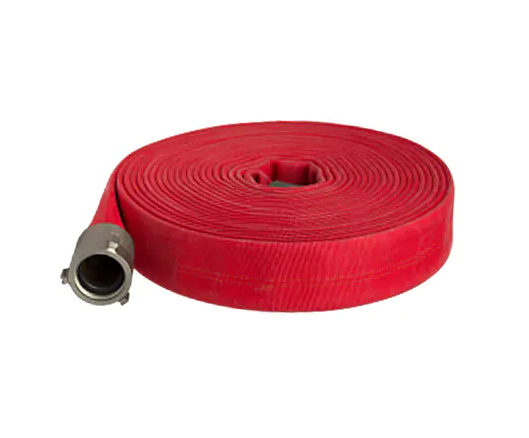
A fire hose may look like a simple length of flexible tubing, but its job demands careful coordination. During an emergency, water needs to travel from a supply point to the area where it is required. A Fire Hose Solution brings together the hose, couplings, nozzles, reels, valves, water source, and supporting equipment needed for that task.
The hose itself contains several layers. A typical fire hose may use an inner lining that carries water and an outer textile jacket that provides mechanical protection. Different hose constructions are designed for different pressure ranges, applications, and installation conditions. Diameter also matters because it affects water flow and handling characteristics.
A Fire Hose Solution begins with understanding the location. A warehouse, commercial building, industrial facility, ship, or outdoor site can have very different requirements. The distance between the water source and the discharge point, available water pressure, hose storage position, and expected operating conditions all influence equipment selection.
Couplings create the connection between the hose and other components. They need to correspond to the hose diameter and the connection standard used in the system. Nozzles then control the water leaving the hose. Adjustable nozzles can provide different spray patterns, while straight-stream configurations direct water in a concentrated flow.
Fire hose reels offer another approach. Instead of storing a long hose loosely, the hose is wound around a reel positioned near the intended area of use. Depending on the design, a reel can provide a compact arrangement that allows the hose to be pulled out when needed.
Water pressure is an important part of the equation. The pressure available at the supply point needs to be sufficient for the selected hose and nozzle arrangement. Flow rate also matters because a large-diameter hose can carry a different volume of water from a smaller one under comparable conditions.
Material selection adds another layer. Synthetic textile jackets are common in many modern hoses because they can combine flexibility with mechanical strength. Rubber or thermoplastic linings can be selected according to the hose design and water-handling requirements.
The phrase Fire Hose Solution describes a complete approach rather than one individual product. When hose construction, water supply, connections, discharge equipment, and storage are considered together, the resulting system becomes easier to understand and match to the actual site.

 English
 Arabic
 Spanish
 Portuguese
 Deutsch
 Turkish
 Dutch
Dutch
 Italiano
 Russian
 Romaian
 Portuguese (Brazil)
 Greek
Greek