


Electric Scooter Controller: Inside The Power System
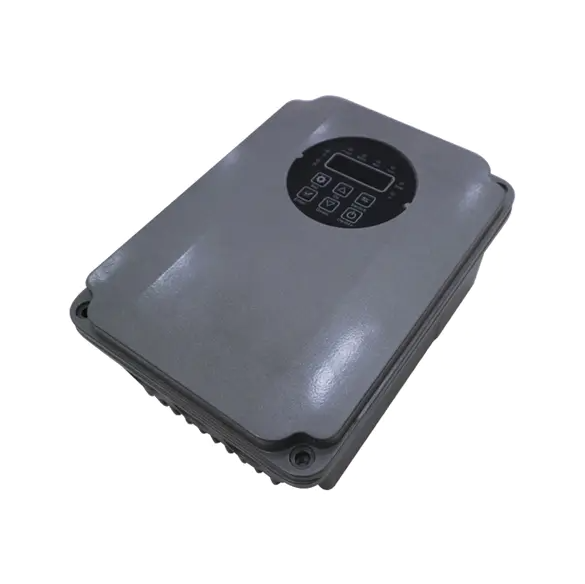
An Electric scooter controller may look like a small electronic box, yet it performs several important tasks inside an electric scooter. Its main role is to regulate electrical power between the battery and motor. It also interprets rider commands and sensor signals, turning electronic information into controlled motor activity.
Think of the throttle as the rider's request and the controller as the decision-making unit. When the throttle position changes, a signal travels to the controller. The controller then adjusts the electrical output sent toward the motor. This interaction is what allows a scooter to move gradually from a standstill into normal riding speed.
Motor compatibility is a key consideration. Brushless DC hub motors commonly use electronic switching to create the rotating magnetic field required for movement. Many of these motors rely on Hall sensors to report rotor position. An Electric scooter controller can read those signals and coordinate the switching sequence inside the motor.
Electrical specifications also deserve attention during product selection. Controller voltage should correspond to the scooter's battery system, and current capacity needs to suit the motor's operating requirements. If these elements are poorly matched, the system may not deliver the expected riding characteristics. Connector arrangement, wiring configuration, communication protocol, and enclosure dimensions can also affect compatibility.
Another feature found in some controller systems is programmable riding behavior. Different settings can influence acceleration response, current limits, electronic braking, and speed control. A manufacturer may configure the controller for a smooth commuter experience or a more responsive riding mode. Such adjustments depend on the hardware and software architecture of the specific unit.
Heat generation is also related to controller operation. Electrical components produce heat when handling current, especially during demanding acceleration or climbing conditions. Controller housings may therefore use metal structures or other heat-dissipation designs to help manage operating temperature. The physical layout can affect how easily heat moves away from internal components.
As electric scooters continue appearing in different formats, controllers can vary considerably in size, programming, connector type, voltage range, and communication features. Choosing a suitable Electric scooter controller requires attention to the complete electrical system rather than focusing on one specification alone. A properly matched controller can provide consistent signal processing and controlled motor response during everyday riding.

 Arabic
 French
 Spanish
 Portuguese
 Deutsch
 Turkish
 Dutch
Dutch
 Italiano
 Russian
 Romaian
 Portuguese (Brazil)
 Greek
Greek