


Dive Deep Into the Dark World of D2R at U4GM
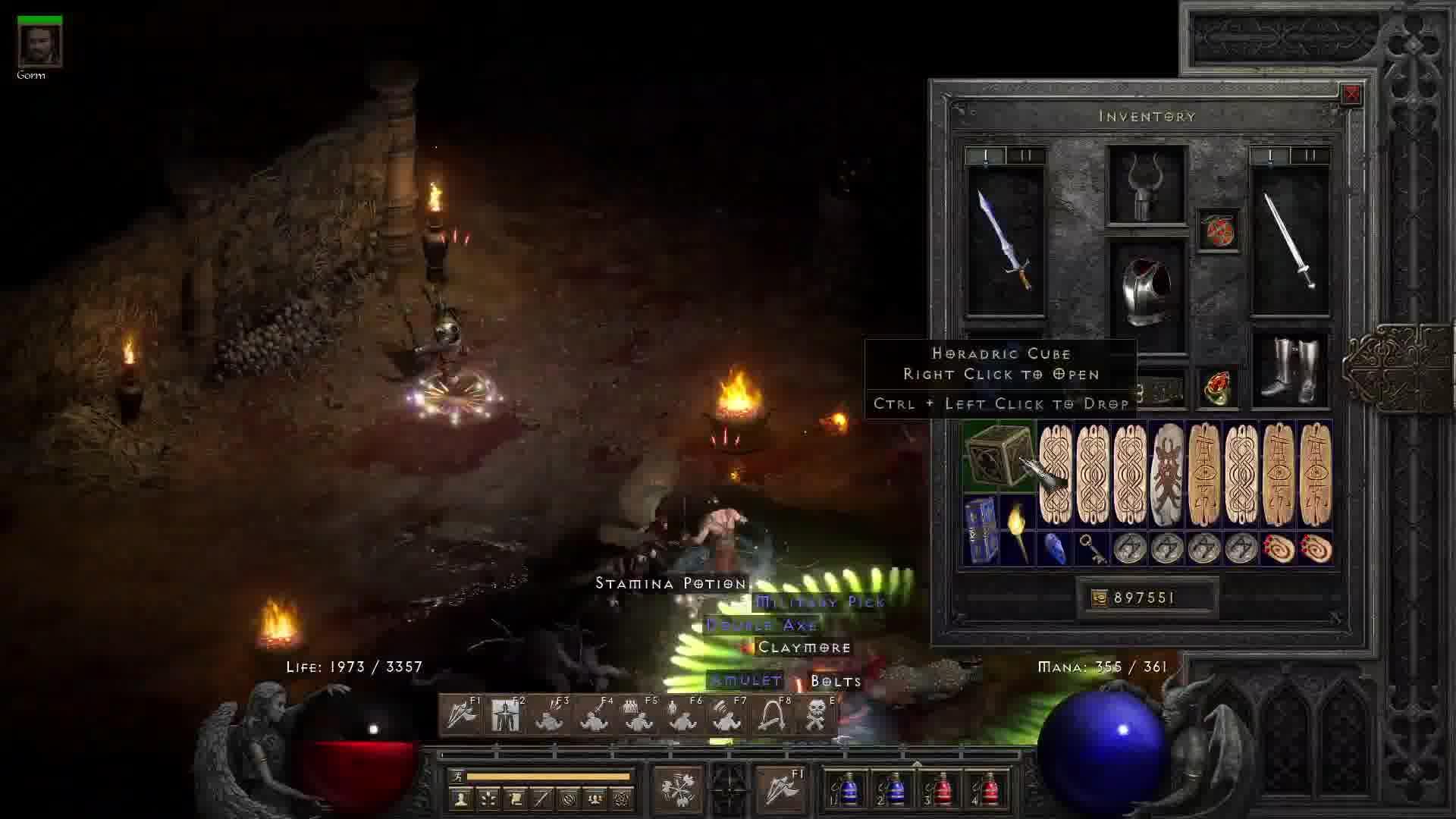
Hell difficulty is where Diablo II: Resurrected stops forgiving careless character construction. A build that performs comfortably in earlier difficulties can suddenly become extremely fragile. The enormous increase in enemy danger exposes weaknesses in resistance, life, positioning, and equipment.
One of the most important problems is the resistance penalty. Upon entering Hell difficulty, characters face a substantial penalty to their elemental resistances. As a result, equipment that seemed perfectly adequate during earlier progression may no longer provide sufficient protection.
Fire, Cold, Lightning, and Poison resistance therefore become critical components of endgame optimization.
The challenge is that defensive statistics compete directly with offensive ones. A player might find an item with excellent damage bonuses but poor resistances. Another item may offer substantial elemental protection while sacrificing offensive potential. Choosing between them is not simply a matter of identifying which item has a higher item level or greater theoretical damage.
It is a question of survival efficiency.
This is where charms become extremely valuable. Inventory space can be filled with charms that provide resistances, life, skill bonuses, or other useful statistics. The problem is that every charm occupies valuable space. Players must decide how much offensive power they are willing to sacrifice for defensive stability.
Sockets create another opportunity for customization. Runes, gems, and jewels can modify equipment to solve specific deficiencies. A character lacking Lightning resistance, for example, may be able to adjust its equipment to compensate. This means gear optimization can continue long after the primary equipment set has been assembled.
Sunder Charms add another important strategic element. Certain enemies in D2R Items can possess immunities that prevent particular forms of elemental damage from affecting them normally. Sunder mechanics allow specialized builds to interact with these immunities differently, opening additional farming opportunities.
However, solving an immunity problem can create another optimization challenge. Once an elemental immunity is broken, the character may need to compensate for other resistance-related effects. The resulting setup must therefore balance offensive capability with defensive requirements.
Players evaluating D2R Items should consider these interactions rather than simply choosing the highest damage options. A character that kills enemies slightly faster but dies repeatedly may be significantly less efficient than one that clears a little more slowly while surviving consistently.
For some players, choosing to buy D2R Runes can provide a convenient way to test defensive configurations. Different equipment combinations can be compared to determine whether additional life, resistance, FHR, or damage produces better practical results.
Hell difficulty also highlights the importance of breakpoints. Faster casting can allow a character to attack from safer distances. Faster Hit Recovery can help a character escape dangerous situations. Increased Attack Speed can dramatically affect physical builds. Consequently, defensive survival and offensive speed are often connected.
A character with excellent resistances but poor mobility may still struggle. Likewise, a powerful damage dealer without enough defense may collapse before completing a dangerous encounter.
The best Hell builds therefore operate as balanced systems. They need sufficient damage to eliminate threats efficiently, enough defense to withstand unavoidable attacks, appropriate resistances to survive elemental damage, and enough mobility or recovery speed to respond to dangerous situations.
This is why endgame gear is so difficult to optimize. Every slot represents a limited resource. Replacing one item may solve a resistance problem but create an FCR problem. Adding a charm may improve life but remove inventory space for another useful charm. Switching weapons may increase damage while changing attributes required elsewhere.
Hell difficulty exposes these compromises immediately.
Rather than seeing the resistance penalty as an arbitrary punishment, advanced players can view it as the game's ultimate gear-check puzzle. It forces the player to understand what the character actually needs.
The result is an endgame where survival itself becomes a mathematical exercise. Resistances must be balanced, breakpoints must be reached, damage must remain competitive, and every gear slot must justify its existence.
In Sanctuary, raw power is only half the equation. The other half is staying alive long enough to use it.

 English
 Arabic
 French
 Spanish
 Portuguese
 Deutsch
 Turkish
 Dutch
Dutch
 Italiano
 Russian
 Romaian
 Greek
Greek