


Freight Trucking Market Size to Reach USD 4.3 Trillion by 2034, Growing at 4.07% CAGR
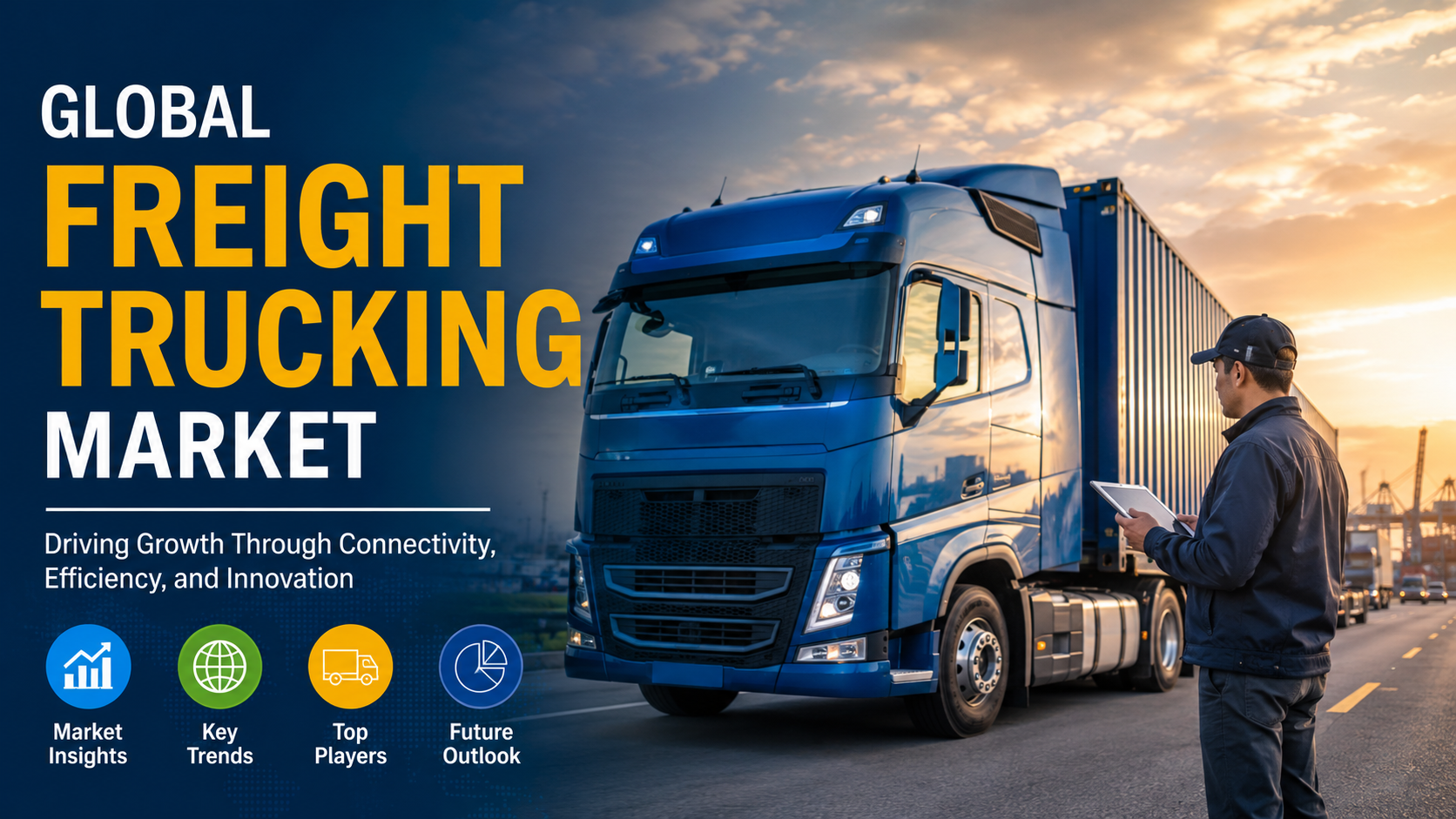
Market Overview
The global freight trucking market size was valued at USD 3.0 Trillion in 2025. Looking forward, the market is forecasted to reach USD 4.3 Trillion by 2034, exhibiting a growth rate (CAGR) of 4.07% during 2026-2034. Asia Pacific currently dominates the market, accounting for 32.6% of the global market share in 2025. The significant growth in the e-commerce industry, rapid industrialization, expanding trade volumes, increasing demand for efficient supply chain transportation, and the introduction of electric freight trucks represent some of the key factors propelling the freight trucking market growth.
Freight Trucking Market Key At a Glance
-
Base Year: 2025
-
Historical Period: 2020–2025
-
Forecast Period: 2026–2034
-
Market Size in 2025: USD 3.0 Trillion
-
Market Forecast in 2034: USD 4.3 Trillion
-
Market Growth Rate (2026–2034): 4.07%
-
Leading Region: Asia Pacific
-
Asia Pacific Market Share (2025): 32.6%
Freight Trucking Market Report: Key Highlights
-
Market Size & Growth: The global freight trucking market share was valued at USD 3.0 Trillion in 2025 and is projected to reach USD 4.3 Trillion by 2034, expanding at a CAGR of 4.07% during 2026–2034.
-
Regional Leadership: Asia Pacific accounted for the largest market share of 32.6% in 2025, supported by rapid industrialization, expanding e-commerce, robust manufacturing activity, infrastructure development, and increasing trade volumes.
-
Major Market Drivers: Growing demand for efficient transportation in supply chain operations, expanding global trade and industrial production, rising e-commerce activity, infrastructure investments, and increasing demand for perishable and consumer goods are supporting market growth.
-
Key Market Trends: Increasing adoption of electric freight trucks, digitalization, autonomous trucking technologies, AI-driven route optimization, real-time fleet monitoring, and the shift toward sustainable freight solutions are shaping the industry.
-
Truck Type: The market is segmented into dry van and box trucks, refrigerated trucks, tanker trucks, flatbed trucks, and others.
-
Cargo Type: The market covers dry bulk goods, oil and diesel, postal, and others.
-
Distance: The market is segmented into 50 miles or less, 51 to 100 miles, 101–200 miles, 201–500 miles, and above 500 miles.
-
End User: Major end-user categories include food and beverages, industrial and manufacturing, energy and mining, oil and gas, pharmaceutical and healthcare, and others.
-
Key Challenges: Poor infrastructure, traffic congestion, road maintenance issues, higher logistics expenses, fuel costs, tolls, and labor costs can negatively impact operational efficiency and profit margins.
-
Emerging Opportunities: Growing e-commerce, increasing EV adoption, autonomous trucking, digital fleet management, alternative fuels, and investments in transportation infrastructure are creating new growth opportunities.
Request for a Sample Report for Detailed Evaluation: https://www.imarcgroup.com/freight-trucking-market/requestsample
What Is Driving Freight Trucking Market Growth in 2026?
Increasing Demand for Efficient Supply Chain Transportation
One of the major factors driving the freight trucking market is the increasing demand for efficient and reliable transportation across supply chain operations. As global trade and industrial production continue to expand, businesses are increasingly dependent on freight trucking for the timely movement of goods across regions. These developments are also shaping freight trucking market trends, while ongoing infrastructure development, technological advancements, and the growing adoption of logistics solutions are supporting market expansion. A detailed freight trucking market analysis highlights the increasing focus on operational efficiency, cost optimization, fleet modernization, and improved transportation connectivity.
Freight trucking provides flexibility, cost-effectiveness, and door-to-door delivery capabilities, making it an integral component of modern logistics networks. The rising demand for perishable and consumer goods, combined with growing infrastructure investments, is further supporting the expansion of the freight trucking industry.
For instance, in 2024, XPO acquired 26 terminals for $870 million from Yellow's first auction, opening facilities in Nashville, Tennessee; Grand Junction, Colorado; and Nogales, Arizona. Such developments reflect continued investment and consolidation across the freight transportation sector.
Furthermore, advancements in fleet management technologies, including GPS tracking, real-time monitoring, and route optimization, are enhancing operational efficiency and helping companies reduce fuel consumption and transportation costs.
Development in E-Commerce
The rapid expansion of the e-commerce industry is significantly influencing the freight trucking market by increasing demand for faster and more efficient delivery services. The expansion of online shopping, particularly following the COVID-19 pandemic, has made dependable last-mile delivery increasingly important.
Freight trucking plays a central role in moving products from distribution centers and warehouses to retail locations and consumers. As customers increasingly expect faster deliveries, trucking companies are investing in technologies such as route optimization, real-time tracking, and advanced fleet management systems.
The continued growth of e-commerce is therefore creating significant opportunities for trucking companies while also encouraging improvements in logistics efficiency and delivery capabilities.
Rapid Industrialization and Growing Trade Volumes
Rapid industrialization and expanding trade volumes are further supporting freight trucking demand. Manufacturing, construction, agriculture, retail, and other industrial sectors require reliable transportation services to move raw materials, intermediate products, and finished goods.
As industrial activity expands across emerging economies, particularly in Asia Pacific, demand for road-based freight transportation is increasing. Freight trucking provides the flexibility required to connect manufacturing facilities, warehouses, distribution centers, and retail networks, making it an important part of regional and cross-border supply chains.
Impact of COVID-19 on the Freight Trucking Market
The COVID-19 pandemic had a profound impact on the freight trucking industry, resulting in significant disruptions and operational changes. During the initial stages of the pandemic, supply chain congestion, labor shortages, lockdown measures, and restrictions on movement caused a slowdown in freight transportation.
However, as economies gradually recovered, freight trucking demand increased significantly, particularly for essential products such as medical supplies, food, and e-commerce goods. Trucking businesses implemented new health and safety procedures to maintain operations during the pandemic.
The rapid increase in online shopping also created additional demand for transportation services. Although COVID-19 created substantial challenges for freight trucking companies, it also accelerated digital transformation throughout the freight and logistics industry.
Freight Trucking Market Trends
Increased Adoption of Electric Freight Trucks
The electric freight trucking market is expanding rapidly as companies seek to reduce emissions and lower operating costs. Growing freight demand, combined with increasing environmental concerns, is encouraging the development and adoption of sustainable transportation solutions.
Electric trucks such as Tesla's Semi are emerging as important examples of the industry's transition toward electrification. The model's reported 500-mile range highlights the increasing capabilities of electric freight vehicles.
Electric trucks can potentially reduce fuel and maintenance expenses while helping trucking companies lower carbon emissions. Adoption is further supported by stricter environmental regulations, improvements in battery technology, and global efforts to decarbonize transportation.
As freight transportation demand continues to increase, electric trucks are expected to play an increasingly important role in reducing the industry's carbon footprint.
Digitalization and Autonomous Trucks
Digitalization is significantly transforming freight trucking operations. AI-driven route optimization, telematics, real-time monitoring, and autonomous driving technologies are increasingly becoming important components of modern trucking operations.
AI-powered systems can optimize delivery routes in real time, improving fuel efficiency and reducing operational costs. Autonomous trucks are also being explored as a potential solution to the growing driver shortage in the freight transportation industry.
Companies such as Aurora Innovation and Kodiak Robotics are testing self-driving freight trucks equipped with advanced sensors and algorithms capable of navigating highways with increasing levels of autonomy.
Although autonomous freight transportation remains under development, the technology has the potential to improve operational efficiency, reduce costs, and enhance safety. Digitalization is also expected to create new business models throughout the freight logistics ecosystem.
Shift Toward Sustainable Freight Solutions
The freight industry is increasingly shifting toward sustainable transportation solutions as governments, businesses, and consumers focus on reducing carbon emissions.
Alternative fuels such as hydrogen and biofuels are being explored as potential solutions for decarbonizing freight transportation. Hydrogen-powered trucks and biofuels could provide additional options for reducing emissions across long-distance and regional freight operations.
The growing emphasis on sustainable freight transportation is encouraging investments in alternative powertrains, fuel-efficient vehicles, charging infrastructure, and other technologies designed to reduce the environmental impact of road freight.
Poor Infrastructure and Higher Logistics Costs
Poor infrastructure and rising logistics costs represent important challenges for the freight trucking market. Underdeveloped road networks, traffic congestion, inadequate road maintenance, and infrastructure bottlenecks can result in delays and higher fuel consumption.
These inefficiencies can reduce freight transportation productivity while increasing delivery times and negatively affecting customer satisfaction. At the same time, higher logistics expenses, including tolls, labor costs, and fuel expenses, can put pressure on trucking companies' profit margins.
As a result, freight transportation companies are increasingly demanding improved infrastructure, better road networks, and cost-efficient logistics alternatives to remain competitive and minimize operating expenses.
Freight Trucking Market Segmentation Analysis
IMARC Group provides an analysis of the key trends in each segment of the global freight trucking market, along with forecasts at the global, regional, and country levels for 2026-2034. The market has been categorized based on truck type, cargo type, distance, and end user.
By Truck Type
-
Dry Van and Box Truck
-
Refrigerated Truck
-
Tanker Truck
-
Flatbed Truck
-
Others
Dry van and box truck leads the market with around 42.2% of the market share in 2025. These vehicles are highly versatile and are suitable for transporting a broad range of goods, including retail products, packaged goods, and non-perishable items.
Their enclosed design protects cargo from external elements while providing safe and secure transportation. The rising demand for e-commerce and just-in-time delivery services is further supporting adoption, particularly across urban and suburban areas.
Operational flexibility and compatibility with loading docks also improve efficiency. In addition, advancements in tracking and fleet management technologies are supporting the segment's ability to meet evolving logistics requirements.
Refrigerated trucks are essential for transporting temperature-sensitive products, including food, beverages, pharmaceuticals, and other perishable goods. Increasing demand for fresh and frozen products and the expansion of pharmaceutical logistics are supporting their use.
Tanker trucks are designed to transport liquid and gaseous cargo, including petroleum products and other industrial materials. Demand from the energy and industrial sectors supports their continued application in freight transportation.
Flatbed trucks are widely used for transporting oversized, heavy, or irregularly shaped cargo that cannot be accommodated by enclosed vehicles. Their flexibility makes them suitable for construction, manufacturing, and industrial applications.
Others include specialized truck types serving specific freight transportation requirements across different industries.
By Cargo Type
-
Dry Bulk Goods
-
Oil and Diesel
-
Postal
-
Others
Dry bulk goods lead the market with around 66.8% of the market share in 2025. This leadership is supported by strong demand for transporting materials such as grains, coal, cement, and other non-liquid commodities required by industrial and agricultural sectors.
The segment benefits from continued expansion in the construction and energy industries, which rely heavily on bulk materials for production and infrastructure projects. Efficient bulk transportation systems, including hopper trucks and specialized freight solutions, support cost-effective operations over long distances.
Furthermore, route optimization, real-time tracking, and other logistics technologies are improving the efficiency of dry bulk transportation.
Oil and diesel represent another important cargo category due to the extensive transportation requirements associated with energy production, refining, storage, and distribution.
Postal freight transportation is supported by continued demand for parcel and mail delivery services, particularly as e-commerce expands and consumers increasingly rely on online purchasing.
Others include various cargo categories transported through road freight networks across industrial, commercial, and consumer applications.
By Distance
-
50 Miles or Less
-
51 to 100 Miles
-
101–200 Miles
-
201–500 Miles
-
Above 500 Miles
50 Miles or Less
Freight trucking over distances of 50 miles or less plays an important role in short-haul and last-mile delivery. This segment connects warehouses, distribution centers, retail locations, and other local facilities.
It supports industries requiring frequent and time-sensitive deliveries, including e-commerce, food and beverages, and retail.
51 to 100 Miles
The 51 to 100-mile segment bridges regional hubs and urban centers and supports medium-haul delivery requirements. It facilitates the movement of goods from manufacturing facilities and warehouses to retail locations and smaller distribution centers.
Manufacturing, wholesale, and agriculture industries rely on this distance category for timely and reliable supply chain operations.
101–200 Miles
The 101–200-mile segment serves interregional supply chains and medium-haul transportation requirements. It is particularly important for connecting regional warehouses, manufacturing plants, and distribution centers.
Industries such as retail, automotive, and food processing depend on this segment to maintain consistent product flows across service areas.
201–500 Miles
The 201–500-mile segment supports long-haul regional deliveries and connects production hubs with major distribution centers. It is particularly important for industries requiring bulk transportation and reliable supply chain operations.
This distance range provides a balance between transportation costs and delivery requirements for moderately distant freight movement.
Above 500 Miles
Distances above 500 miles are important for long-haul freight transportation across states and regions. This segment enables the movement of goods between major manufacturing hubs and large distribution networks.
It supports extensive supply chains and nationwide as well as cross-regional trade operations.
By End User
-
Food and Beverages
-
Industrial and Manufacturing
-
Energy and Mining
-
Oil and Gas
-
Pharmaceutical and Healthcare
-
Others
Oil and gas leads the market in 2025. The segment's leadership is attributed to the critical role of trucking in transporting crude oil, refined petroleum products, and natural gas to refineries, storage facilities, and distribution points.
Specialized tanker trucks enable safe and efficient transportation while complying with stringent safety and environmental standards. Continued energy consumption, industrial activities, drilling projects, and energy infrastructure development are supporting freight volumes.
Advancements in tracking systems and fleet management technologies are also improving operational efficiency and helping companies manage the logistical requirements of the energy sector.
Food and beverages rely heavily on freight trucking for transporting perishable and non-perishable products between farms, processing facilities, warehouses, retailers, and consumers.
Industrial and manufacturing represents a major freight trucking end user due to the continuous movement of raw materials, components, machinery, and finished products throughout manufacturing supply chains.
Energy and mining require specialized freight transportation for moving raw materials, equipment, and other materials associated with mining and energy operations.
Pharmaceutical and healthcare depend on reliable freight transportation for the movement of medicines, medical supplies, equipment, and other healthcare products, many of which require controlled transportation conditions.
Others include additional industries relying on road freight transportation for their supply chain and distribution requirements.
By Region
-
North America
-
United States
-
Canada
-
-
Europe
-
Germany
-
France
-
United Kingdom
-
Italy
-
Spain
-
Others
-
-
Asia Pacific
-
China
-
Japan
-
India
-
South Korea
-
Australia
-
Indonesia
-
Others
-
-
Latin America
-
Brazil
-
Mexico
-
Others
-
-
Middle East and Africa
Asia Pacific accounted for the largest market share of over 32.6% in 2025. This dominance is attributed to rapid industrialization, the expanding e-commerce sector, robust manufacturing activity, and infrastructure development.
China, India, and Southeast Asian countries are driving regional demand through economic expansion and increasing infrastructure investments. Extensive road networks and rising trade volumes are further supporting market development.
Freight trucking serves diverse industries throughout the region, including consumer goods, automotive, agriculture, and manufacturing. Advancements in logistics technology and government initiatives to improve transportation infrastructure are also strengthening Asia Pacific's position in the global market.
Key Regional Takeaways
United States Freight Trucking Market Analysis
The United States accounts for 84.4% of the North American market. The U.S. freight trucking market remains a cornerstone of the country's logistics infrastructure, supported by a strong economy and extensive highway networks.
According to the American Trucking Associations, the U.S. trucking industry generated USD 987 Billion in revenue in 2023 and accounted for approximately 80% of the nation's freight transportation. Around 3.5 million truck drivers were estimated to be employed in the industry in 2022.
Growing demand for e-commerce and retail products is supporting market expansion, while autonomous and electric truck technologies are creating additional opportunities. Continued infrastructure investment through initiatives such as the Infrastructure Investment and Jobs Act is further supporting the industry's development.
Major companies such as Knight-Swift Transportation and J.B. Hunt continue to play important roles in the market. At the same time, fuel price volatility remains a challenge, encouraging investment in fuel-efficient trucks and alternative energy solutions.
For instance, in 2024, XPO expanded its U.S.-Mexico cross-border service with XPO Mexico+, offering increased capacity, CTPAT-certified security, and 99% postal code coverage in Mexico to address growing demand amid shifting North American supply chains.
Europe Freight Trucking Market Analysis
The European freight trucking market is increasingly focused on electrification and sustainable transportation infrastructure. Significant investments are being made in electric vehicle charging networks to accelerate the transition toward greener transportation.
In 2023, the European Investment Bank and the European Commission committed more than EUR 1.5 Billion (USD 1.57 Billion) toward alternative fuels infrastructure, with significant emphasis on expanding electric fast-charging networks across the continent.
The European Union has also set targets to increase the number of public charging stations to one million by 2025 and three million by 2030. Countries such as Germany are making considerable investments in EV infrastructure to improve access to fast charging for consumers and businesses.
These investments are supporting Europe's climate and energy objectives while helping establish an ecosystem capable of supporting the transition toward electric freight transportation.
Asia Pacific Freight Trucking Market Analysis
Asia Pacific is witnessing robust growth due to rapid economic development, expanding trade, industrialization, and growing e-commerce activity. According to the Asian Development Bank, the region's road freight market reached USD 1.5 Trillion in 2023.
China, India, and Japan represent major markets in the region. Expanding road networks and growing e-commerce activity are increasing freight transportation requirements.
In India, the road freight transport sector is expected to grow at 7% annually through 2025. Governments across the region are making significant infrastructure investments to improve road networks and logistics efficiency.
Growing consumer demand, particularly in China and India, is stimulating e-commerce and increasing truck transportation requirements. Companies such as Toyota Tsusho and Sinotrans are leveraging smart logistics and green trucking technologies, further positioning Asia Pacific as a major global freight trucking market.
Latin America Freight Trucking Market Analysis
Freight trucking in Latin America is expanding due to increasing demand for domestic and cross-border logistics services. Mexico's trucking industry plays an important role in supporting the country's manufacturing base and export activity, particularly because of its close trade relationship with the United States.
In 2023, trucks accounted for approximately 87.3% of Mexico's transportation GDP, highlighting their central role in the country's logistics network. By 2024, Mexico had more than 671,000 trucks, representing an increase of 17.8% since 2018.
The industry remains fragmented, with small enterprises operating approximately 52.2% of the fleet. Mexico's trucking network is also closely integrated with U.S. trade, with more than 600,000 truck crossings reported at the border each month.
Middle East and Africa Freight Trucking Market Analysis
Freight trucking across the Middle East and Africa varies considerably based on differences in infrastructure development and regional trade dynamics.
Freight activity is increasing across GCC countries, supported by investments in ports, road networks, and logistics corridors. Saudi Arabia's logistics market was valued at more than USD 30 Billion in 2022.
Although infrastructure constraints continue to challenge the African trucking market, countries such as South Africa are making investments in road infrastructure. The mining sector also represents an important source of freight demand across the continent.
Despite challenges related to fuel costs and political instability, continued infrastructure development and regional trade expansion are expected to support market growth across the Middle East and Africa.
Competitive Landscape in the Freight Trucking Industry
The competitive landscape of the freight trucking market is characterized by established transportation companies and emerging players competing through operational efficiency, service reliability, technological innovation, and network expansion.
Leading companies benefit from extensive fleets, established infrastructure, broad distribution networks, and advanced logistics solutions. Competition is increasingly centered on cost-effectiveness, delivery reliability, fleet utilization, telematics, route optimization, and automated systems.
Smaller companies continue to focus on regional and niche markets, while partnerships, acquisitions, and consolidation are influencing the competitive structure. The increasing demand for sustainability is also encouraging companies to invest in electric and fuel-efficient trucks.
For instance, in 2024, XPO opened a 36,000-square-foot freight center in South Las Vegas, enhancing trade show shipping, local service, and freight routing across the Southwest and Rockies while complementing its existing North Las Vegas facility.
Key Freight Trucking Market Players Include
-
A.P. Møller – Mærsk A/S
-
J & J Logistics LLC
-
J.B. Hunt Transport Services Inc.
-
Landstar System Inc.
-
Old Dominion Freight Line Inc.
-
R+L Carriers Inc.
-
Schneider National Inc.
-
Swift Transportation Company (Knight-Swift Transportation Holdings Inc.)
-
XPO Logistics Inc.
-
Yellow Corporation
Recent Developments
-
December 2024: Aurora Innovation, Inc. announced the launch of a new 78,000-square-foot office and testing facility in Bozeman, Montana. Located at Montana State University's Innovation Campus, the facility is being used for development and testing of the company's FirstLight Lidar technology and includes research laboratories and vehicle testing areas.
-
December 2024: Transfix announced a partnership with DAT Freight & Analytics to enhance its Data Solutions suite. Through the partnership, DAT iQ truckload data analytics provides brokers with AI-driven pricing insights, forecasting, and market intelligence designed to optimize pricing, improve efficiency, and strengthen profit margins.
-
December 2024: Supply chain management platform Cofactr raised USD 17.2 Million in Series A funding led by Bain Capital. Cofactr provides procurement and logistics management solutions for hardware manufacturers across industries including aerospace, robotics, and autonomous vehicles, while also helping companies manage complex regulatory supply chain requirements.
-
November 2024: Schneider announced the launch of a new intermodal service connecting Mexico and Texas with the Southeastern United States. The service, scheduled to begin in December, uses CSX and Canadian Pacific Kansas City railroads to provide shippers with efficient border crossings and reduce freight loss.
-
July 2024: Knight-Swift Transportation announced the acquisition of Dependable Highway Express (DHE), adding 14 terminals and USD 122 Million in revenue. The acquisition was expected to increase Knight-Swift's annual LTL revenue above USD 1 Billion. DHE is a regional LTL carrier providing overnight service across California, Nevada, and Arizona and operating in 40 states through partnerships.
Freight Trucking Market Drivers, Challenges & Opportunities
Major Market Drivers
-
Increasing Supply Chain Transportation Demand: Expanding global trade and industrial production are increasing reliance on freight trucking for efficient movement of goods.
-
E-Commerce Expansion: The growth of online shopping is creating significant demand for reliable last-mile and regional delivery services.
-
Rapid Industrialization: Expanding manufacturing, construction, agriculture, and industrial activities are increasing freight transportation requirements.
-
Fleet Management Technology: GPS tracking, real-time monitoring, telematics, and route optimization are improving operational efficiency and reducing fuel consumption.
-
Infrastructure Investment: Government and private-sector investments in roads, highways, logistics corridors, and transportation infrastructure are supporting freight network expansion.
-
Electrification: Increasing adoption of electric freight trucks is opening new opportunities for sustainable transportation and lower operating costs.
Key Challenges
-
Poor Infrastructure: Underdeveloped roads, traffic congestion, and inadequate maintenance can increase transportation delays and operating costs.
-
Higher Logistics Costs: Rising fuel prices, tolls, labor costs, and other logistics expenses can reduce trucking companies' profit margins.
-
Driver Shortages: The availability of qualified drivers remains a challenge for the industry, creating additional interest in autonomous trucking technologies.
-
Fuel Price Volatility: Fluctuating fuel prices can significantly affect operating expenses and transportation profitability.
-
Sustainability Requirements: Increasing environmental regulations require trucking companies to invest in cleaner vehicles, alternative fuels, and emissions-reduction technologies.
Emerging Opportunities
-
Electric Freight Trucks: Increasing demand for low-emission transportation is creating opportunities for electric truck manufacturers and fleet operators.
-
Autonomous Trucking: Self-driving technology could address driver shortages while improving operational efficiency and potentially reducing transportation costs.
-
Digital Freight Solutions: AI, telematics, route optimization, and real-time tracking can improve fleet utilization and logistics performance.
-
Alternative Fuels: Hydrogen and biofuels represent potential solutions for reducing emissions in long-distance freight transportation.
-
E-Commerce Logistics: Continued growth in online retail is generating new demand for last-mile, regional, and distribution-center transportation services.
Freight Trucking Market FAQs
1. What is the current size of the freight trucking market?
The global freight trucking market was valued at USD 3.0 Trillion in 2025 and is forecast to reach USD 4.3 Trillion by 2034, expanding at a CAGR of 4.07% during 2026–2034.
2. What is driving the growth of the freight trucking market?
The market is primarily driven by increasing demand for efficient supply chain transportation, expanding e-commerce activity, rapid industrialization, growing trade volumes, infrastructure investments, and the adoption of advanced fleet management technologies.
3. Which region dominates the freight trucking market?
Asia Pacific dominates the global market, accounting for 32.6% of the market share in 2025. Rapid industrialization, expanding e-commerce, robust manufacturing activity, infrastructure development, and rising trade volumes are supporting the region's leadership.
4. Which truck type holds the largest share of the freight trucking market?
Dry van and box trucks lead the market, accounting for around 42.2% of the market share in 2025, supported by their versatility and suitability for transporting a wide variety of packaged and non-perishable goods.
5. Which cargo type dominates the freight trucking market?
Dry bulk goods lead the market with around 66.8% of the market share in 2025, driven by demand from industrial, agricultural, construction, and energy sectors.
6. Which end user leads the freight trucking market?
Oil and gas leads the market in 2025, supported by the critical role of trucking in transporting crude oil, refined products, and natural gas to refineries, storage facilities, and distribution points.
7. What are the key trends in the freight trucking market?
Major trends include increased adoption of electric freight trucks, digitalization, autonomous trucking, AI-powered route optimization, real-time fleet monitoring, and a shift toward sustainable freight solutions such as hydrogen and biofuels.
Conclusion: Freight Trucking Market Outlook to 2034
The global freight trucking market is poised for steady growth through 2034, supported by expanding e-commerce, rapid industrialization, increasing global trade, rising demand for efficient supply chain transportation, infrastructure investments, and technological advancements in fleet management.
The industry's transition toward electric freight trucks, autonomous vehicles, AI-driven route optimization, and alternative fuels is expected to transform freight transportation operations while supporting efforts to reduce emissions and improve cost efficiency.
Despite challenges related to poor infrastructure, traffic congestion, fuel price volatility, driver shortages, and higher logistics costs, continued investments in transportation infrastructure and digital technologies are creating significant opportunities for market participants.
Asia Pacific is expected to maintain its leadership position, supported by rapid industrialization, expanding e-commerce, strong manufacturing activity, and infrastructure development. North America and Europe are also expected to benefit from technological innovation and investments in sustainable transportation, while Latin America and the Middle East and Africa offer additional growth opportunities through expanding trade and logistics infrastructure.
Companies investing in electric and fuel-efficient fleets, autonomous trucking, digital logistics platforms, advanced fleet management systems, and sustainable freight solutions will be well positioned to capitalize on the evolving freight transportation landscape through 2034.
About the Author
IMARC Group is a leading global market research company providing data-driven insights and strategic consulting services across diverse industries. The company delivers comprehensive research reports covering automotive, technology, healthcare, chemicals, packaging, food & beverages, consumer goods, and industrial sectors, helping organizations make informed business decisions and identify emerging growth opportunities.
Media & Sales Contact
IMARC Group
United States: +1-201-971-6302
India: +91-120-433-0800
United Kingdom: +44-753-714-6104

 English
 Arabic
 French
 Spanish
 Deutsch
 Turkish
 Dutch
Dutch
 Italiano
 Russian
 Romaian
 Portuguese (Brazil)
 Greek
Greek