


Glass Fibre (Fiberglass) Composite LPG Cylinders Market Size, Share, Trends, and Growth Forecast
The global Glass Fibre (Fiberglass) Composite LPG Cylinders Market is gaining momentum as consumers, energy providers, and commercial users increasingly seek lightweight, durable, and safer alternatives to conventional steel LPG cylinders. According to M2Square Consultancy, the market was valued at USD 1.16 billion in 2026 and is projected to reach USD 1.96 billion by 2034, expanding at a CAGR of 6.7% during the forecast period.
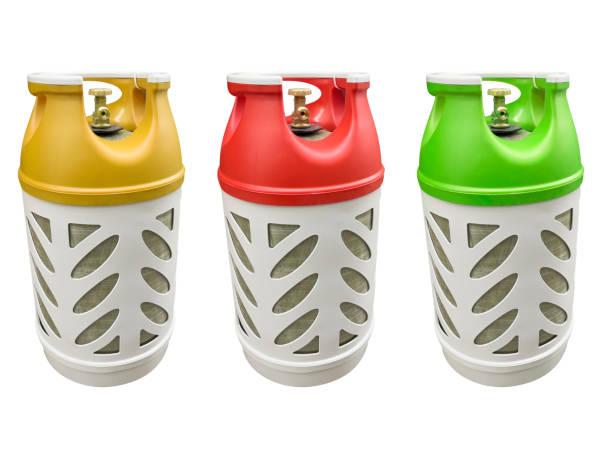
Glass fibre composite LPG cylinders are manufactured using fiberglass-reinforced composite materials and offer advantages such as reduced weight, corrosion resistance, improved durability, and easier handling. Their transparent construction can also allow users to monitor the remaining LPG level, adding convenience to residential and commercial applications.
𝐑𝐞𝐪𝐮𝐞𝐬𝐭 𝐏𝐝𝐟 𝐒𝐚𝐦𝐩𝐥𝐞 𝐇𝐞𝐫𝐞:https://m2squareconsultancy.com/request-sample/glass-fibre-composite-lpg-cylinders-market/896
Growing Demand for Lightweight LPG Cylinders
The increasing preference for lightweight gas storage solutions is one of the key factors driving market growth. Composite cylinders are considerably lighter than traditional steel cylinders, making them easier to lift, transport, store, and install.
Lower weight can also improve efficiency throughout the LPG supply chain by simplifying cylinder handling and transportation. These benefits are particularly valuable for households, restaurants, hotels, and other businesses that frequently move or replace LPG cylinders.
The growing focus on transportation safety and user convenience is expected to encourage further adoption of fiberglass composite cylinders through 2034.
Corrosion Resistance Supports Market Expansion
Unlike conventional steel cylinders, fiberglass composite cylinders provide strong resistance to corrosion. This makes them particularly suitable for humid, coastal, and chemically exposed environments where metal cylinders may require greater maintenance.
Their resistance to rust and structural degradation can contribute to longer service life and lower maintenance requirements. As consumers and LPG distributors become more aware of these advantages, demand for composite cylinder technologies is expected to increase.
Manufacturers are also investing in improvements to impact resistance, structural strength, pressure performance, and overall cylinder durability.
Type IV Composite Cylinders Lead the Product Segment
By product type, Type IV composite cylinders represent the leading segment, accounting for approximately 54.8% of the global market. These cylinders use a polymer liner that is fully wrapped with fiberglass composite materials, helping reduce weight while maintaining structural strength.
Type IV cylinders are increasingly used across residential, commercial, and industrial applications because of their lightweight construction, corrosion resistance, durability, and ease of handling. Continued advancements in composite manufacturing and compliance with pressure vessel standards are expected to support segment growth.
10–20 kg Cylinders Dominate by Capacity
The 10–20 kg capacity segment holds the largest market share. This capacity range provides a practical balance between portability and LPG storage requirements, making it suitable for residential households and small commercial establishments.
Restaurants, cafés, hospitality businesses, and households can benefit from the easier handling offered by composite cylinders in this size category. Rising LPG consumption and clean cooking initiatives are expected to maintain demand for 10–20 kg composite cylinders.
Residential Applications Drive Adoption
The residential segment represents the dominant application category. LPG remains an important fuel for cooking and heating in many markets, while governments and energy providers continue expanding access to cleaner household energy.
Consumers are increasingly attracted to fiberglass composite cylinders because they are lightweight, rust-resistant, durable, and easier to handle than traditional steel alternatives. Expanding LPG distribution infrastructure and rising awareness of cylinder safety are expected to create additional opportunities in residential markets.
Asia Pacific Holds a Leading Market Position
Asia Pacific accounted for approximately 41.9% of the global market in 2026, making it the leading regional market. China, India, Japan, and South Korea are important contributors, supported by rising household LPG consumption, urbanization, clean cooking initiatives, and investments in modern LPG distribution infrastructure.
Europe is also witnessing demand due to stringent safety requirements and the adoption of advanced composite pressure vessels. North America is supported by applications in recreational vehicles, outdoor cooking, industrial uses, and commercial establishments.
Latin America and the Middle East & Africa are expected to provide additional growth opportunities as LPG accessibility improves and governments invest in household energy infrastructure.
Smart Technologies Create New Opportunities
The integration of digital technologies is creating new opportunities within the composite LPG cylinder industry. Manufacturers are exploring RFID identification, digital tracking, and IoT-enabled monitoring to improve inventory management, distribution tracking, safety inspections, and cylinder lifecycle management.
Smart cylinder technologies can help LPG distributors improve operational visibility while supporting more efficient asset management. These innovations are expected to become increasingly important as energy providers modernize their distribution networks.
Future Outlook
The future of the Glass Fibre (Fiberglass) Composite LPG Cylinders Market will be shaped by increasing LPG consumption, clean cooking programs, lightweight product demand, safety improvements, corrosion resistance, smart cylinder technologies, and investments in LPG infrastructure.
Leading companies identified by M2Square Consultancy include Hexagon Composites ASA, Worthington Enterprises, Inc., Aburi Composites Ltd., Time Technoplast Ltd., Sahamitr Pressure Container Plc., EVAS S.p.A., HPC Research B.V., Supreme Industries Limited, Lite Cylinder Company AS, Faber Industrie S.p.A., Amtrol-Alfa Metalomecânica S.A., Rama Cylinders Pvt. Ltd., Shijiazhuang Enric Gas Equipment Co., Ltd., Composite Scandinavia AB, and Beijing Tianhai Industry Co., Ltd.
With the market projected to increase from USD 1.16 billion in 2026 to USD 1.96 billion by 2034, fiberglass composite LPG cylinders are positioned for continued adoption as consumers and energy companies prioritize lightweight, corrosion-resistant, convenient, and durable gas storage solutions.
Explore the detailed Glass Fibre (Fiberglass) Composite LPG Cylinders Market analysis from M2Square Consultancy for market size, segmentation, regional analysis, competitive landscape, trends, and forecasts through 2034. M2Square Consultancy – Glass Fibre Composite LPG Cylinders Market Report
Related Reports:
https://m2squareconsultancy.com/reports/cancer-biopsy-market
https://m2squareconsultancy.com/reports/cell-culture-market
https://m2squareconsultancy.com/reports/clinical-trials-outsourcing-market
https://m2squareconsultancy.com/reports/autoinjectors-market
https://m2squareconsultancy.com/reports/breast-biopsy-devices-market
Get in Touch
Ready to elevate your strategy or explore custom market insights? Reach out to the team directly:
Email: [email protected]
Phone (India): +91 80978 74280
Phone (US): +1 929 447 0100

 Arabic
 French
 Spanish
 Portuguese
 Deutsch
 Turkish
 Dutch
Dutch
 Italiano
 Russian
 Romaian
 Portuguese (Brazil)
 Greek
Greek