


What Architects Today Can Still Learn From History's Biggest Rule-Breakers
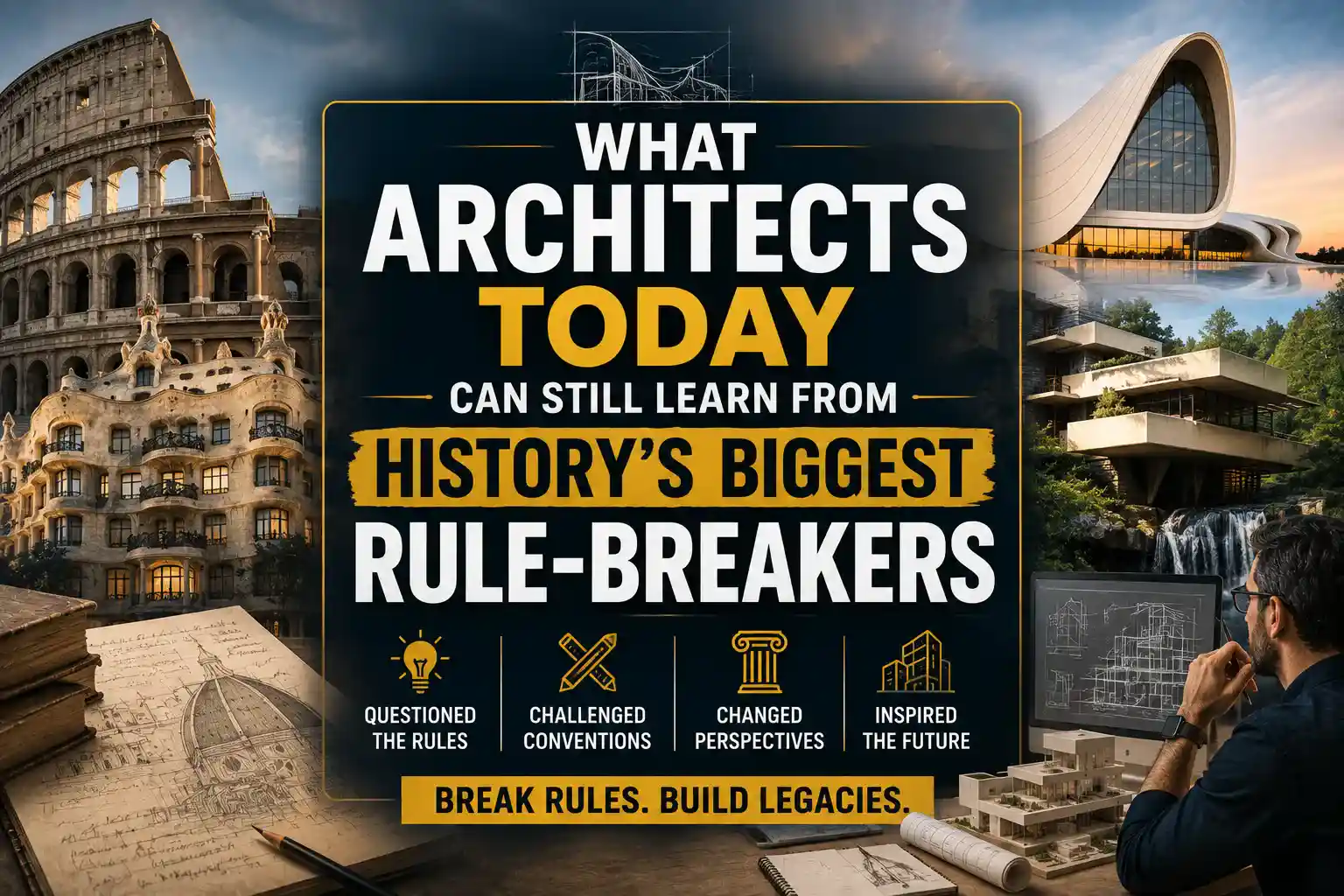
Every design era eventually produces a generation that gets bored of following the rules perfectly. It happens in music, in fashion, and it has happened more than once in architecture. Long before "disruptive design" became a marketing phrase, there was a period in Italian architecture where the entire profession seemed to collectively decide that perfection was overrated and the results are still studied, argued about, and quietly borrowed from today.
The Moment Perfect Proportion Stopped Being the Point
For decades, Renaissance architects had chased a very specific ideal: balance, symmetry, and mathematical harmony inspired by classical antiquity. It was elegant, it was rational, and eventually, it became predictable. A new generation of architects started asking a different question not "how do we build this correctly," but "how do we build this in a way that surprises someone."
Breaking Rules on Purpose Is Harder Than It Looks
There's a common misconception that rule-breaking design is simply the absence of discipline. In reality, the opposite tends to be true. Distorting a classical column, exaggerating a pediment, or layering unexpected architectural elements on top of each other requires an even deeper understanding of the original rules than following them does. You can't meaningfully subvert a proportion system you don't fully understand.
Architecture as a Reflection of Its Moment
It's tempting to view unconventional design purely as an aesthetic choice, but it's rarely disconnected from what's happening around it. Periods of political instability, social upheaval, or cultural anxiety have a way of showing up in the built environment sometimes literally, in the form of deliberately unsettling or complex facades that mirror a world that no longer feels orderly or predictable.
Why This Kind of Design Still Resonates With Architects Today
Complexity as a Design Philosophy, Not a Flaw
Modern architecture occasionally swings back toward embracing complexity and asymmetry rather than treating it as something to smooth over. Layered facades, unconventional massing, and intentionally "imperfect" proportions show up in contemporary residential and commercial projects precisely because they create visual interest that a purely symmetrical building sometimes lacks.
Personal Expression Over Strict Formula
One of the more lasting shifts from this era of architectural rebellion was the idea that a building could express something personal from an architect's point of view, not just a formula applied correctly. That idea underpins a huge amount of contemporary design thinking, from boutique residential work to statement commercial buildings that are meant to be memorable rather than merely correct.
Decorative Detail as a Storytelling Tool
Elaborate surface treatments, unconventional window placement, and layered ornamentation weren't just decoration for its own sake; they were a way of making a building communicate something beyond function. That same instinct drives a lot of high-end architectural detailing today, where clients want a building that says something distinct rather than blending in.
Understanding the History Helps You Use It Intentionally
For architects and designers who want to actually study this period in depth its defining features, the historical pressures that shaped it, and why it still echoes through contemporary design this detailed piece on Mannerist architecture breaks down the style's origins, its key characteristics, and its lasting cultural impact in a way that's genuinely useful for anyone drawing inspiration from historical movements rather than just referencing them in passing.
How to Borrow From Historical Movements Without Copying Them
-
Study what problem the original movement was solving, not just what it looked like
-
Identify the specific technique proportion distortion, layering, unexpected materials rather than the whole aesthetic package
-
Translate the underlying idea (tension, surprise, personal expression) into contemporary materials and building codes
-
Use visualization tools early to test how a historically-inspired detail will actually read at full scale
-
Avoid pastiche borrowing a single gesture is usually more effective than recreating an entire style wholesale
Final Thoughts
Design movements that intentionally break from convention tend to get remembered as historical footnotes, but the underlying instinct behind them questioning whether "correct" and "compelling" are always the same thing never really goes out of style. Architects today aren't building Italian palazzos, but the willingness to layer complexity, create tension, and let a building say something personal is a thread that runs directly from those rule-breaking eras to some of the most interesting design work being done right now.

 English
 Arabic
 French
 Spanish
 Portuguese
 Turkish
 Dutch
Dutch
 Italiano
 Russian
 Romaian
 Portuguese (Brazil)
 Greek
Greek