


A Complete Handbook to Cross-Border Travel in Twin Capitals: Uncovering Shared Heritage Between the Czech and Bratislava
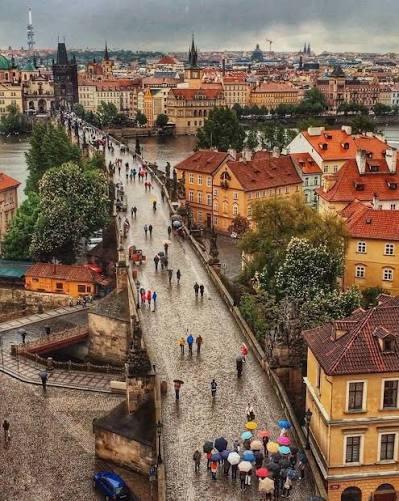
For centuries, the cities of Prague and Bratislava have been connected by the winding currents of the Vltava and Danube rivers by their common past, and by the imperial powers that rose and fell. Currently, they provide travellers with a distinctive cross-frontier experience Just a four-hour train ride or a short flight apart Yet each has its own unique character and identity. Detailed information on top rated Slovakian escorts Prague can be found at the online resource.
Exploring these two capitals together reveals the rich tapestry of Central European culture. Where medieval pointed architecture rubs shoulders with the heavy concrete of the socialist era. Where the beer pubs and the wine bars are neighbours. And where the past is never quite past. Here is a guide for those who want to do more than visit two cities — they want to understand the ongoing connection between them.
Open your itinerary in Prague, a city that has the atmosphere of a stone fairy tale. The mediaeval Old Town Square, with its clock that has been in operation since the early fifteenth century, opens the experience in grand style. Walk across the Charles Bridge at first light, when the saints' statues slowly come into view through the morning haze and the hilltop castle is bathed in a warm golden glow. To immerse yourself in the city's culture, go to the Castle complex, which is the largest mediaeval castle on the planet, and then allow yourself to become absorbed by the twisting streets of Mala Strana, where Baroque palaces conceal peaceful gardens. Music has always been important here; you should attend a concert at the Rudolfinum or the National Theatre, where Dvorak and Smetana are known to have given the first performances of their well-known works.
Prague's culinary scene is a delight for the senses. The local specialities — svickova (beef with a creamy sauce) and trdelnik (sweet pastry) — are best enjoyed in a historic pub or a riverside eatery. But the modern cooking scene is just as striking, with places such as La Degustation, which has a Michelin star, giving Bohemian flavours a new interpretation. Between your gastronomic experiences, visit the city's vibrant artistic environment — which takes in the Alfons Mucha Museum and the contemporary shows at DOX. You should also sample the local brew; the pubs here are not only for drinking, but for talking, for discussion, and for the slow, steady rhythm of life in Prague.
A brief trip south brings you to Bratislava, the attractive Slovakian capital, which is often in the shadow of its better-known neighbour, yet is full of its own quiet and considerable attraction. Bratislava is the opposite of Prague in scale — where Prague is grand and large, Bratislava is intimate and suited to walking. The historic centre is a network of narrow ways, houses in light colours, and small, comfortable squares. The hilltop Bratislava Castle offers panoramic views over the Danube and, on clear days, a glimpse of neighbouring Austria and Hungary. The city's compact size allows for easy exploration — from the Gothic St. Martin's Cathedral, where Hungarian kings were once crowned, to the quirky statue of Cumil ("The Watcher"), a bronze man peeking out from a manhole.

 English
 Arabic
 French
 Spanish
 Portuguese
 Deutsch
 Turkish
 Dutch
Dutch
 Italiano
 Romaian
 Portuguese (Brazil)
 Greek
Greek