


How to Develop a Tokenization Solution for Properties With Multiple Owners
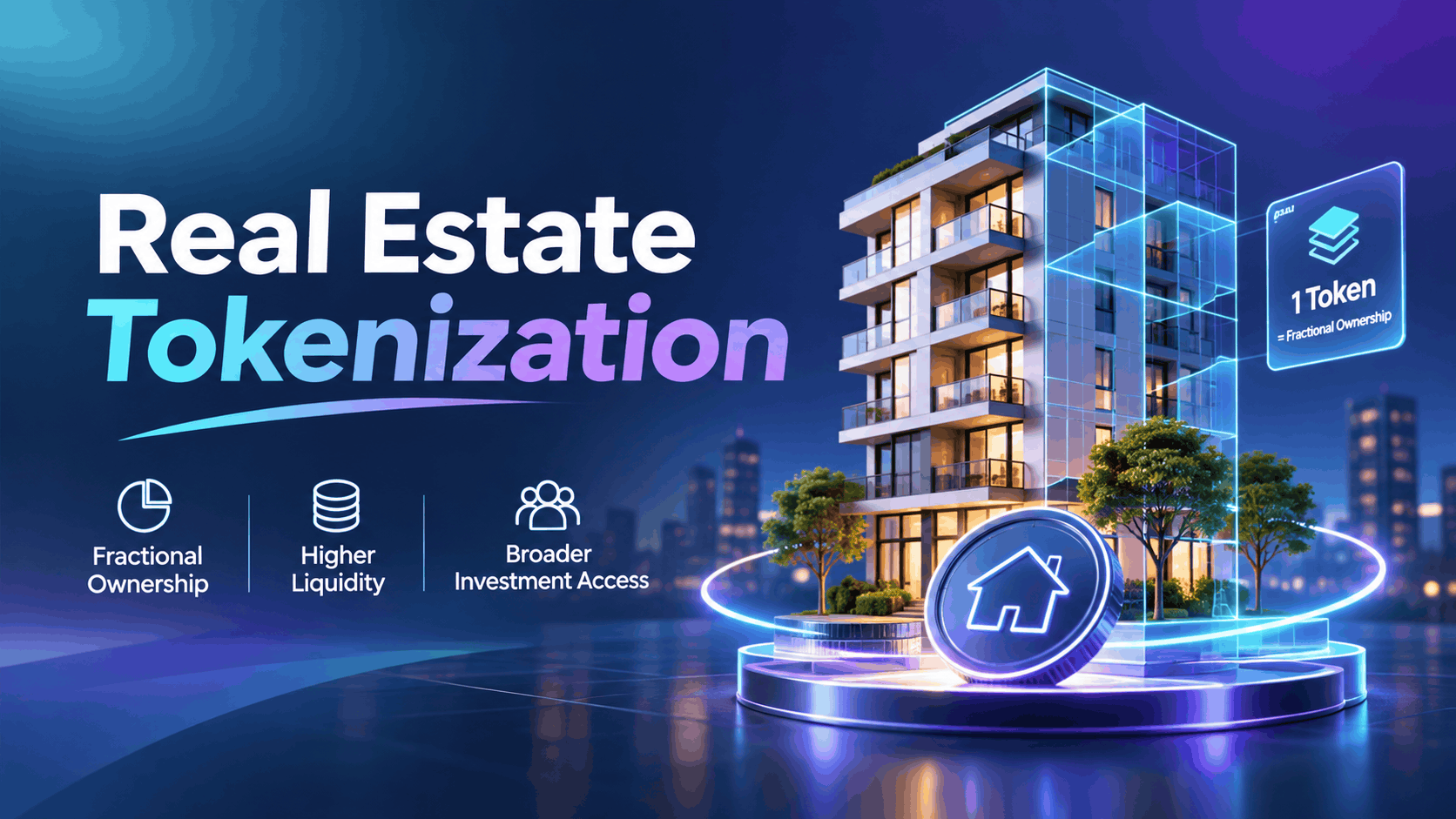
Real estate ownership is not always limited to a single individual or organization. Many properties are jointly owned by family members, business partners, investment groups, developers, or multiple stakeholders. While shared ownership allows individuals to participate in larger property investments, it can also create challenges related to ownership management, profit distribution, decision-making, asset transfers, and investment tracking.
Traditional property ownership structures often depend on lengthy legal documentation, manual recordkeeping, and complicated coordination between stakeholders. These processes can become increasingly difficult when a property has dozens or hundreds of owners.
Real estate tokenization introduces a more structured approach to managing shared property interests. By representing legally defined ownership interests through blockchain-based digital tokens, businesses can create transparent ownership records, automate certain administrative processes, and simplify how multiple investors participate in real estate assets.
Developing a real estate tokenization solution for properties with multiple owners requires more than creating digital tokens. It involves designing an appropriate ownership structure, establishing legal agreements, implementing smart contracts, integrating payment systems, and building a secure platform for managing investor participation.
Why Do Properties With Multiple Owners Need Tokenization?
Joint property ownership can involve different individuals holding different ownership percentages in the same asset. For example, a commercial property might be jointly owned by five business partners, while a residential development could involve dozens of investors contributing different amounts of capital.
Although traditional ownership structures support these arrangements, managing them can become complicated as the number of stakeholders increases.
Some common challenges include:
-
Ownership tracking: Maintaining accurate records of each owner's percentage, rights, and investment contribution can become difficult.
-
Profit distribution: Rental income, dividends, or other property-related earnings must be calculated and distributed according to ownership agreements.
-
Ownership transfers: Transferring an ownership interest may require approvals, legal documentation, and additional administrative procedures.
-
Decision-making: Coordinating multiple owners for property management, renovations, sales, and other important decisions can slow down operations.
-
Limited liquidity: Selling a partial ownership interest through traditional property transactions can be complicated and time-consuming.
-
Reporting transparency: Owners may struggle to access updated information about property performance, financial activity, and ownership changes.
A well-designed tokenization solution can address several of these operational challenges by bringing ownership records, investor information, and selected financial activities into a unified digital environment.
How Does Property Tokenization Work for Multiple Owners?
Property tokenization converts legally defined interests in real estate into blockchain-based digital tokens. Each token represents a specific right or interest established through the property's legal and investment structure.
For example, consider a commercial property valued at $5 million and jointly owned by five investors. Each investor holds a 20% ownership interest.
Through a suitable tokenization structure, the property interest could be divided into 50,000 digital tokens, with each token representing a defined fraction of the legally structured interest.
The tokenization solution can record:
-
Total number of issued tokens.
-
Individual investor token balances.
-
Ownership percentages.
-
Investment contributions.
-
Transfer history.
-
Distribution entitlements.
-
Voting or governance rights, where applicable.
However, issuing tokens does not automatically change the property's legal ownership records. The underlying legal structure must clearly establish how token ownership relates to property rights, such as shares in a property-owning company, an interest in an SPV, or contractual financial rights.
This connection between legal ownership and blockchain records is essential for developing a reliable multi-owner tokenization solution.
Key Steps to Develop a Tokenization Solution for Multi-Owner Properties
Developing a property tokenization solution requires a combination of legal structuring, blockchain development, financial integration, and platform engineering.
Identify the Property Ownership Structure
The first step is understanding how the property is currently owned and how ownership interests will be represented digitally.
A property may belong to:
-
Multiple individual owners.
-
Family members with inherited ownership interests.
-
Business partners.
-
Real estate investment groups.
-
Property development companies.
-
Corporate entities and investment funds.
The development team must evaluate the existing ownership agreements, ownership percentages, legal restrictions, and stakeholder responsibilities.
For example, if three partners jointly own an industrial property with ownership interests of 50%, 30%, and 20%, the tokenization structure should accurately reflect these proportions.
The solution must also define whether tokens represent direct legal interests, shares in a property-owning entity, or contractual claims connected to the asset.
Establish a Legal and Compliance Framework
Legal structuring is one of the most important parts of multi-owner property tokenization.
Before creating digital tokens, businesses must determine how the tokenized interests will be legally issued, transferred, and managed.
An appropriate legal framework should address:
-
Ownership rights and investor entitlements.
-
Property title and ownership verification.
-
Agreements between existing owners.
-
Investor eligibility requirements.
-
Securities and investment regulations.
-
Token transfer restrictions.
-
Tax responsibilities.
-
Dispute resolution procedures.
A Special Purpose Vehicle (SPV) is one commonly used structure for organizing tokenized real estate ownership. The property may be held by an SPV, while investors hold legally defined shares or interests in that entity.
This approach can help separate property-level responsibilities from investor participation. However, the appropriate structure depends on the jurisdiction, asset type, and applicable regulations.
Design the Tokenization Model
After establishing the legal framework, the next step is designing the token model.
The tokenization model determines how the property interest is divided, how many tokens are issued, and what rights each token represents.
For multi-owner properties, developers generally need to consider:
Ownership-based tokens: Represent legally established fractional interests in a property-owning entity or another approved ownership structure.
Revenue-sharing tokens: Represent contractual entitlements to rental income, property revenue, or other defined cash flows.
Governance-enabled tokens: Provide eligible holders with specific voting or approval rights related to property management and investment decisions.
The token model should also establish whether tokens can be transferred, whether existing owners have first refusal rights, and whether certain transactions require approval.
These rules help ensure that digital ownership records remain aligned with the underlying legal agreements.
Select the Right Blockchain Network
Blockchain infrastructure plays an important role in managing tokenized property interests.
The selected network should support secure transactions, smart contract execution, transparent ownership records, and integrations with external services.
Some blockchain networks businesses may evaluate include:
-
Ethereum – Suitable for established smart contract ecosystems and token standards.
-
Polygon – Offers an Ethereum-compatible environment for developing tokenization applications.
-
Solana – Supports high-throughput transactions and smart contract applications.
-
Avalanche – Provides smart contract infrastructure and customizable blockchain environments.
The choice depends on transaction costs, scalability, ecosystem compatibility, security requirements, privacy needs, and regulatory considerations.
For businesses managing sensitive ownership information, a permissioned blockchain or hybrid architecture may also be appropriate.
Develop Smart Contracts for Ownership Management
Smart contracts automate predefined rules associated with token issuance, ownership tracking, transfers, and distributions.
For properties with multiple owners, smart contracts should be designed around the actual legal and operational requirements of the investment structure.
Important smart contract functionalities include:
-
Token issuance: Creates digital tokens according to the approved ownership allocation.
-
Ownership tracking: Records token balances and transaction history.
-
Transfer management: Enforces eligibility checks and transfer restrictions.
-
Income distribution: Calculates and distributes eligible property-related earnings.
-
Voting mechanisms: Supports predefined investor voting and approval processes.
-
Compliance controls: Restricts transactions involving ineligible or unauthorized participants.
For instance, if a property generates $100,000 in distributable rental income, the smart contract can calculate each eligible investor's share according to their recorded entitlement.
If an investor holds 20% of the relevant economic interest, their allocated amount would be $20,000 before applicable deductions and adjustments.
However, smart contracts should execute only the rules established in legally enforceable agreements. They do not independently determine property rights or resolve legal disputes.
Build an Investor and Co-Owner Dashboard
A centralized dashboard makes it easier for multiple property owners to monitor their investments and access relevant information.
Instead of depending entirely on manual reports and separate communication channels, stakeholders can use a digital interface to view their ownership information.
A comprehensive dashboard should include:
-
Individual ownership percentages.
-
Token balances and transaction history.
-
Property valuation information.
-
Rental income and distribution records.
-
Investment performance reports.
-
Pending ownership transfer requests.
-
Voting proposals and decisions.
-
Important legal documents and notifications.
Different access levels should be provided for property administrators, original owners, investors, and compliance personnel.
This ensures that each participant can access information and perform actions according to their assigned permissions.
Integrate Payments and Revenue Distribution
Financial management becomes more complicated when several individuals own the same property.
A tokenization solution should include payment infrastructure that supports investment contributions, transaction settlements, rental income distribution, and other relevant financial activities.
For example, when a tokenized commercial property generates rental income, the system can calculate the distributable amount based on each investor's eligible ownership interest.
Payment integrations can support:
-
Fiat payment processing.
-
Stablecoin transactions, where legally permitted.
-
Investor contribution tracking.
-
Automated distribution calculations.
-
Payment confirmations.
-
Financial reporting.
The solution should also account for management fees, property maintenance expenses, taxes, reserves, and other deductions before calculating investor distributions.
Implement a Secure Token Transfer and Trading Mechanism
One of the potential advantages of tokenization is making eligible fractional interests easier to transfer.
However, transferring tokens representing multi-owner property interests requires careful consideration of existing ownership agreements and regulatory restrictions.
A tokenization solution can include a controlled transfer mechanism that allows eligible investors to transfer their interests after satisfying the applicable requirements.
Important features include:
-
Investor identity verification.
-
KYC and AML checks.
-
Transfer approval workflows.
-
Ownership restriction enforcement.
-
Transaction history.
-
Whitelisting of eligible wallet addresses.
If secondary trading is permitted, the solution may also integrate with a compliant secondary marketplace or trading infrastructure.
This can provide investors with additional flexibility without requiring the entire property to be sold.
Essential Features of a Multi-Owner Property Tokenization Solution
A successful solution should combine ownership management, investor administration, financial operations, and blockchain functionality.
|
Feature |
Purpose |
|---|---|
|
Multi-owner management |
Maintains individual ownership records and entitlements |
|
Fractional token issuance |
Represents legally structured investment interests |
|
Smart contract automation |
Executes predefined ownership and financial rules |
|
Investor dashboard |
Provides ownership and investment visibility |
|
KYC and AML integration |
Supports investor verification and compliance |
|
Revenue distribution |
Calculates and manages eligible income payments |
|
Voting and governance |
Coordinates approved investor decisions |
|
Transfer management |
Controls eligible ownership transfers |
|
Document management |
Stores agreements and relevant property records |
|
Reporting and analytics |
Tracks property and investment performance |
These features should be developed according to the property's ownership structure rather than relying on a generic tokenization architecture.
Challenges in Developing Multi-Owner Property Tokenization Solutions
Although tokenization can simplify several ownership management processes, developing a solution for jointly owned properties involves important challenges.
Maintaining Accurate Ownership Records
Existing properties may have complicated ownership arrangements involving inheritance, partnerships, corporate entities, or previously transferred interests.
Developers must ensure that blockchain records accurately reflect verified legal documentation and approved ownership allocations.
Managing Disagreements Between Owners
Multiple owners may have different opinions about property sales, renovations, rental agreements, and investment decisions.
A tokenization solution should incorporate clearly defined voting rights, approval thresholds, and dispute resolution procedures.
Ensuring Regulatory Compliance
Depending on the structure, tokenized interests may fall under securities, investment, property, and financial regulations.
Businesses must establish suitable investor onboarding, transfer restrictions, disclosures, and reporting procedures.
Protecting Digital Ownership Records
Unauthorized wallet access, smart contract vulnerabilities, and fraudulent transactions can create significant risks.
Security measures should include smart contract audits, multi-factor authentication, wallet security, role-based permissions, and transaction monitoring.
Connecting Blockchain Records With Legal Systems
Blockchain records and traditional property registries may operate independently.
Businesses must establish reliable procedures for keeping digital ownership information consistent with legally recognized ownership documents and relevant registry requirements.
How a Real Estate Tokenization Development Company Can Help
Developing a tokenization solution for properties with multiple owners requires expertise across blockchain engineering, smart contract development, real estate investment structures, and financial technology.
A specialized Real Estate Tokenization Development Company can help businesses build customized solutions that support complex ownership arrangements and investor participation.
Development services may include:
-
Custom real estate tokenization architecture.
-
Multi-owner and fractional ownership management.
-
Smart contract development and auditing.
-
SPV-based tokenization implementation.
-
Investor onboarding and KYC/AML integration.
-
Digital asset issuance and transfer management.
-
Automated revenue distribution.
-
Investor dashboards and administrative panels.
-
Secondary trading functionality.
-
Blockchain and payment gateway integration.
Companies such as INORU, which specialize in tokenization development, can support businesses in building customized blockchain-based solutions aligned with their property ownership models, operational requirements, and investment objectives.
The right development approach should prioritize legal alignment, secure infrastructure, and long-term scalability rather than focusing only on token creation.
Future Opportunities for Multi-Owner Real Estate Tokenization
The demand for flexible real estate investment structures is creating opportunities for tokenization across different property categories.
Beyond traditional residential and commercial properties, businesses can explore tokenization for:
Family-owned properties: Multiple family members can manage defined investment interests and related financial entitlements through structured digital ownership records.
Commercial property partnerships: Business partners can establish transparent records of their investment contributions, ownership interests, and eligible revenue distributions.
Large real estate developments: Developers can organize investor participation in large-scale projects involving multiple funding partners.
Mixed-use developments: Residential, retail, office, and hospitality components can be organized under suitable ownership and investment structures.
Inherited real estate assets: Tokenization may help organize legally verified fractional interests among multiple beneficiaries, subject to inheritance laws and applicable transfer requirements.
Real estate investment portfolios: Businesses can create structured investment arrangements involving multiple properties and different groups of investors.
These opportunities demonstrate how tokenization can support more flexible ways of structuring property investments, coordinating stakeholders, and managing real estate-related financial interests.
Conclusion
Developing a tokenization solution for properties with multiple owners requires a well-planned combination of legal ownership structures, blockchain infrastructure, smart contracts, investor management, and financial integrations.
From establishing ownership percentages to automating income distributions and managing eligible transfers, a customized solution can help businesses simplify complex property ownership arrangements while improving transparency and operational efficiency.
However, successful implementation depends on ensuring that every digital token represents clearly defined and legally enforceable rights.
As real estate investment models continue to evolve, businesses can explore customized tokenization solutions to manage jointly owned properties, organize investor participation, and create more flexible investment opportunities.
Working with an experienced real estate tokenization development company can help turn these requirements into a secure, scalable, and business-ready solution.

 English
 Arabic
 French
 Spanish
 Portuguese
 Deutsch
 Turkish
 Dutch
 Italiano
 Romaian
 Portuguese (Brazil)
 Greek