


Muscle tension that lingers for weeks or months rarely stays a minor inconvenience. Trigger points, the taut bands of muscle fiber that develop after strain, overuse, or prolonged postural stress, can refer pain to distant areas, restrict joint motion, and quietly alter the way a person moves. A tight upper trapezius may generate headaches that feel like they sit behind the eye. Restriction in the gluteal muscles may limit hip rotation and change walking mechanics. Because these patterns develop gradually and often outlast the event that caused them, they frequently resist stretching, massage, and rest, leaving people frustrated by discomfort that returns whenever they resume normal activity. In Loveland, where desk work, commuting, outdoor recreation, and physically demanding trades create predictable patterns of muscular overload, this kind of persistent tension is a common reason people seek professional care.
Modern rehabilitation offers several approaches for releasing restricted tissue, and one that has earned considerable attention is dry needling, a technique in which fine filiform needles are inserted into trigger points and taut bands to produce a local twitch response and subsequent relaxation. When performed by a trained clinician as part of a broader rehabilitation plan, it can complement manual therapy and exercise by restoring mobility that allows strengthening to progress. Residents considering Dry Needling in Loveland services should understand what the technique involves, which conditions it addresses, how it fits into comprehensive care, and what safety standards a qualified provider should meet before treatment begins.
Understanding Dry Needling in Loveland and Its Role in Addressing Muscle Tension
Dry needling is a skilled intervention in which thin, sterile needles are inserted into myofascial trigger points, taut muscle bands, and connective tissue to reduce pain and restore movement. It is distinct from acupuncture in both rationale and application: dry needling is grounded in anatomy, physiology, and neuromuscular assessment, and needles are placed according to identified dysfunction in specific muscles rather than along traditional meridian pathways. The technique is thought to work through several mechanisms, including local twitch responses that help reset dysfunctional muscle activity, changes in local blood flow, and modulation of pain signaling in the nervous system. Its importance lies in what it enables rather than what it replaces. Releasing a restricted muscle can immediately improve range of motion and reduce pain enough for a patient to participate more effectively in exercise and functional retraining, which are ultimately what produce lasting change. For patients dealing with stubborn tension that has not responded to other approaches, this combination of targeted release and active rehabilitation often produces meaningful progress.
How Trigger Points Create Tension and Limit Movement
Trigger points develop when muscle fibers remain in a sustained contracted state, often following acute strain, repetitive use, or prolonged positioning. The affected tissue becomes sensitive and taut, and it can refer pain along predictable patterns that sometimes appear far from the actual source. This referral quality is what makes trigger points so frequently misidentified, since a patient may report headache, jaw discomfort, or elbow pain while the contributing restriction sits in the neck or shoulder. Beyond pain, trigger points reduce the available range of motion in the affected muscle and alter the timing of surrounding muscles, which changes movement quality throughout a chain. A restricted calf may limit ankle dorsiflexion and alter squatting mechanics. Tension in the hip rotators may restrict rotation and shift load to the lower back. Because these adaptations develop gradually, patients often accept them as normal until function declines enough to prompt a search for care.
Conditions That Respond Well to Targeted Dry Needling Techniques
The conditions that respond best to dry needling share a common feature: they involve localized muscle tension or trigger points that contribute directly to pain or movement restriction. Tension-type and cervicogenic headaches frequently involve trigger points in the upper trapezius, suboccipital, and sternocleidomastoid muscles. Neck pain and restricted rotation often arise from deep cervical and upper back tension. Shoulder impingement and rotator cuff irritation may be maintained by restricted infraspinatus, teres minor, or pectoral tissue. Low back pain frequently involves quadratus lumborum, gluteal, and erector spinae trigger points, while hip and knee complaints can be influenced by tension in the tensor fasciae latae, piriformis, or calf complex. Chronic overuse patterns in runners, cyclists, and manual laborers respond particularly well when needling is paired with load management and strengthening. Even in these cases, accurate assessment determines whether muscle tension is the primary driver or a secondary adaptation to another problem, and treatment is adjusted accordingly.
What to Expect During a Dry Needling in Loveland Session
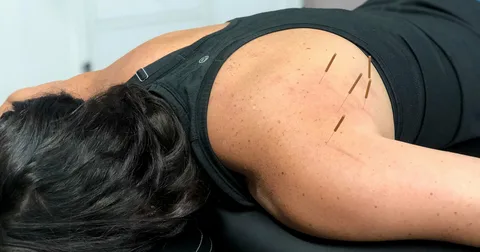
A typical session begins with a focused assessment in which the clinician reviews symptoms, movement limitations, and prior treatment, then palpates the relevant muscles to identify trigger points and taut bands. The skin is cleansed, and thin sterile needles are inserted into the identified areas, often with a guide tube for precision. Patients may feel a brief sharp sensation on insertion followed by a deep ache or the characteristic local twitch response, an involuntary contraction that many clinicians consider a positive sign. Needles typically remain in place for a short period, sometimes with slight manipulation, and several points may be treated in a single session depending on tolerance and clinical priorities. Side effects are usually mild and temporary, including soreness, minor bruising, or fatigue for a day or two. Clinicians provide aftercare guidance, such as applying heat, staying active, and hydrating, and they often follow needling with mobility exercises or stretching to consolidate the gains while the tissue is responsive.
Integrating Dry Needling With Exercise and Rehabilitation
The effectiveness of dry needling depends heavily on how well it is integrated with active rehabilitation. Releasing a restricted muscle creates an opportunity, but that opportunity is lost if the patient does not reinforce the new range with movement and strength training. Clinicians typically follow treatment with targeted mobility work, then progress to strengthening exercises that build capacity in the muscles that were restricted or inhibited. Motor control training helps patients relearn patterns that pain has disrupted, improving coordination during lifting, reaching, and sustained postures. Education on ergonomics, activity pacing, and load management ensures that daily habits support recovery rather than recreating the tension that prompted treatment. For athletes and active adults, sport-specific drills are introduced once tissue tolerance allows. When these components are sequenced deliberately, patients experience improvement that holds up after discharge rather than relief that fades within days, and the technique becomes one part of a coherent plan rather than an isolated intervention.
Choosing the Right Provider, Quality, and Safety Standards
Selecting a qualified provider requires more than confirming that a clinic offers the service. Patients should verify that the clinician is a licensed healthcare professional with formal training in dry needling, since regulations and training requirements vary and the technique should only be performed by practitioners with appropriate education and supervised experience. It is reasonable to ask how many sessions are typically required, how the technique will be integrated with exercise and manual therapy, and what conditions would make the treatment inappropriate. Quality and safety standards are central because the technique involves penetrating the skin and placing needles near nerves, blood vessels, and the lungs. Reputable practitioners use sterile single-use needles, follow appropriate skin preparation and disposal procedures, and screen thoroughly for contraindications including bleeding disorders, anticoagulant use, immune compromise, and pregnancy in specific regions. Clear communication about expected sensations, potential side effects, and post-treatment care supports informed consent and helps patients recognize when to report concerns.
Benefits of Dry Needling and Future Trends
The benefits of dry needling are most meaningful when the technique is embedded in comprehensive rehabilitation rather than used in isolation. Patients often experience immediate improvements in range of motion and reductions in pain that allow them to participate more fully in exercise and functional training, which is ultimately what produces durable change. Headache frequency and intensity may decrease when cervical and upper back trigger points are addressed alongside postural and strengthening work. Chronic overuse complaints in runners, cyclists, and manual workers often improve when needling is combined with load management and targeted conditioning. Meanwhile, the field continues to advance as research clarifies the mechanisms involved and training standards become more consistent. Clinicians increasingly use objective measures, including range-of-motion testing and pain rating scales, to confirm that treatment is producing measurable change rather than relying on subjective impressions, and dry needling is increasingly viewed as one component within a broader, evidence-informed plan.
Conclusion
Persistent muscle tension and trigger points can quietly limit mobility, provoke referred pain, and undermine the effectiveness of exercise and other rehabilitation efforts. Dry needling offers a targeted way to release restricted tissue and create the window of mobility that allows active rehabilitation to succeed, provided it is delivered by a properly trained clinician as part of a comprehensive plan. For residents dealing with stubborn tension that has not responded to stretching, massage, or rest, choosing Dry Needling in Loveland services with attention to training, safety standards, and integration with exercise ensures that treatment is both effective and appropriate. Whether the goal is relieving chronic headaches, restoring shoulder or hip mobility, or resolving overuse complaints that interfere with work and recreation, the right approach combines skilled technique with a clear plan for long-term function. Investing in professional, integrated care is an investment in comfort, mobility, and lasting relief.

 English
 French
 Spanish
 Portuguese
 Deutsch
 Turkish
 Dutch
 Italiano
 Russian
 Romaian
 Portuguese (Brazil)
 Greek