


Enterprise IT Hardware: What Businesses Should Consider Before Buying
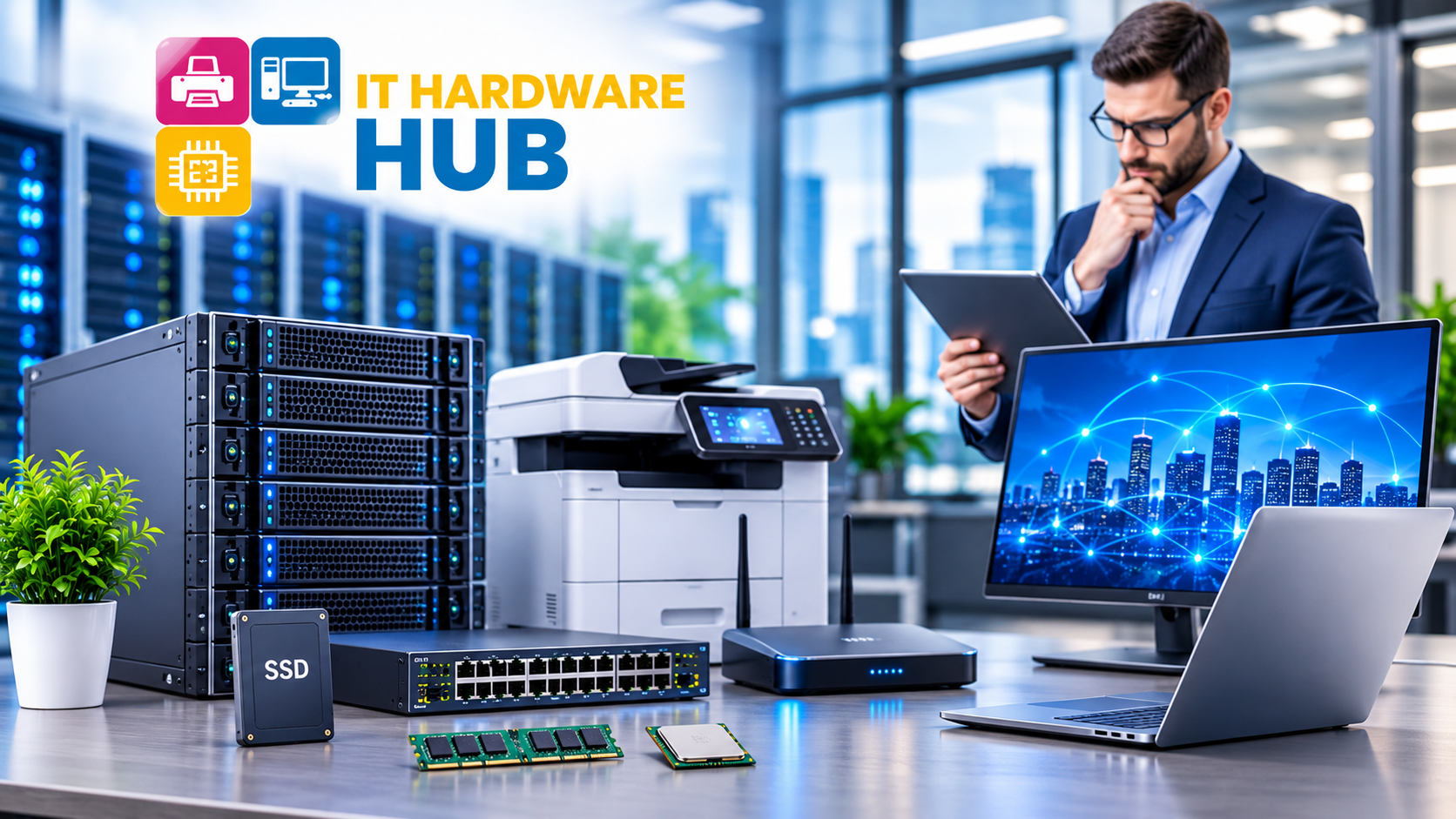
Choosing the right technology infrastructure is essential for businesses that want to maintain productivity, improve operational efficiency, and support long-term growth. As organizations expand, their technology requirements become more demanding. Standard office equipment may no longer provide the performance, reliability, or scalability needed to manage larger workloads, increasing the importance of investing in enterprise IT hardware.
From powerful servers and business computers to networking equipment and enterprise storage solutions, every hardware investment plays a role in supporting daily operations. However, purchasing enterprise equipment involves more than comparing specifications and prices. Businesses must evaluate their current infrastructure, performance requirements, security needs, compatibility, and future expansion plans.
This guide explores the most important factors organizations should consider before purchasing enterprise IT hardware and explains how to make informed technology investment decisions.
1. Understand Your Business IT Requirements
Before purchasing any hardware, businesses should identify their operational requirements and technical priorities. Different organizations have different workloads, user demands, and infrastructure needs.
For example, a financial services company may require high-performance servers, secure storage, and reliable networking equipment to manage sensitive information. Meanwhile, a growing e-commerce business may prioritize scalable servers, faster storage, and network infrastructure capable of handling increasing customer traffic.
Start by evaluating:
-
The number of employees and connected devices.
-
Current software and application requirements.
-
Data storage and processing needs.
-
Network performance and connectivity requirements.
-
Security and compliance considerations.
-
Expected business growth over the next few years.
Understanding these requirements helps businesses avoid purchasing unnecessary equipment or investing in hardware that cannot support their workloads.
2. Choose the Right Enterprise Server Hardware
Servers are a central component of many enterprise IT environments. They support applications, databases, file sharing, virtualization, and other business-critical operations.
Important Server Specifications
When evaluating server hardware, consider the following components:
-
Processors: Select CPUs with sufficient cores and processing capacity for your applications and workloads.
-
Memory (RAM): Adequate memory supports multitasking, virtualization, and database operations.
-
Storage: SSDs and enterprise storage drives can improve application responsiveness and data access.
-
Redundancy: Redundant power supplies, cooling systems, and storage configurations can help reduce downtime.
-
Expansion Capacity: Additional memory slots, drive bays, and network interfaces provide flexibility as requirements increase.
Rack servers are commonly used in enterprise data centers because they support organized installations and efficient infrastructure management. Tower servers may be more suitable for smaller organizations with limited server room space.
3. Invest in Reliable Networking Equipment
Enterprise networking equipment connects employees, servers, workstations, and other devices across an organization. A reliable network is essential for communication, collaboration, application access, and data transfer.
Businesses should evaluate several networking components before making purchasing decisions.
Essential Networking Hardware
Enterprise Routers: Manage network traffic and connect internal infrastructure to external networks.
Managed Network Switches: Connect multiple devices while providing features such as VLAN configuration, traffic monitoring, and network management.
Wireless Access Points: Provide dependable wireless connectivity across offices, meeting rooms, and other business environments.
Firewalls: Help protect networks by monitoring traffic and enforcing security policies.
When selecting networking equipment, consider port availability, Ethernet speeds, wireless standards, network capacity, management features, and compatibility with existing infrastructure.
Choosing scalable networking solutions can also make it easier to accommodate additional employees, devices, and business locations.
4. Evaluate Enterprise Storage and Data Protection
Businesses generate and manage large volumes of information, including customer records, financial documents, application data, and operational files. Reliable storage infrastructure is therefore an important part of enterprise IT planning.
Common enterprise storage solutions include:
-
Solid-State Drives (SSDs): Provide fast data access and improved storage performance.
-
Hard Disk Drives (HDDs): Offer high-capacity storage for organizations managing large datasets.
-
Network-Attached Storage (NAS): Provides centralized file storage accessible through a network.
-
Storage Area Networks (SANs): Deliver dedicated, high-performance storage connectivity for demanding enterprise environments.
Businesses should consider storage capacity, read and write performance, redundancy, backup requirements, and recovery procedures.
RAID configurations can improve availability or performance, depending on their design, but they should never replace independent backups. Organizations should maintain regular backups and periodically test their recovery procedures to reduce the impact of unexpected data loss.
5. Prioritize Hardware Compatibility and Integration
One of the most common challenges when purchasing enterprise IT hardware is compatibility with existing systems. New equipment must work effectively with current operating systems, applications, network infrastructure, and peripheral devices.
Before purchasing, verify supported hardware configurations, interface standards, firmware requirements, and manufacturer compatibility documentation.
For example, installing a new server without checking its compatibility with existing virtualization software or storage infrastructure can create additional configuration expenses and operational complications.
A properly planned hardware environment helps businesses simplify deployment, reduce technical issues, and maintain consistent performance across their infrastructure.
6. Consider Budget, Reliability, and Total Cost of Ownership
Enterprise hardware represents a significant investment, so businesses should evaluate long-term costs rather than focusing exclusively on initial purchase prices.
The total cost of ownership (TCO) includes:
-
Initial hardware purchase expenses.
-
Installation and configuration costs.
-
Electricity and cooling requirements.
-
Maintenance and technical support.
-
Software and licensing expenses.
-
Future upgrades and replacement costs.
Reliability is equally important. Hardware failures can interrupt business operations, affect employees, and potentially result in lost revenue.
Look for established manufacturers, appropriate warranty coverage, replacement availability, and dependable technical support. Investing in reliable equipment can help organizations avoid unnecessary maintenance expenses and reduce operational disruptions.
7. Plan for Scalability and Future Business Growth
Enterprise IT infrastructure should support both current operations and future business requirements. Purchasing equipment with limited expansion capabilities can result in expensive replacements when workloads increase.
Businesses should consider servers with expandable memory, additional storage bays, upgradeable processors where supported, and sufficient network connectivity.
Scalable infrastructure also makes it easier to support additional employees, new applications, remote offices, and changing technology requirements.
Rather than purchasing the most expensive equipment available, organizations should focus on hardware that offers the right balance between current performance and future flexibility.
8. Choose a Dependable IT Hardware Supplier
Selecting the right supplier is another important part of enterprise procurement. Businesses need access to suitable products, accurate specifications, competitive pricing, and clear purchasing information.
Comparing suppliers can help organizations evaluate product availability, manufacturer options, warranty policies, shipping arrangements, and return conditions.
Businesses exploring computers, servers, storage devices, networking equipment, and other technology products can also visit IT Hardware Hub to explore IT hardware options for different business and infrastructure requirements.
Working with a dependable supplier can simplify purchasing decisions and help businesses source equipment that aligns with their technical and operational needs.
Conclusion
Purchasing enterprise IT hardware requires careful planning, technical evaluation, and a clear understanding of business objectives. Servers, networking equipment, storage solutions, computers, and supporting components must work together to create a reliable and efficient IT environment.
Before making an investment, businesses should evaluate performance requirements, compatibility, security, scalability, warranty coverage, and total cost of ownership. Choosing suitable equipment rather than simply purchasing the most expensive products can deliver better long-term value.
With a well-planned procurement strategy and reliable hardware suppliers, organizations can strengthen their IT infrastructure, improve operational efficiency, and build a technology foundation that supports sustainable business growth.

 English
 Arabic
 French
 Spanish
 Portuguese
 Deutsch
 Turkish
 Dutch
 Italiano
 Russian
 Portuguese (Brazil)
 Greek