


Living Room Rug Ideas | Choose the Right Size and Style Today
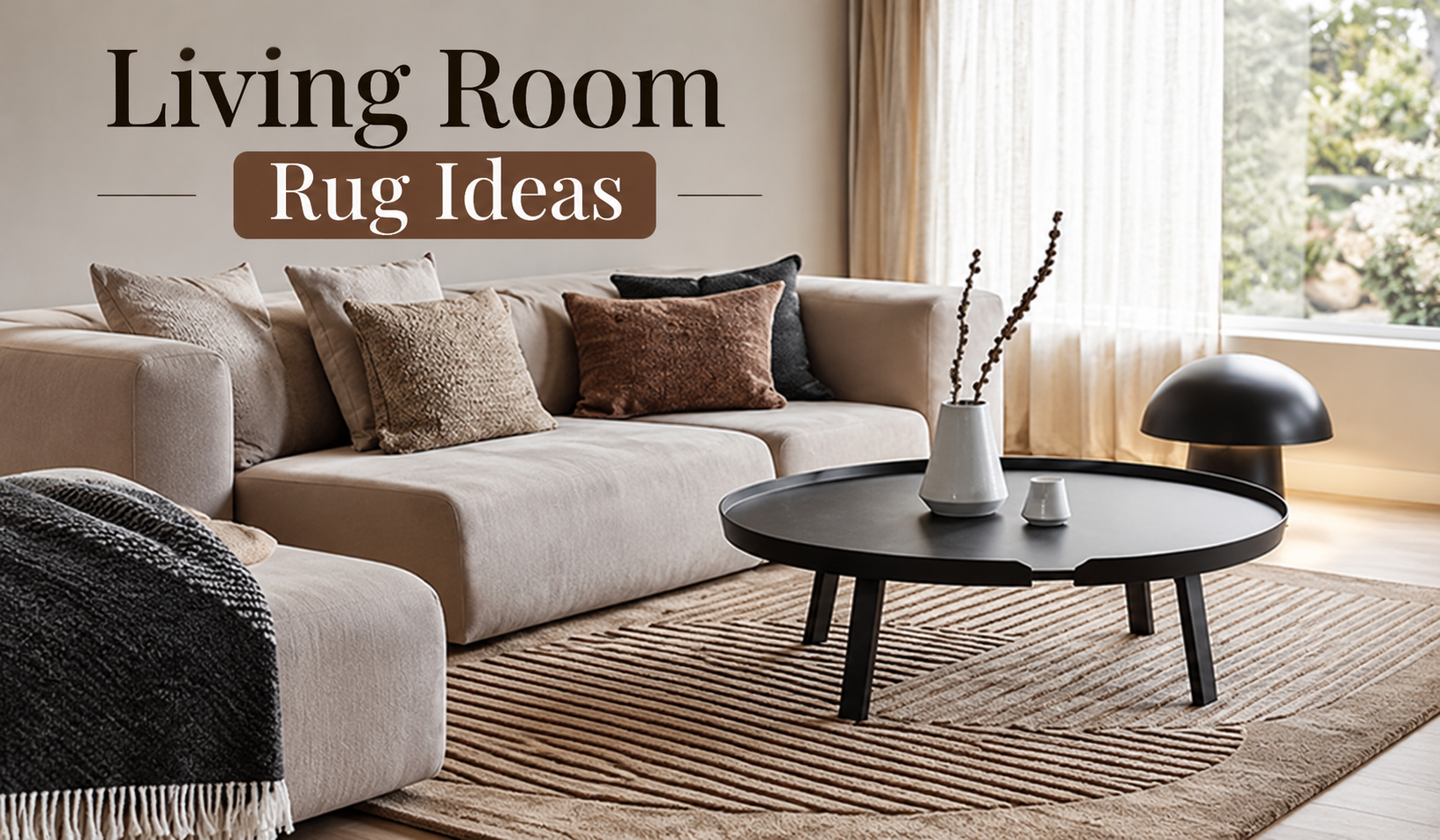
A rug does more work in a living room than almost any other single piece. It anchors the furniture, softens a hard floor, absorbs sound and adds colour or texture without a full redecoration. The best living room rug ideas start with practical decisions about size, material and layout and only then move on to pattern and colour.
A rug is also one of the easiest things to get wrong. One that is too small, too busy or too thin for the way you live can make an otherwise good room feel unfinished. This guide walks through each step in a calm, sensible order and you can return to our full collection of living room rug ideas whenever you want more inspiration.
What size rug should a living room have?
Size is the decision that matters most and it is the one people most often underestimate. A rug that floats in the middle of the room like a postage stamp makes the space look smaller and the furniture look disconnected. A good rule is to choose the largest rug that suits your room while leaving a border of bare floor around the edges, usually somewhere between 12 and 24 inches (30 to 60 cm).
The key question is how your furniture will relate to the rug. There are three common approaches:
-
All legs on the rug. Every piece in the seating area sits fully on the rug. This feels generous and polished and it suits larger rooms.
-
Front legs on the rug. The front legs of the sofa and chairs rest on the rug while the back legs sit on the floor. This works well in medium rooms and is the most forgiving option.
-
Only the coffee table on the rug. This is usually a mistake in a standard living room, because it separates the rug from the seating. It can work in very small spaces if the rug is paired with a clear layout.
Use the table below as a starting point. Measure your own room before you buy and tape out the rug shape on the floor for a day to see how it feels.
|
Room or layout |
Suggested rug size |
Metric (approx.) |
How furniture sits |
|
Small room, sofa and one chair |
5 x 8 ft |
150 x 240 cm |
Front legs on the rug |
|
Medium room, sofa and two chairs |
8 x 10 ft |
240 x 300 cm |
Front legs on, or all legs on |
|
Large room, sectional or full seating group |
9 x 12 ft |
270 x 365 cm |
All legs on the rug |
|
Open-plan living area |
10 x 14 ft |
300 x 425 cm |
All legs on, defines the zone |
|
Round accent rug beside a chair |
5 to 6 ft diameter |
150 to 180 cm |
Chair partly on the rug |
|
Distance between sofa edge and coffee table |
n/a |
14 to 18 in (35 to 45 cm) |
Table sits fully on the rug |
These sizes are common guidelines rather than strict rules. Ceiling height, door swing, radiators and the position of windows can all change what works, so treat the table as a starting point and adjust to your room.
To check a size before buying, mark the rug’s outline on the floor with painter’s tape and leave it for a day or two. Walk through the room as you normally would, sit on the sofa and see whether the edges feel natural. It is also worth checking where the rug will meet doors, radiators and vents, since a rug that blocks a door or sits too close to a heat source will cause problems later. If your room falls between two standard sizes, the larger one is usually the safer choice, as long as you can still see a clear strip of floor around it. Many makers also offer custom sizes, which is worth considering for awkward or very large spaces.
What are the best living room rug ideas for different styles?
Once the size is settled, style is where you can enjoy yourself. The most successful rugs echo something already present in the room, such as the wood tone of the floor, the shape of the coffee table or the colour of the curtains, rather than competing with everything at once.
Neutral and minimal
A plain rug in cream, oatmeal, soft grey or greige is the calmest option. It lets the furniture and artwork lead and it ages well because it does not belong to a particular trend. To stop a neutral rug from feeling flat, choose one with visible texture, such as a loop pile, a subtle weave or a gentle tonal pattern.
Traditional and vintage-style
Patterned rugs with a worn, layered look suit rooms with wood furniture, panelling or period details. They are also practical, because pattern and varied colour hide small marks and everyday wear better than a plain surface. A faded vintage-style design can bring warmth to a modern room that feels a little too clean.
Bold geometric and graphic
Stripes, checks, grids and abstract shapes add energy, especially in a room where the walls and sofa are quiet. Keep the rest of the palette simple and let the rug be the clear focal point. If you already have several patterns in the room, a graphic rug in a similar colour range will feel intentional rather than chaotic.
Natural fibre
Jute, sisal and seagrass bring an earthy, relaxed look that suits coastal, Scandinavian and rustic rooms. Their neutral colour sits easily with almost any palette. They can feel slightly coarse underfoot, so they work best in areas where people do not sit on the floor often.
Round and organic shapes
A round or irregular rug softens a room full of straight lines and it is useful in a seating area arranged around a round coffee table. Keep it large enough to hold the furniture and avoid using a small round rug in the middle of a large rectangular room, where it can look lost.
Modern abstract and painterly
Soft, blurred colour fields, brushstroke patterns and irregular shapes feel contemporary without being loud. They work well in rooms with simple furniture, where the rug can act like a piece of artwork on the floor. Choose colours that already appear in the room, so the design feels connected to the space rather than added at the last minute.
Soft and shaggy
A thick, shaggy rug brings comfort, especially in a room where people sit on the floor or like to put their feet up. It needs more care than a flat weave, because crumbs and dust settle deep in the pile, so it suits a quieter room better than a busy family space.
If you are still comparing styles, our collection of living room rug ideas is a useful place to see how these looks translate into complete rooms.
Which rug material works best for everyday living?
Material affects how a rug feels, how it wears and how easy it is to look after, so it deserves as much thought as the design. The right choice depends on how much traffic the room gets, whether you have pets or children and how much cleaning you are willing to do.
Wool is a popular choice for living rooms. It is dense, resilient and comfortable underfoot and it tends to recover well from furniture marks. It usually costs more than synthetic options, but it can last for many years with sensible care. Shedding is common with new wool rugs and generally settles with regular vacuuming.
Cotton is soft and easy to live with and flat-woven cotton rugs are often light enough to wash or shake out. They are a good fit for casual rooms, though they can flatten and show wear sooner in busy areas.
Synthetic fibres such as polypropylene and polyester are designed to be durable and budget-friendly and many are easy to clean. They suit households with pets, children or frequent spills. Quality varies widely, so look for a dense construction rather than a thin, loosely made rug.
Jute, sisal and seagrass offer texture and a natural look. They are best used where there is little spilling, because liquid can leave marks that are hard to remove. Always check the care label before you buy.
Viscose and silk-look materials have a lovely sheen, but they can be marked and worn more easily. They are better suited to a low-traffic room than to a family living area.
Pile height matters too. A low pile or flat weave is easier to vacuum and sits comfortably under a coffee table or a door. A medium to high pile feels softer but traps more crumbs and dust, so it suits a quieter space. Whatever you choose, a good rug pad underneath prevents slipping, adds cushioning and helps protect both the rug and the floor.
It also helps to understand how a rug is made. Hand-knotted and hand-woven rugs are made slowly and can last a long time, but they usually cost more. Machine-made rugs are more affordable and come in a wider range of designs and a well-made one can serve a busy household well. Tufted rugs sit somewhere in between, with a pile inserted into a backing, so quality depends on the density of the pile and the strength of the backing. Whatever the method, press your hand into the pile and look at the underside: a dense, firm feel is usually a better sign than a thin, loose one.
How do you choose the right colour and pattern?
Start with the room you already have, not the rug you like in the shop. Look at the large surfaces first: the floor, the walls and the sofa. The rug should work with at least one of these rather than fighting all three.
Here are some simple principles that make the decision easier:
-
Match the mood to the room. Light, warm tones make a room feel open and calm. Deeper shades such as navy, forest green or charcoal add depth and a sense of enclosure.
-
Contrast with the sofa, not with everything. If the sofa is pale, a mid or dark rug grounds it. If the sofa is dark, a lighter rug stops the seating area from feeling heavy.
-
Choose pattern by scale. A large pattern suits a large room, while a fine, small-scale pattern reads almost like a texture and works in smaller spaces.
-
Pick one or two colours from the room. Pulling a shade from a cushion, a painting or a curtain makes the rug look planned.
-
Be honest about maintenance. Very pale plain rugs show marks quickly. A mottled or patterned design in a similar colour is far more forgiving.
If you are unsure, a rug with a muted, slightly varied tone is the safest route. It looks considered, hides daily wear and gives you freedom to change cushions, throws and accessories later without replacing the rug.
Light matters as well. A room with plenty of natural light can carry a deeper or richer rug without feeling heavy, while a darker room usually benefits from a lighter, softer tone that helps bounce around what light there is. Look at the rug at different times of day, because the same colour can look warmer in the evening and cooler in the morning. If the floor is already a strong colour, such as dark wood or patterned tile, choose a rug that is clearly lighter or darker than the floor so it reads as its own layer instead of blending into the background.
How should the sofa and other furniture sit on the rug?
The layout decides whether a rug feels anchored or accidental. Begin with the sofa, since it is the largest piece and sets the line of the room. Ideally, the front legs of the sofa sit on the rug and the rug extends a little beyond the sides of the sofa so the seating looks grounded rather than perched on the edge.
The coffee table should sit fully on the rug, with about 14 to 18 inches (35 to 45 cm) between the table edge and the sofa so it is easy to reach and still easy to walk around. Armchairs placed opposite or beside the sofa should have at least their front legs on the rug, so the whole group reads as one arrangement.
If the rug is large enough for every leg to sit on it, the room usually looks calmer and more generous. If that is not possible, front legs on is the sensible compromise. What you should avoid is a layout where some chairs have no contact with the rug at all, because they look like they belong to a different room.
Direction matters too. In a rectangular room, running the rug in the same direction as the longest wall usually makes the space feel more balanced. If the room has a TV wall or a fireplace, make sure the rug leads the eye towards it rather than cutting across it. When two seating groups share one room, consider two rugs of a matching size or style so each zone has its own anchor. Finally, keep the rug clear of shelving or a console table along a wall, since furniture that sits half on and half off the rug can look untidy.
In an open-plan space, use the rug to define the living zone. Choose a size that holds the sofa, chairs and table together and keep it clear of the dining area so the two spaces read as separate. The choice of sofa also affects the proportions, so for sofa sizes and layouts, see our guide to Living Room Sofa Ideas.
How can you layer rugs and add warmth?
Layering is a clever way to add depth, fix a rug that is slightly too small or give a plain base more personality. The method is straightforward: place a large, neutral rug, such as jute or a flat-weave, on the floor, then add a smaller rug on top, ideally with a different pattern, texture or colour.
A few guidelines help it look deliberate:
-
Keep the base large and simple. It does the structural work and should hold the furniture.
-
Offset the top rug slightly. A small angle or an off-centre position feels relaxed and modern, while a perfectly centred layer can look stiff.
-
Let the layers differ in texture. A flat jute base under a soft wool or sheepskin-style rug is a classic combination.
-
Use grip underneath. Layered rugs can shift, so a thin non-slip pad between them keeps everything safe.
Layering is also a practical way to refresh a room on a budget. A neutral base can stay in place for years while a smaller top rug is swapped for a new colour or pattern as your taste changes, or for a warmer texture in winter and a lighter one in summer. It lets you try a bolder design without committing to a large, expensive rug.
Texture is also the quickest way to make a room feel warmer. A soft rug, a chunky throw and a few well-chosen cushions together create a space that invites people to sit down and stay. For more ways to build that atmosphere, take a look at our guide to Cozy Living Room Ideas.
How do you look after a living room rug?
A little regular care keeps a rug looking good for much longer. Vacuum once or twice a week, going with the direction of the pile and avoid a beater bar on rugs with fringes or delicate fibres, since it can pull and damage them. Treat spills straight away by blotting, not rubbing, with a clean cloth and check the care label before using any cleaning product. Test any cleaner on a hidden corner first.
Rotate the rug every few months so that wear and sunlight are spread evenly. Strong, direct sunlight can fade colour over time, so use curtains, blinds or a UV-filtering window film if the rug sits in a sunny spot. Lift the rug occasionally to vacuum the floor underneath and check the pad, as dust and moisture can collect there.
Heavy furniture can leave dents in the pile. Moving the legs a little from time to time helps and so do furniture cups under the heaviest pieces. For deep stains or a rug made from delicate material, a professional rug cleaner is usually safer than trying to fix it yourself.
What to avoid when choosing a living room rug
Most rug problems come from a few repeated mistakes. Avoid these and you will have avoided the majority of regrets.
-
Buying too small. This is the most common error. A rug that only fits the coffee table leaves the seating disconnected. When in doubt, go up one size.
-
Ignoring the door and the floor. A thick pile can catch on a door and a rug on carpet needs a flat, firm base to avoid bunching.
-
Skipping the rug pad. Without one, rugs slide, wear faster and can bunch up underfoot, which is both annoying and a trip hazard.
-
Choosing by photo alone. Colour and texture look different in your light. Ask for a sample, or view the rug in person where possible.
-
Forgetting the lifestyle. A pale, high-pile rug in a room with pets or small children needs constant attention. Choose a material and colour you can live with.
-
Matching everything exactly. A rug in the same colour as the sofa and curtains can look flat. A related shade with some contrast is more interesting.
-
Pushing the rug against the walls. Leave a border of visible floor so the room has some breathing space.
-
Overcrowding with pattern. If the room already has several patterns, let the rug be plain or tonal rather than adding one more competing design.
-
Ignoring care instructions. Some rugs cannot be steam-cleaned or placed in direct sunlight. Read the label before you commit.
Conclusion
The best rug is the one that suits your room, your furniture and the way you actually live. Start with size, choose a material that matches your household, then let colour and pattern follow. Take your time, measure carefully and trust a simple, well-made rug over a trendy one that will not last. If you would like more inspiration for the rest of the room, you can find more living room ideas at Epicpu.
Frequently asked questions (FAQs)
What is the best rug size for a living room?
An 8 x 10 ft (240 x 300 cm) rug suits many rooms, with 5 x 8 ft for small rooms and 9 x 12 ft for large ones.
Should a living room rug match the sofa?
Not exactly. Share a tone or colour with the sofa, but keep some contrast so each piece stands out.
What rug is easiest to keep clean in a living room?
A low-pile or flat-weave rug in a patterned or mottled design is easiest to vacuum and hides marks best.
Can you put a rug on top of the carpet?
Yes. Choose a flat-weave or low-pile rug and add a grip underneath so it stays put.

 English
 Arabic
 French
 Spanish
 Portuguese
 Deutsch
 Turkish
 Dutch
 Italiano
 Romaian
 Portuguese (Brazil)
 Greek