


Metal Cable Tray Manufacturing Plant Cost Analysis Report 2026: Machinery and Technology Requirements
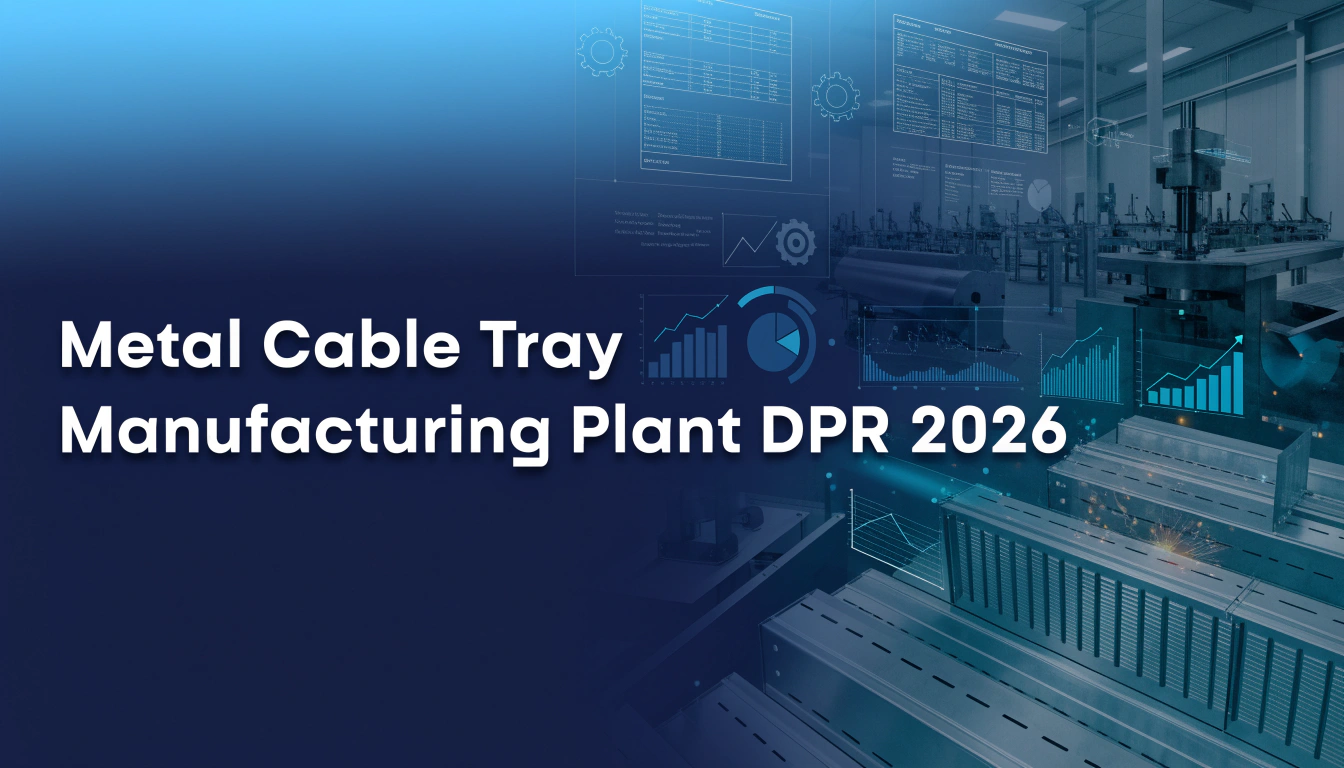
Establishing a metal cable tray manufacturing plant involves several systematic production stages, including metal coil decoiling, straightening, roll forming, punching, welding, cutting, surface treatment through galvanizing or powder coating, and final packaging. The facility generally requires specialized machinery such as decoiling and straightening equipment, hydraulic press brakes, punching machines, roll forming systems, welding stations, automated cutting saws, and galvanizing or powder coating units. As metal cable trays are widely used for supporting, organizing, and protecting electrical cables across industrial facilities, commercial buildings, and infrastructure projects, maintaining structural strength, load-bearing capacity, corrosion resistance, and dimensional accuracy is essential. Furthermore, compliance with applicable national and international standards, including relevant IS, IEC, and NEMA requirements, is important for ensuring product quality and operational safety. Therefore, preparing a comprehensive metal cable tray manufacturing plant DPR helps investors evaluate capital expenditure, machinery requirements, production capacity, operational efficiency, regulatory requirements, and long-term business profitability.
The metal cable tray manufacturing industry is expected to experience steady growth through 2026, supported by increasing demand for reliable electrical cable management systems across industrial, commercial, and residential infrastructure. According to industry reports, metal cable trays account for 63.40% of the material type segment in the cable tray market, highlighting the strong preference for steel, aluminum, and stainless-steel products over non-metallic alternatives. Moreover, the rapid development of data centers, renewable energy projects, electric vehicle infrastructure, smart buildings, and industrial automation facilities is increasing the need for durable, high-capacity, and organized cable routing solutions. Additionally, ongoing investments in large-scale infrastructure, power distribution networks, manufacturing facilities, and commercial construction are supporting the adoption of metal cable trays due to their mechanical strength, durability, corrosion protection options, and fire-resistant properties. These developments are creating favorable growth opportunities for manufacturers and investors in the metal cable tray industry.
IMARC Group's report, titled "Metal Cable Tray Manufacturing Plant Project Report 2026: Industry Trends, Plant Setup, Machinery, Raw Materials, Investment Opportunities, Cost and Revenue," provides a complete roadmap for setting up a metal cable tray manufacturing plant. It covers a comprehensive market overview to micro-level information such as unit operations involved, raw material requirements, utility requirements, infrastructure requirements, machinery and technology requirements, manpower requirements, packaging requirements, transportation requirements, etc.
Request for a Sample Report: https://www.imarcgroup.com/metal-cable-tray-manufacturing-plant-project-report/requestsample
Metal Cable Tray Industry Outlook 2026
The market for metal cable tray is primarily driven by the increasing need for safe, organized, and durable cable management systems in the growing construction, oil & gas, telecommunications, and power generation sectors. The global shift toward modern infrastructure, energy efficiency, and renewable power plants further fuels demand for cable trays. As per the Ministry of New and Renewable Energy, India added a record 44.5 GW of renewable energy capacity in 2025, reinforcing the need for extensive cable management infrastructure across new power installations. Additionally, technological advancements in manufacturing processes, such as automated cutting and welding, have reduced production costs and improved tray quality, enhancing the market's growth. The rising emphasis on industrial safety standards and building codes that require proper cable management and fire protection is also a key factor contributing to the market's expansion.
However, challenges such as volatility in steel coil and galvanizing material prices, high initial capital investment in specialized forming and finishing machinery, energy consumption concerns, and evolving environmental and safety regulations may influence production costs and strategic investment decisions for new plant setups.
Key Insights for setting up a Metal Cable Tray Manufacturing Plant
Detailed Process Flow
• Product Overview
• Unit Operations Involved
• Mass Balance and Raw Material Requirements
• Quality Assurance Criteria
• Technical Tests
Project Details, Requirements and Costs Involved:
• Land, Location and Site Development
• Plant Layout
• Machinery Requirements and Costs
• Raw Material Requirements and Costs
• Packaging Requirements and Costs
• Transportation Requirements and Costs
• Utility Requirements and Costs
• Human Resource Requirements and Costs
Capital Expenditure (CapEx) and Operational Expenditure (OpEx) Analysis:
Machinery costs account for the largest share of total capital expenditure, given the specialized roll forming, welding, and galvanizing or powder coating equipment required. Land and site development costs, along with civil works, form a substantial part of the overall investment. On the operating side, raw materials, primarily steel coils and galvanizing materials, account for approximately 70-80% of total operating expenses, followed by utilities at around 10-15%, with the remaining share attributed to packaging, transportation, salaries, depreciation, and other overheads.
Project Economics:
• Capital Investments
• Operating Costs
• Expenditure Projections
• Revenue Projections
• Taxation and Depreciation
• Profit Projections
• Financial Analysis
Profitability Analysis:
• Total Income
• Total Expenditure
• Gross Profit
• Gross Margin
• Net Profit
• Net Margin
Key Cost Components
• Raw Materials:
• The primary cost driver, including steel coils and galvanizing materials, both essential for metal cable tray production.
• Finishing and Coating Costs:
• Expenses for galvanizing (GI, HDG) or powder coating processes that provide corrosion resistance and extend product lifespan across industrial and outdoor applications.
• Machinery and Equipment:
• Capital investment in decoiling and straightening lines, press brakes and punching machines, roll forming systems, welding stations, and automated cutting saws, along with ongoing maintenance costs.
• Labor:
• Includes salaries, training, and benefits for skilled and unskilled workers involved in plant operation, maintenance, and quality control.
• Utilities:
• Costs for electricity, compressed air, water, and cooling systems essential for continuous, safe production.
• Packaging and Transportation:
• Expenses related to bundling, storing, and distributing finished metal cable trays to EPC contractors and end users, including logistics infrastructure.
• Depreciation and Financing:
• Depreciation of fixed assets and interest or repayment obligations for loans or capital investment in plant setup.
• Compliance and Safety:
• Investment in effluent treatment systems, environmental compliance, safety measures, and monitoring systems to detect process deviations.
• Overheads:
• Administrative costs such as insurance, office operations, licensing, marketing, and general plant management.
Economic Trends Influencing Metal Cable Tray Plant Setup Costs 2026
Steel and Zinc Price Volatility: As steel coils and galvanizing materials are the primary raw materials for metal cable tray manufacturing, fluctuating global steel and zinc prices directly impact both capital and operating costs. Higher material prices raise production expenses, making supplier diversification and long-term contracts more critical.
Carbon Pricing & Environmental Policies: Growing regulatory focus on emissions and effluent discharge increases costs related to treatment systems, dust control, and compliance. Carbon pricing mechanisms and tighter environmental rules around steel processing and galvanizing may elevate initial capital outlay for new plant setups.
Inflation & Interest Rates: Rising inflation inflates the cost of building materials, civil construction, labor, and machinery, while higher interest rates increase the cost of loans and financing needed for plant construction, equipment procurement, and commissioning of forming and finishing lines.
Government Subsidies & Stimulus: Policies supporting domestic manufacturing and infrastructure development, such as Make in India and infrastructure PLI schemes, can reduce setup costs through grants, low-interest loans, or tax incentives aimed at metal cable tray plant investments.
Technological Advancements: Innovations in automated cutting, welding, and roll forming systems can increase upfront CapEx but offer significant productivity gains, reduced material waste, and lower per-unit costs, enhancing long-term ROI.
Supply Chain Localization: Efforts to reshore steel processing and reduce dependence on imported coils are incentivizing in-country investment in plant equipment and raw material sourcing. This may increase initial costs if domestic supply is limited but improves supply chain resilience and delivery turnaround.
Labor Market Considerations: Shortages in skilled labor for operating high-speed forming, welding, and coating lines can drive up wages or necessitate investment in operator training and retention programs, raising both initial setup and ongoing operational expenses.
Speak to an Analyst for Customized Report: https://www.imarcgroup.com/request?type=report&id=9166&flag=C
Challenges and Considerations for Investors
• Raw Material Price Volatility:
• Metal cable tray manufacturing heavily depends on steel coil and galvanizing material pricing. Fluctuations in global steel and zinc prices can significantly impact production costs and profit margins.
• High Capital Intensity:
• Establishing a metal cable tray plant requires substantial investment in roll forming systems, welding stations, and galvanizing or powder coating lines. Long payback periods can deter risk-averse investors.
• Environmental Compliance:
• Stringent environmental regulations on effluent discharge, emissions, and waste treatment require additional investment in pollution control technologies and sustainable practices.
• Quality and Regulatory Standards:
• Compliance with structural load requirements, corrosion protection standards, and national and international certifications such as IS, IEC, and NEMA is essential and may limit flexibility while increasing compliance costs.
• Market Competition:
• The global metal cable tray market is competitive, with several established players such as Legrand, Schneider Electric, and Atkore International. Investors must focus on operational efficiency or niche differentiation to remain viable.
• Logistics and Distribution:
• Transporting bulk metal cable trays requires reliable infrastructure and storage facilities. Poor logistics can lead to distribution bottlenecks and increased delivery costs.
• Technological Barriers:
• Staying competitive requires adopting advanced, energy-efficient forming and finishing technologies. Outdated systems lead to higher operational costs and greater environmental impact.
• Policy and Regulatory Risks:
• Changes in government policies, such as import restrictions on steel or infrastructure spending shifts, can alter market dynamics abruptly and affect investment outcomes.
About Us:
IMARC Group is a global management consulting firm that helps the world's most ambitious changemakers to create a lasting impact. The company excels in understanding its client's business priorities and delivering tailored solutions that drive meaningful outcomes. We provide a comprehensive suite of market entry and expansion services. Our offerings include thorough market assessment, feasibility studies, company incorporation assistance, factory setup support, regulatory approvals and licensing navigation, branding, marketing and sales strategies, competitive landscape, and benchmarking analyses, pricing and cost research, and procurement research.
Contact Us:
IMARC Group
134 N 4th St. Brooklyn, NY 11249, USA
Email: [email protected]
Tel No:(D) +91 120 433 0800, 7827100593
United States: (+1-201-971-6302)

 English
 Arabic
 Spanish
 Portuguese
 Deutsch
 Turkish
 Dutch
 Italiano
 Russian
 Romaian
 Portuguese (Brazil)
 Greek