


How Do Sand and Gravel Specifications Differ Between Ready-Mix and Precast Concrete?
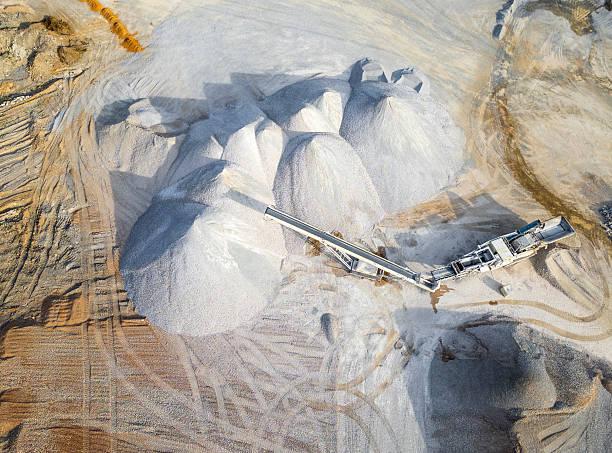
Have you ever wondered why the same concrete materials cannot always be used for every construction job? Well, the answer often comes down to how the concrete will be made and where it will be used. When choosing sand and gravel in Riverside County, it is important to know that ready-mix and precast concrete have different material requirements. Both depend on good-quality aggregates, but the size, shape, grading, moisture, and cleanliness of those materials can vary depending on the final application.
Let us look at what makes these specifications different and why choosing the right materials can make a real difference.
1. Understanding the Difference Between Ready-Mix and Precast Concrete
Before getting into aggregate specifications, let us clear up one thing. Ready-mix and precast concrete are made for different working conditions.
Ready-mix concrete is prepared at a batching plant and transported to a construction site in a mixer truck. It needs to stay workable during transportation and placement. Workers may pour it into foundations, driveways, slabs, columns, or other structures.
Precast concrete is produced in a controlled facility using prepared molds. Products such as concrete pipes, wall panels, steps, and paving blocks are made this way.
Since these two methods have different production needs, their sand and gravel specifications are not always the same.
2. Aggregate Gradation Requirements
Gradation simply means the distribution of different particle sizes in a mixture. It might sound technical, but the idea is pretty simple.
In ready-mix concrete, sand and coarse aggregates must work together to create a mixture that is easy to transport, pour, and finish. A balanced particle distribution helps reduce gaps and supports a consistent concrete mix.
Precast concrete may require more controlled gradation because products are often made using specific molds and production methods. The aggregate sizes need to suit the product's thickness, shape, and surface finish.
For example, a thick precast concrete panel may allow larger aggregate particles than a thin decorative concrete unit.
3. Particle Shape and Surface Texture
Have you noticed that some gravel pieces look smooth and rounded while others have rough, uneven edges? That small difference can affect how concrete behaves.
Ready-mix concrete often benefits from a suitable combination of rounded and angular particles. Rounded aggregates can improve workability, while angular particles can help create a strong internal structure.
Precast concrete specifications may place greater attention on particle shape, especially when producing items with detailed molds or smooth surfaces. Poorly shaped particles can affect how easily the mix fills narrow spaces.
The goal is to find a suitable balance between workability, strength, and the appearance of the finished product.
4. Moisture Content and Water Control
Here is something that can easily be overlooked... the amount of water already present in sand and gravel.
Ready-mix producers need to account for aggregate moisture before adding water to the batch. If wet sand is used without adjusting the mix, the concrete may become too watery. Too much water can affect strength and make finishing difficult.
Precast facilities also need careful moisture control. Since production usually follows a planned process, keeping moisture levels consistent helps maintain the same mix quality from one production batch to another.
When sourcing sand and gravel in Riverside County, it is worth discussing moisture conditions and material handling with the supplier before placing an order.
5. Cleanliness and Material Quality
Nobody wants unwanted materials getting into a concrete mix. Clay, organic matter, excessive dust, and other impurities can create problems during production.
For ready-mix concrete, clean aggregates help maintain consistent mixing, placement, and finishing.
Precast concrete may have even more specific cleanliness requirements depending on the product. A small surface defect can become noticeable when manufacturing decorative panels, blocks, or architectural elements.
This does not mean one type always needs cleaner materials than the other. Both require aggregates that meet the relevant project specifications.
6. Maximum Aggregate Size and Concrete Performance
The maximum aggregate size is another important difference between these applications.
Ready-mix concrete can use different aggregate sizes depending on the placement conditions, reinforcement spacing, and thickness of the structure.
Precast products often have fixed dimensions. If aggregate particles are too large, they may not move properly through narrow mold sections or around reinforcement.
Smaller aggregate sizes may be preferred for thin sections and detailed shapes, while larger sizes can be suitable for thicker products.
Choosing the right size from the beginning helps avoid unnecessary production and placement problems.
7. Why Project-Specific Specifications Matter
So, can we simply order one type of sand and gravel for every concrete application? Not always.
Ready-mix and precast producers should consider their mix designs, production equipment, placement methods, and finished product requirements before selecting aggregates.
Even when two projects use similar concrete grades, their material needs can be different. Checking the required grading, particle shape, moisture content, and cleanliness makes the selection process easier.
A little planning here can save time, reduce material waste, and prevent avoidable mix problems later.
Frequently Asked Questions
1. Can the same sand be used for ready-mix and precast concrete?
Yes, sometimes. The sand must meet the grading, cleanliness, and other requirements of both applications. The final decision depends on the concrete mix design.
2. Why is aggregate gradation important in concrete production?
Gradation affects how sand and gravel particles fit together. A suitable combination helps reduce empty spaces, improve workability, and support consistent concrete quality.
3. Does precast concrete require smaller gravel than ready-mix concrete?
Not in every case. Precast products with thin sections or detailed molds may need smaller aggregates, while thicker products can accommodate larger particles.
4. How does sand moisture affect concrete quality?
Moisture changes the amount of water entering the concrete mixture. If it is not measured correctly, the water-to-cement ratio can change and affect the finished concrete.
5. What should we check when purchasing sand and gravel in Riverside County?
Check particle size, gradation, cleanliness, moisture content, and material consistency. It is also important to match the aggregates with the specific requirements of your ready-mix or precast concrete project.

 English
 Arabic
 French
 Spanish
 Deutsch
 Turkish
 Dutch
 Italiano
 Russian
 Romaian
 Portuguese (Brazil)
 Greek