


3D Product Configurator Developers for Los Angeles Brands: 7 Custom-Build Teams (2026)
A Los Angeles brand that needs a 3D configurator with its own product rules and pricing logic has two routes: rent a SaaS platform or hire a team to build one. This list covers the second route, seven teams that write configurators to order, ranked by published cases, stack, integrations and independent reviews. Todor3D in Culver City takes first place, with three live configurators and a configurator platform on its case pages.
| Rank | Team | Base | Stack | Integrations named on site | Public configurator cases | Reviews |
|---|---|---|---|---|---|---|
| 1 | Todor3D | Culver City, Los Angeles | Three.js, WebGL, React, Node.js, AWS S3 | E-commerce, pricing APIs, CMS catalogs, WordPress | Patio covers, branded umbrellas, closets, no-code platform | Clutch 5.0 · 25 |
| 2 | Salsita | Prague, Ostrava, Atlanta | Parametric 3D, visual CPQ | ERP, CRM, Shopify, WooCommerce, BigCommerce | Furniture, construction, outdoor living | — |
| 3 | Digital Nature | British Columbia, Canada | Three.js, React Three Fiber, Next.js | Shareable configuration URLs | 4x4 vehicle builder | — |
| 4 | Stay3D | Remote, no city listed | Three.js, WebGL, React, Next.js, Node.js | Shopify, custom storefronts | Color, material and finish configurators | — |
| 5 | GO3DVIZ | San Diego | CAD-based 3D modeling, real-time viewers | Web-ready embeds | Consumer and industrial products | Google 5.0 · 22 |
| 6 | Xallama | Remote-first | Web and mobile 3D, AR | Not specified | Pergolas, verandas, sofas, garages | — |
| 7 | WESHOW3D | China | Three.js, WebGL | Shopify, WooCommerce | Home goods, motorcycles | — |
How We Ranked
We opened each company's website and kept only teams that list custom 3D configurator development as a service. Teams scored higher for public case studies with live demos, a named stack, integrations with commerce or pricing systems, and an office in California. Independent reviews on Clutch or Google counted, and so did published budget information.
SaaS platforms such as Threekit, Zakeke, Vectary and Expivi were left out of the ranking on purpose. They are covered in a separate section below, because the choice between renting and building is the first decision a brand has to make.
Seven teams that build configurators to order
Todor3D in Culver City, Los Angeles
Todor3D was founded in 2020 and has a US office at 6101 W Centinela Ave #110, Culver City, CA 90230. The team of 40+ people works across several countries and time zones, and lists 300+ shipped projects and a 5.0 rating across 25 Clutch reviews. Configurators sit inside its 3D and immersive practice, next to 3D web development and AR/VR.
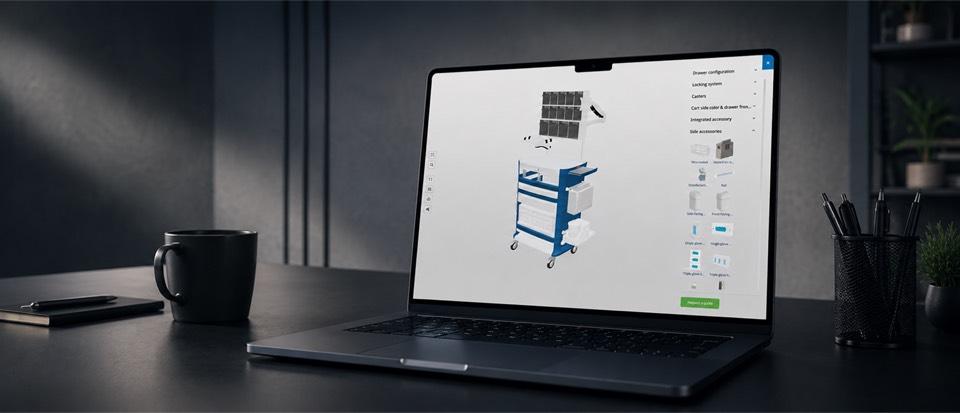
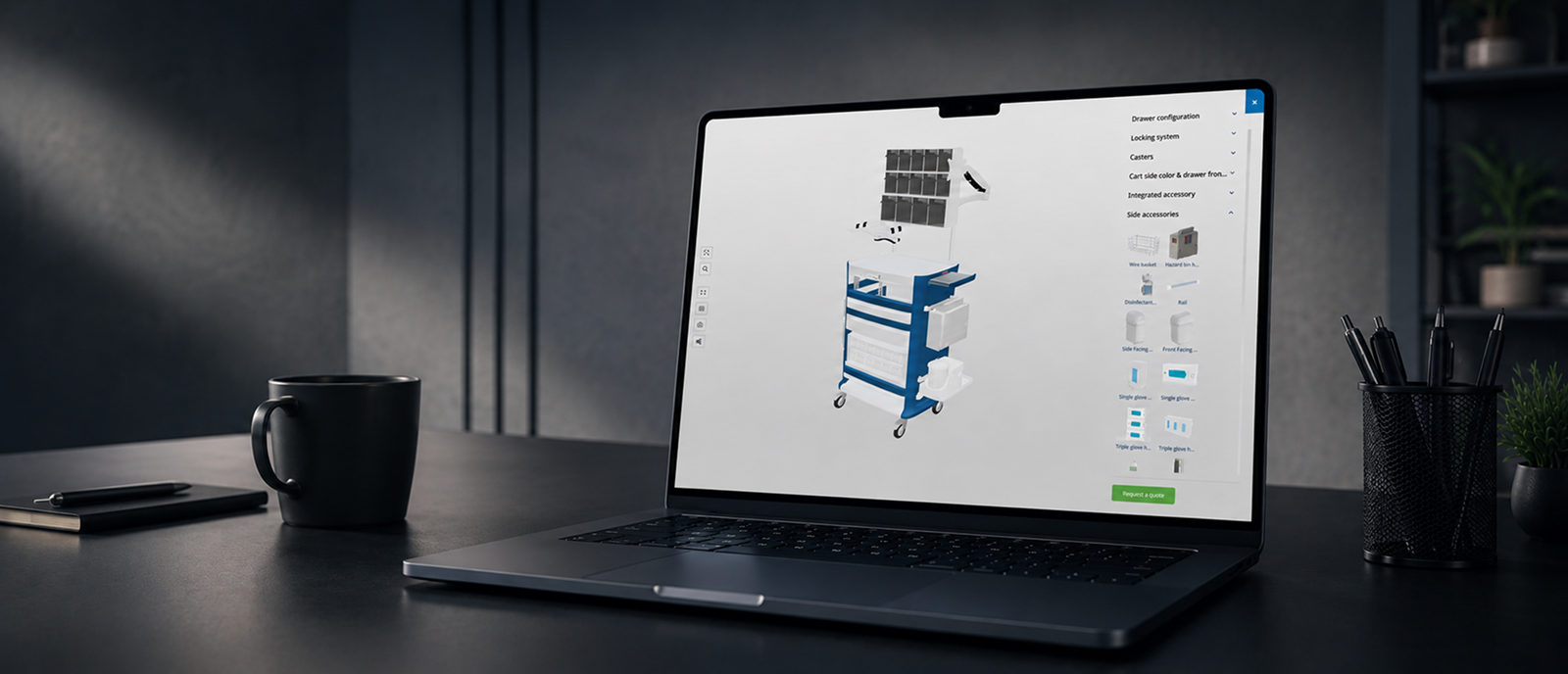
For brands that need their own pricing rules, Todor3D offers custom 3D configurator development in Los Angeles on Three.js, React and Node.js. It has also built the other side of the market: a no-code configurator platform for Digital Artflow, where business teams set options, rules and prices themselves and embed the result in any website. That platform project runs on React 18, Three.js and Google Model Viewer, with a published budget band of $100,000–250,000.
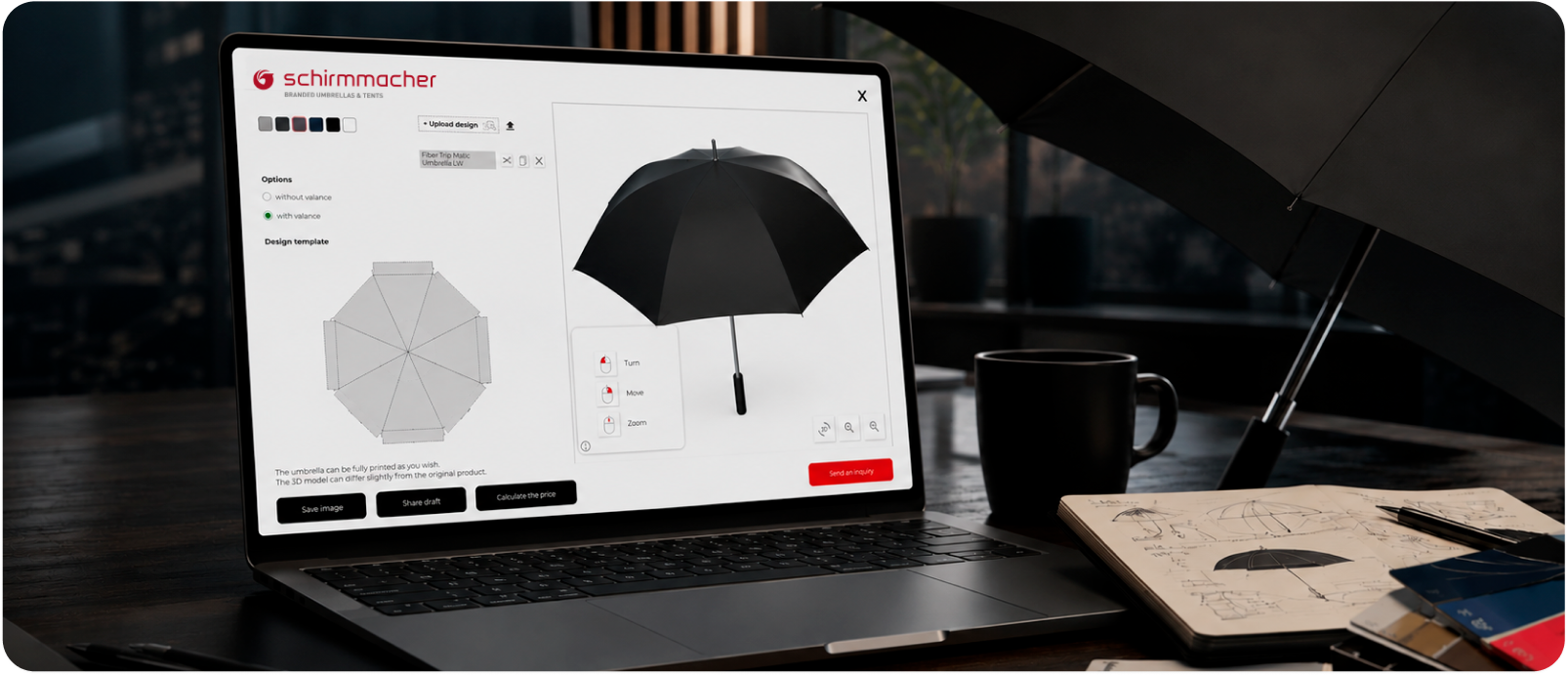
The longest custom engagement is with Schirmmacher, an Austrian maker of branded umbrellas, parasols, tents and deckchairs. Customers place their own logo on a Blender-modeled product and export a PDF proof before ordering. The configurator has grown through nine work batches since February 2023, a 33-month run in the $10,000–50,000 band.
Salsita
Salsita builds 3D configurators and visual CPQ for manufacturers and retailers, with offices in Prague, Ostrava and Atlanta. Its parametric models resize according to product sizing rules, and the system can output CAD files, bills of materials and cut lists. The team lists integrations that push selections, prices and SKUs into ERP and CRM systems.
The strongest fit is a furniture, cabinet or outdoor-living brand whose order has to reach the factory floor without manual re-entry.
Digital Nature
Digital Nature is a web development studio in British Columbia led by founder Shane Vincent. It builds real-time product configurators on Three.js and React Three Fiber, covering color, materials, components and dimensions, with shareable URLs for each configuration. Its portfolio includes 4x4 Builder, a 3D vehicle customizer with multiplayer and VR support.
The studio also ships React and Next.js web apps, which helps when a configurator has to live inside a larger product.
Stay3D
Stay3D focuses on 3D commerce: real-time product configurators and the storefronts around them. Its site lists color, material and finish customization, camera animation, custom shaders and interactive product logic in Three.js. It also builds Shopify integrations, custom React and Next.js storefronts and Node.js back ends.
The site does not name a city, so brands that want in-person meetings should ask before signing.
GO3DVIZ
GO3DVIZ is a San Diego studio known for product rendering and animation that also builds interactive configurators for variants, colors and finishes. It works from CAD files, packaging artwork, photos or physical samples, and can model a product from a sketch when no CAD file exists. Named clients on its site include consumer, medical device and sporting goods brands.
That rendering background is useful for brands that need marketing stills and a configurator from the same 3D assets.
Xallama
Xallama is a remote-first product agency whose main service is 3D configurator development for pergolas, verandas, furniture and garages. Its case list includes a sofa configurator and an AR product viewer, and AR previews are offered on web and mobile. The agency describes its team as senior-led.
The site does not name a tech stack, which is worth raising in a first call.
WESHOW3D
WESHOW3D has built Web3D product presentations since 2014 and runs a separate configurator brand, WECONFIG3D. Its configurators handle real-time material and color switching, multi-parameter combinations and price calculation on Three.js and WebGL. The team lists Shopify and WooCommerce connections and optimizes models with texture compression and progressive loading.
Its registration details point to China, so a Los Angeles brand should plan for a large time-zone gap.
Four answers make every quote comparable
Configurator quotes vary widely because teams price different assumptions. Brands get comparable numbers when they send every team the same short brief that answers four questions.
- How many products and options. A single product with ten finishes is a different job from a modular system where parts snap together. List the product lines, the option groups and the combinations that are not allowed.
- Where the price comes from. A price table inside the configurator is simple. Prices calculated by an ERP or a pricing API need an integration, error handling and a loading state while the number updates.
- What happens after the buyer finishes. Add to cart, request a quote, save a project or send a link to a sales rep. Each path touches a different system.
- What 3D files exist. CAD files, old renders or nothing at all. Modeling from scratch can take as long as the code.
A team that asks these questions before it quotes is pricing the real job rather than a product photo.
A SaaS configurator is enough when the product fits a template
Platforms such as Threekit, Zakeke, Vectary and Expivi let a brand upload 3D models, define options and publish a configurator without writing code. For a product with a fixed set of colors, materials and add-ons, that is often the faster and cheaper start.
A custom build earns its cost when the rules get specific. Typical signs are dimensions that must stay inside production limits, prices pulled from an ERP, quotes that go to a sales team, or a visual interface the platform cannot match. A custom build also leaves the brand owning the code, while a subscription stops working when payments stop.
| Question | SaaS platform | Custom build |
|---|---|---|
| Product rules | Option sets and standard conditions | Any rule the factory uses |
| Pricing | Price lists inside the platform | Live prices from your own systems |
| Interface | Platform templates | Designed for the brand |
| Code ownership | Stays with the vendor | Transferred to the brand |
| Cost model | Monthly or yearly subscription | Project budget plus support |
Some teams sit between the two. A no-code builder made for one company can serve many products, which is what the Digital Artflow platform does for shutters, store shelving and hospital carts.
FAQ
How much does a custom 3D product configurator cost?
It depends on the number of product variants, the complexity of the rules and the integrations. Todor3D's case pages show configurator budgets from $10,000–50,000 for a closet or umbrella configurator to $100,000–250,000 for a full configurator platform.
How long does it take to build one?
The Culver City studio's own estimate for a typical configurator is 4–10 weeks, and 3–6 months for a full platform. Configurators tied to pricing systems tend to stay in development after launch, as new products and options are added. The Schirmmacher configurator, for example, has been extended in nine batches since 2023.
Where do the 3D models come from?
Most manufacturers already have CAD files, which a 3D team converts into light, web-ready models. When there is no CAD, studios model the product in tools such as Blender from photos, drawings or samples. Every model has to be built so that colors, parts and logos can change in the browser.
Should a brand build its own configurator or subscribe to a platform?
Subscribe if the product fits a platform's templates and the goal is to launch fast. Build if the configurator must follow production limits, pull live prices or send structured orders to sales. Many brands test demand on a platform first and move to a custom build when the rules outgrow it.

 English
 Arabic
 French
 Spanish
 Portuguese
 Deutsch
 Turkish
 Dutch
 Russian
 Romaian
 Portuguese (Brazil)
 Greek