


Why Is Joint Range of Motion Important in Resistance Training?
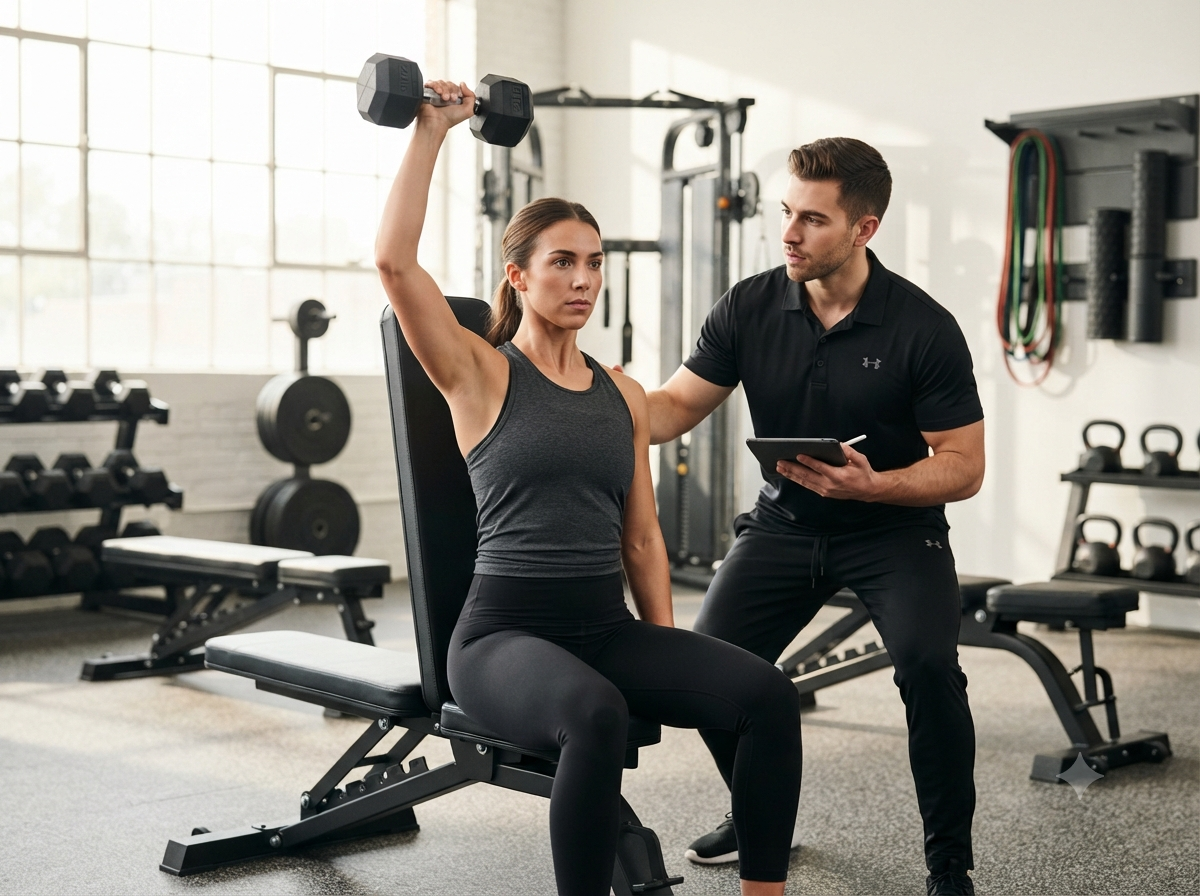
Ever tried doing a squat and felt like your body just refused to go any lower? Or picked up a dumbbell for shoulder presses and struggled to lift your arms comfortably? We have all seen moments like these in the gym. Sometimes, the problem is not a lack of strength. It could be the way our joints move. Understanding this is an important part of learning through a Certificate IV in Fitness Sydney, especially when it comes to helping people exercise with better control and confidence.
Joint range of motion might sound like something only fitness experts need to worry about, but it affects almost every exercise we do. From bending our knees during squats to straightening our elbows during push-ups, our joints are busy throughout a workout.
First, What Does Joint Range of Motion Mean?
Let's keep this simple. Joint range of motion is how far a joint can move comfortably in a particular direction.
Try bending your elbow and bringing your hand towards your shoulder. Now straighten your arm. That movement is a simple example of your elbow's range of motion.
Different joints move in different ways. Your shoulders can rotate and move in several directions, while your knees mainly bend and straighten. Your hips and ankles have their own movement patterns too.
Here is something worth remembering: not everyone has the same range of motion. One person might find deep squats easy, while another struggles to get past halfway. It does not automatically mean one person is fitter than the other. Bodies have different movement abilities, and that is perfectly normal.
What Happens When You Train Through a Suitable Range?
Let's take the humble bicep curl. It looks easy enough, right? Pick up a dumbbell, bend your elbow and lower it again.
But imagine doing every repetition only halfway. You might still feel your muscles working, but you are not using the same movement range as you would during a controlled curl from a comfortable starting position.
Resistance training through an appropriate range allows muscles to work at different lengths and helps develop strength across those positions.
The same applies to squats, lunges and chest presses. The goal is not to make every movement as big as possible. It is to use a range that suits your body, the exercise and your current ability.
Why Does Joint Movement Affect Exercise Technique?
Here is where things get interesting. Sometimes, an exercise looks wrong because a person has not learned the technique properly. Other times, their joints simply do not move well enough to perform it comfortably.
For example, someone with limited ankle mobility might struggle to keep their heels on the floor during a squat. Another person may find overhead presses difficult because their shoulders cannot move comfortably into the required position.
Simply telling these people to try harder is not going to solve the problem!
Anyone learning through a Personal Training course in Sydney needs to understand the connection between joint movement and exercise technique. It helps trainers look beyond what they can see and think about why a movement feels difficult in the first place.
Can You Improve Your Joint Range of Motion?
In many cases, yes. Regular movement and suitable mobility exercises can help people improve how comfortably they move.
You do not need an hour-long stretching routine or a complicated collection of exercises. A few simple habits can make a difference.
-
Move before lifting: Gentle warm-up movements help prepare your joints for the exercises ahead.
-
Give mobility some attention: Try controlled hip rotations, ankle movements and shoulder circles.
-
Do not rush your repetitions: Slowing down can help you notice where your movement becomes restricted.
-
Choose sensible weights: Heavy weights are not worth much if you cannot control the movement.
-
Be patient: Mobility improvements take time, so do not expect everything to change after two workouts.
And please, do not force a movement just because someone next to you can do it. Your workout is not a competition in who can squat the lowest!
Does a Bigger Range of Motion Always Mean Better Results?
Not always. This is one of those things that can easily be misunderstood in the gym.
Using a comfortable, controlled range is generally a good starting point, but forcing a joint beyond its available movement can affect technique and cause discomfort.
For someone recovering from an injury or dealing with movement restrictions, a smaller range may be more appropriate. As their strength and movement ability improve, they may gradually increase it.
What matters is knowing when to challenge the body and when to make an adjustment. Good resistance training is not about pushing through every limitation. It is about making sensible choices that support steady progress.
Frequently Asked Questions
1. What is joint range of motion in exercise?
It refers to how far a joint can move in a particular direction. For example, bending and straightening your knee are part of its range of motion.
2. Does limited joint mobility affect muscle growth?
It can influence how an exercise is performed and which positions a muscle is trained in. Choosing suitable exercises and movement ranges can help people train effectively.
3. Should we always use a full range of motion when lifting weights?
Not necessarily. Use the available range that allows you to maintain control and good technique. The right range can vary between individuals and exercises.
4. What exercises help improve joint mobility?
Controlled movements such as hip rotations, ankle circles, shoulder rotations and gentle dynamic stretches can help improve mobility over time.
5. What is the difference between joint mobility and flexibility?
Flexibility is mainly about how far muscles and surrounding tissues can stretch. Mobility is about how well you can move a joint through its available range with control.

 English
 Arabic
 French
 Spanish
 Portuguese
 Deutsch
 Turkish
 Dutch
 Italiano
 Romaian
 Portuguese (Brazil)
 Greek